
Species
Tricolored bat
Perimyotis subflavus
One of the smallest bats in eastern North America, golden-brown, and now in steep decline.
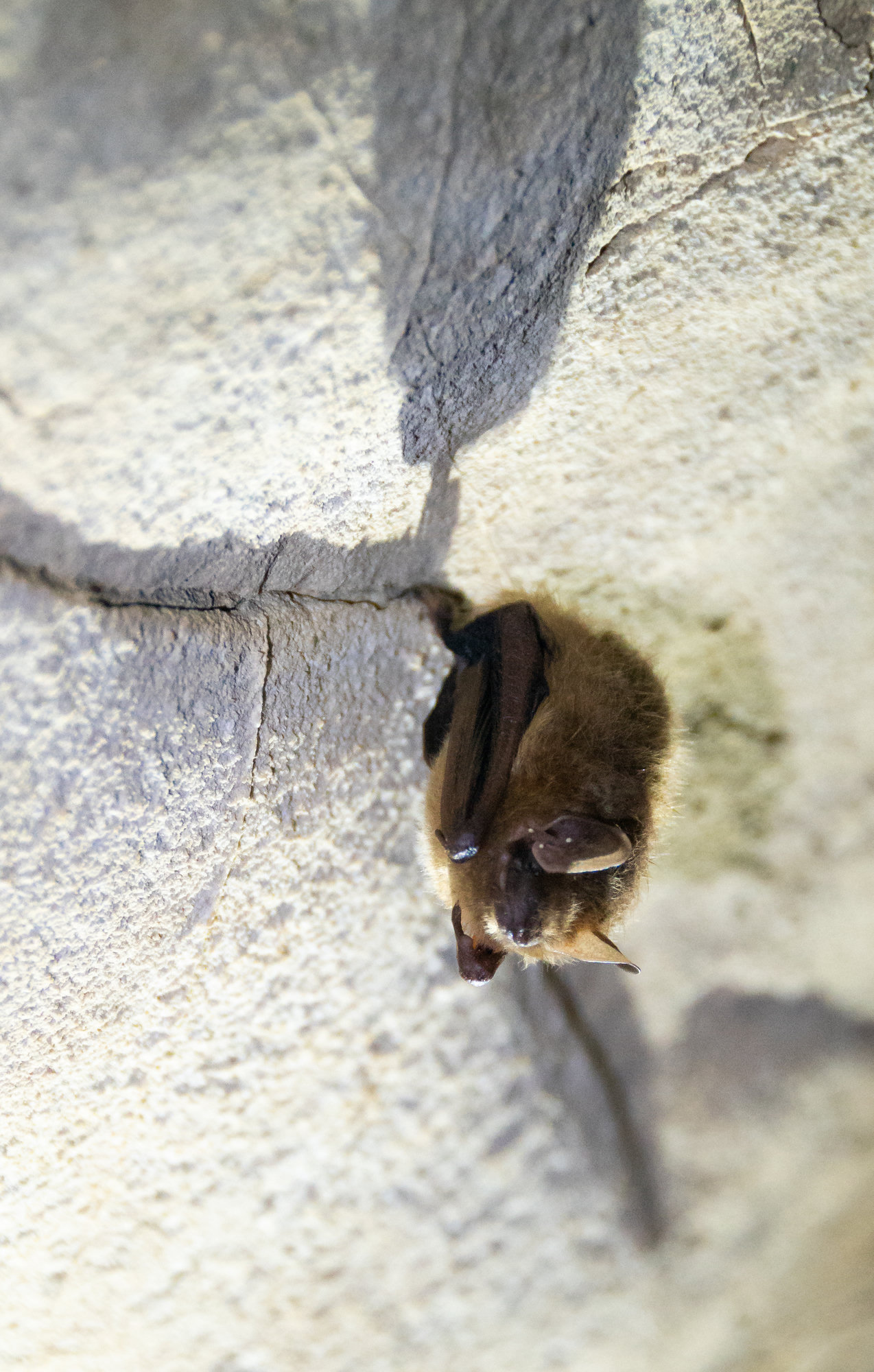
Photo U.S. Air Force photo by Jill Pickett (opens in a new tab) / Wikimedia Commons, Public domain (opens in a new tab)
At a glance
- Size
- Body about 8 to 9 cm; wingspan about 21 to 26 cm
- Weight
- About 4 to 8 g
- Habitat
- Forests and forest edges near water; caves, mines and culverts in winter
- Diet
- Small flying insects: moths, beetles, flies, leafhoppers and midges
- Active
- Night; one of the first bats out in the evening
- Roost
- Clumps of dead leaves and Spanish moss in summer; caves, mines and culverts in winter
- Status
- Proposed for listing as endangered in the United States in 2022, after severe losses to white-nose syndrome
- Rabies vector
- Yes
Identification
- Key marks
- Tiny; each hair is dark at the base, yellowish-brown in the middle and dark at the tip; bright pinkish forearms against dark wings
- Told apart from
- Other small bats, which lack the contrast between pink forearms and black wings
- Told apart from
- Eastern small-footed bat, which has a black mask across its face
- Where to look
- Hanging alone on cave and culvert walls in winter, often beaded with condensation; fluttering over water at dusk in summer
Behaviour
Tricolored bats are among the smallest bats in the East and among the first to fly each evening, hunting in a slow, erratic flight over water, along forest edges and around trees.
In summer they roost in foliage, often in clumps of dead leaves or, in the South, in Spanish moss. In winter they hibernate, usually alone, hanging on the walls of caves, mines and — across the southern coastal plain, including Georgia — concrete road culverts. They hibernate for long periods without waking, and their fur is often covered in droplets of condensation.
Why they matter
Tricolored bats take enormous numbers of small insects for their size, including midges and other flies that rise from water in the evening.
They are also one of the clearest measures of what white-nose syndrome, a fungal disease of hibernating bats, has done to North America. Hibernation counts of this species have collapsed across much of its range since the disease arrived, and the bats that remain matter far more than their size suggests.
Reproduction and lifecycle
Mating — late summer and autumn, at cave entrances; sperm is stored over winter
Gestation — about 44 days after fertilisation in spring
Birth — June, usually two pups
Flight — at about four weeks old
Independence — by late summer
Lifespan — up to about 15 years has been recorded; most live far less
Living around people
- Waking a hibernating bat costs it fat it cannot replace in winter; stay out of caves, mines and culverts where bats are hibernating.
- Follow any closure signs on caves; they protect hibernating bats from disturbance and the spread of disease.
- Cleaning boots and gear between caves helps slow the spread of white-nose syndrome.
- Never handle a bat with bare hands; bats are rabies vector species.
Misconceptions
- A bat hanging still in a culvert in winter is dead. It is hibernating, and disturbing it can kill it.
- Small bats are baby bats. Adult tricolored bats weigh about as much as two or three coins.
- White-nose syndrome only affects cave explorers' bats. It has spread across much of North America and devastated several common species, including this one.
Related species
Seasonal activity
When this species is breeding, and when there are nests on the ground. Mowing during the shaded months is how most nests are found.
| Jan | Feb | Mar | Apr | May | Jun | Jul | Aug | Sep | Oct | Nov | Dec | |
|---|---|---|---|---|---|---|---|---|---|---|---|---|
| Breeding | Jan: no | Feb: no | Mar: no | Apr: no | May: no | Jun: no | Jul: no | Aug: no | Sep: no | Oct: no | Nov: no | Dec: no |
| Active nests | Jan: no | Feb: no | Mar: no | Apr: no | May: no | Jun: no | Jul: no | Aug: no | Sep: no | Oct: no | Nov: no | Dec: no |
| Notes | Hibernating in caves, mines and culverts; rarely waking | Hibernation continues | Emerging from hibernation, earlier in the South | Females move to summer roosts in foliage | Pregnant females gather, alone or in small groups | Pups are born, usually twins | Young begin to fly at about four weeks old | Young are independent; bats feed heavily to build fat | Swarming at cave entrances; mating begins | Mating continues; bats move toward winter sites | Hibernation begins | Hibernating |
Where it lives
Recorded in 49 states and provinces. Each one links to the other animals there, and to the rehabilitators licensed for them.
Treated as a rabies-vector species in Alabama, Arkansas, Colorado, Connecticut, Delaware, District of Columbia, Florida, Georgia, Illinois, Indiana, Iowa, Kansas, Kentucky, Louisiana, Maine, Maryland, Massachusetts, Michigan, Minnesota, Mississippi, Missouri, Nebraska, New Hampshire, New Jersey, New Mexico, New York, North Carolina, Ohio, Oklahoma, Pennsylvania, Rhode Island, South Carolina, Tennessee, Texas, Vermont, Virginia, West Virginia, Wisconsin, New Brunswick, Nova Scotia, Ontario, Quebec, Chiapas, Coahuila, Nuevo Leon, San Luis Potosi, Tabasco, Tamaulipas and Veracruz. There, only a certified rehabilitator may take one.
United States
- Alabama
- Arkansas
- Colorado
- Connecticut
- Delaware
- District of Columbia
- Florida
- Georgia
- Illinois
- Indiana
- Iowa
- Kansas
- Kentucky
- Louisiana
- Maine
- Maryland
- Massachusetts
- Michigan
- Minnesota
- Mississippi
- Missouri
- Nebraska
- New Hampshire
- New Jersey
- New Mexico
- New York
- North Carolina
- Ohio
- Oklahoma
- Pennsylvania
- Rhode Island
- South Carolina
- Tennessee
- Texas
- Vermont
- Virginia
- West Virginia
- Wisconsin
If you found one
Answer a few questions and you will get a specific answer for what you are looking at.
I found an animal