
Species
Little brown bat
Myotis lucifugus
Once one of the commonest bats in North America, now among the hardest hit by white-nose syndrome.
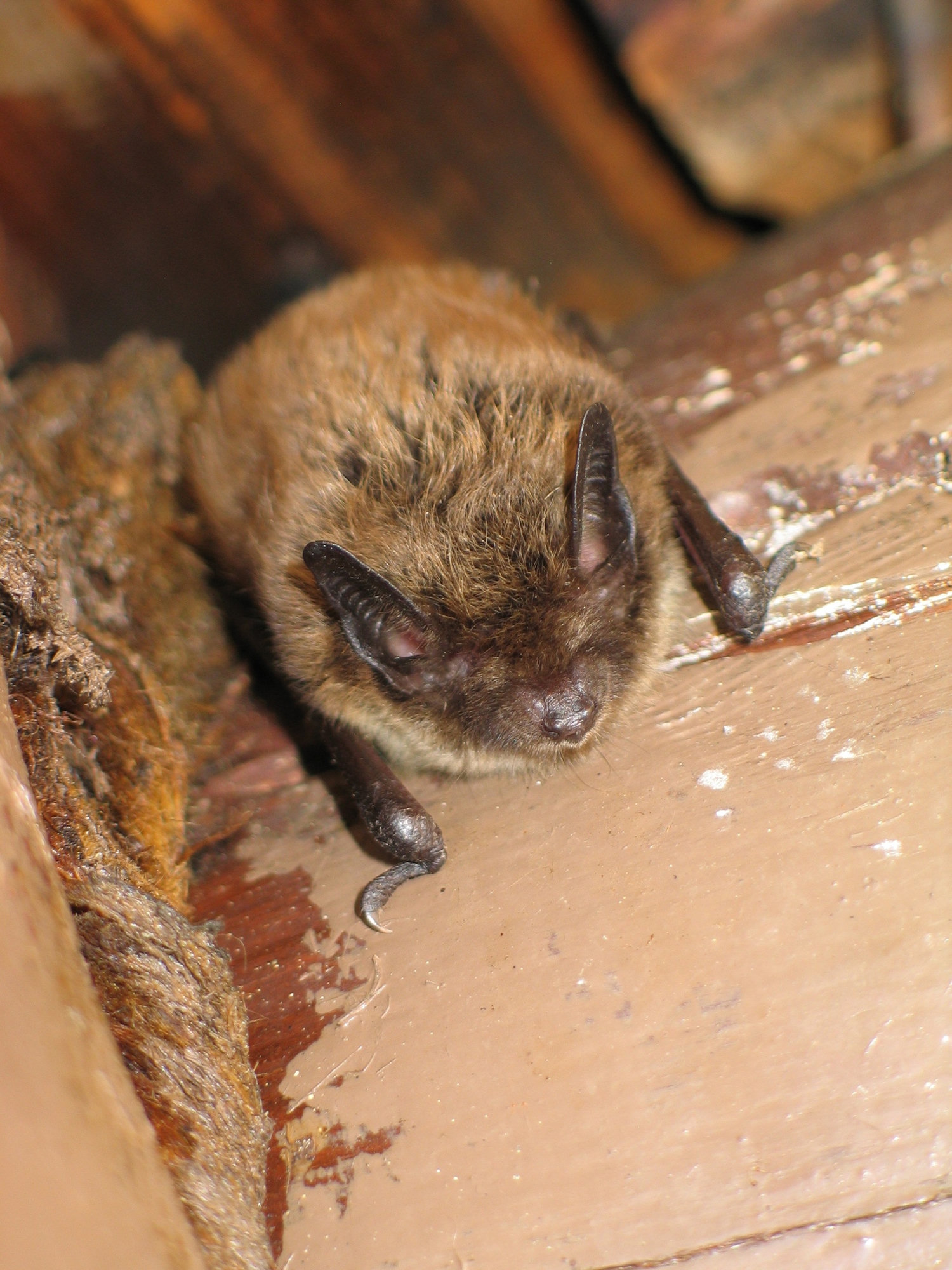
Photo LeeAnn Latremouille (opens in a new tab) / iNaturalist, CC BY 4.0 (opens in a new tab)
At a glance
- Size
- Body about 8 to 10 cm; wingspan about 22 to 27 cm
- Weight
- About 5 to 14 g
- Habitat
- Forests and towns near water
- Diet
- Aquatic insects such as midges, mayflies and caddisflies, plus moths, beetles and some mosquitoes
- Active
- Night, from dusk
- Roost
- Buildings, tree cavities and bat houses in summer; caves and mines in winter
- Young
- One pup a year
- Rabies vector
- Yes
Identification
- Key marks
- Glossy, sleek brown fur; darker wings and ears; short, blunt tragus; long hairs on the toes reaching past the claws
- Told apart from
- Big brown bat, which is larger with a heavier head
- Told apart from
- Indiana bat, which is duller, pinkish-lipped and has short toe hairs
- Told apart from
- Northern long-eared bat, which has much longer ears
- Where to look
- Emerging from barns, attics and bat houses at dusk; hunting over ponds and streams
Behaviour
Little brown bats hunt over water and along forest edges, catching insects in the air and sometimes skimming them from the surface. Females gather in summer maternity colonies in attics, barns and bat houses, often in the hundreds.
In winter they hibernate in caves and mines, where their body temperature drops close to that of the cave and they can go weeks without waking.
In Georgia they are uncommon and found mainly in the mountains and hills of the north.
Why they matter
Little brown bats are among the longest-lived small mammals known: one banded bat was recaptured more than 30 years later. Few animals of their size come close.
They are also a measure of loss. White-nose syndrome, first found in New York in 2006, has killed the great majority of little brown bats in parts of the Northeast, turning a species that was once everywhere into one that many people will never see.
Reproduction and lifecycle
Mating — late summer and autumn at cave entrances; sperm is stored until spring
Gestation — about 50 to 60 days after fertilisation
Birth — June and early July, a single pup
Flight — at about three weeks old
Independence — by late summer
Lifespan — often several years; more than 30 has been recorded
Living around people
- A colony in a barn or attic should never be excluded between May and August, when pups cannot yet fly.
- Bat houses mounted in the sun near water can give colonies a safe alternative.
- Keep out of caves and mines where bats hibernate, and clean gear to slow white-nose syndrome.
- Never handle a bat with bare hands; bats are rabies vector species.
Misconceptions
- A little brown bat eats a thousand mosquitoes an hour. That figure came from a laboratory experiment; wild bats eat a mixture of insects, of which mosquitoes are only a part — though the total they eat is still very large.
- Bats are blind. They see well; echolocation adds to their vision rather than replacing it.
- Excluding bats in summer is harmless. Pups left inside die.
Related species
Seasonal activity
When this species is breeding, and when there are nests on the ground. Mowing during the shaded months is how most nests are found.
| Jan | Feb | Mar | Apr | May | Jun | Jul | Aug | Sep | Oct | Nov | Dec | |
|---|---|---|---|---|---|---|---|---|---|---|---|---|
| Breeding | Jan: no | Feb: no | Mar: no | Apr: no | May: no | Jun: no | Jul: no | Aug: no | Sep: no | Oct: no | Nov: no | Dec: no |
| Active nests | Jan: no | Feb: no | Mar: no | Apr: no | May: no | Jun: no | Jul: no | Aug: no | Sep: no | Oct: no | Nov: no | Dec: no |
| Notes | Hibernating in caves and mines | Hibernation continues | Emerging from hibernation, earlier in the South | Females move to summer maternity colonies | Colonies gather in buildings and bat houses | Pups are born, one per female | Young begin to fly at about three weeks old | Young are independent; colonies disperse | Swarming and mating at caves and mines | Hibernation begins | Hibernating | Hibernating |
Where it lives
Recorded in 56 states and provinces. Each one links to the other animals there, and to the rehabilitators licensed for them.
Treated as a rabies-vector species in Alabama, Alaska, Arkansas, California, Colorado, Connecticut, Delaware, District of Columbia, Georgia, Idaho, Illinois, Indiana, Iowa, Kansas, Kentucky, Maine, Maryland, Massachusetts, Michigan, Minnesota, Missouri, Montana, Nebraska, Nevada, New Hampshire, New Jersey, New Mexico, New York, North Carolina, North Dakota, Ohio, Oregon, Pennsylvania, Rhode Island, South Carolina, South Dakota, Tennessee, Utah, Vermont, Virginia, Washington, West Virginia, Wisconsin, Wyoming, Alberta, British Columbia, Manitoba, New Brunswick, Newfoundland and Labrador, Northwest Territories, Nova Scotia, Ontario, Prince Edward Island, Quebec, Saskatchewan and Yukon. There, only a certified rehabilitator may take one.
United States
- Alabama
- Alaska
- Arkansas
- California
- Colorado
- Connecticut
- Delaware
- District of Columbia
- Georgia
- Idaho
- Illinois
- Indiana
- Iowa
- Kansas
- Kentucky
- Maine
- Maryland
- Massachusetts
- Michigan
- Minnesota
- Missouri
- Montana
- Nebraska
- Nevada
- New Hampshire
- New Jersey
- New Mexico
- New York
- North Carolina
- North Dakota
- Ohio
- Oregon
- Pennsylvania
- Rhode Island
- South Carolina
- South Dakota
- Tennessee
- Utah
- Vermont
- Virginia
- Washington
- West Virginia
- Wisconsin
- Wyoming
If you found one
Answer a few questions and you will get a specific answer for what you are looking at.
I found an animal