
Species
Big brown bat
Eptesicus fuscus
A robust, adaptable bat that often shares buildings with people while feeding heavily on beetles and other night insects.
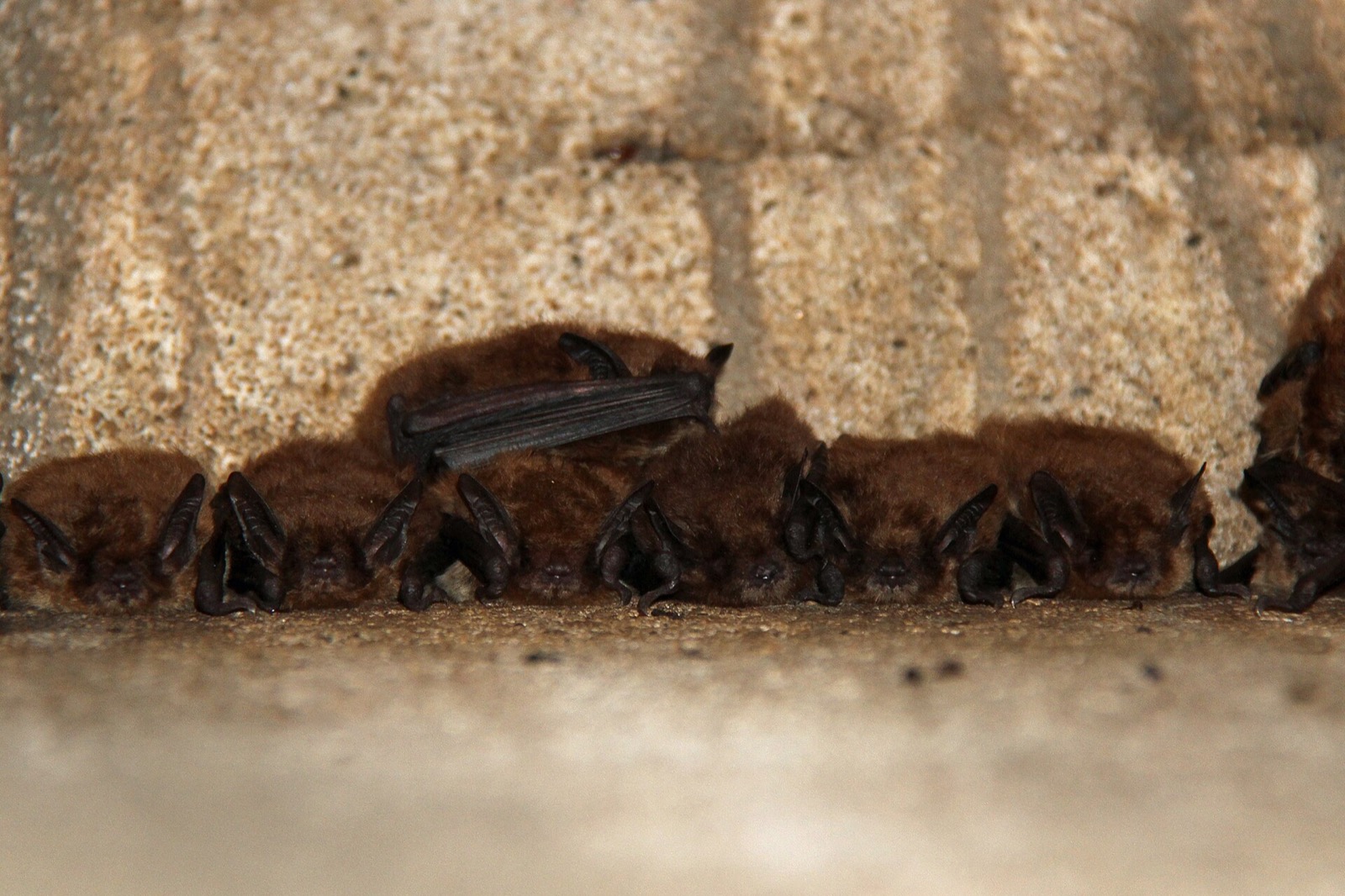
Photo Greg Schechter (opens in a new tab), CC BY 2.0 (opens in a new tab)
At a glance
- Occurrence
- Native to North America
- Habitat
- Forests, farms, towns and cities; roosts in tree cavities, buildings, bridges and crevices
- Diet
- Beetles, moths, true bugs and other flying insects
- Activity
- Nocturnal; can be active on mild winter nights
- Shelter
- Tree cavities, buildings, bridges, caves and other crevices
- Social pattern
- Small groups to maternity colonies; winter clusters may form
- Rabies vector
- Yes
Identification
- Key marks
- Large for a North American bat, glossy brown fur, dark ears and muzzle and broad wings
- Told apart from
- Evening bat, which is smaller with shorter ears and a more compact muzzle
- Where to look
- Forests, farms, towns and cities; roosts in tree cavities, buildings, bridges and crevices
Behaviour
It is nocturnal; can be active on mild winter nights. It uses habitats including forests, farms, towns and cities; roosts in tree cavities, buildings, bridges and crevices. It feeds on beetles, moths, true bugs and other flying insects.
It navigates and hunts with echolocation, emitting high-frequency calls and interpreting returning echoes. Roost use shifts with season, temperature and reproductive needs.
Big brown bats tolerate colder conditions than many southern bats and may remain intermittently active through much of a northern winter.
Why they matter
North American bats consume nocturnal insects, including moths, beetles, flies and many insects that emerge from rivers and wetlands. Their feeding transfers energy from night-flying insect swarms into the wider food web.
Powered flight lets bats exploit a nocturnal aerial niche no other mammal in North America can use, while echolocation gives them a detailed acoustic picture in darkness.
Reproduction and lifecycle
Mating — many North American bats mate in late summer or autumn; hibernating species can store sperm through winter.
Pregnancy — fertilisation or embryo development resumes in spring; gestation is commonly about 6–10 weeks depending on species and temperature.
Pup — most North American bats produce one pup per year, though some tree bats regularly have twins or more.
Flight — pups typically begin flying in roughly 3–6 weeks and are weaned during summer.
Autumn — juveniles build fat and join migration or hibernation movements before winter.
Living around people
- Keep cats indoors, especially from dusk through dawn.
- Do not seal an occupied bat roost during the maternity season when flightless pups may be present.
- Use properly fitted screens and chimney caps to prevent accidental entry into living spaces.
- A bat on the ground or exposed low on a wall should not be handled with bare hands; bats are rabies vector species even though most individual bats are not rabid.
Misconceptions
- A bat seen in daylight is automatically rabid. Daylight activity can occur for several reasons, but unusual behaviour or direct contact still warrants cautious handling and professional medical advice after an exposure.
- Bats are blind. All North American bats can see; echolocation adds a powerful second way to navigate and hunt.
- Bats try to fly into people's hair. They avoid collisions using vision and echolocation and have no reason to target hair.
Related species
- rafinesques-big-eared-bat
- silver-haired-bat
- brazilian-free-tailed-bat
Seasonal activity
When this species is breeding, and when there are nests on the ground. Mowing during the shaded months is how most nests are found.
| Jan | Feb | Mar | Apr | May | Jun | Jul | Aug | Sep | Oct | Nov | Dec | |
|---|---|---|---|---|---|---|---|---|---|---|---|---|
| Breeding | Jan: no | Feb: no | Mar: no | Apr: no | May: no | Jun: no | Jul: no | Aug: no | Sep: no | Oct: no | Nov: no | Dec: no |
| Active nests | Jan: no | Feb: no | Mar: no | Apr: no | May: no | Jun: no | Jul: no | Aug: no | Sep: no | Oct: no | Nov: no | Dec: no |
| Notes | Winter torpor or hibernation is the dominant pattern; disturbance can force costly use of stored fat. | Hibernation continues, with brief arousals and occasional activity during warm spells depending on species. | Spring emergence begins as insects become available; bats move from winter sites toward summer habitat. | Females gather at maternity roosts; the bat maternity season is underway. | Pregnancy and early births occur; warm roosts become especially important. | Pups are born or growing rapidly while mothers forage each night. | Young begin flying and weaning; maternity colonies become increasingly mobile late in the month. | Juveniles disperse and autumn swarming or migration begins. | Mating, swarming and movement toward winter sites increase. | Many bats arrive at hibernation sites and accumulate or conserve fat. | Long torpor bouts become common as insect activity declines. | Winter hibernation or deep torpor is established. |
If you found one
Answer a few questions and you will get a specific answer for what you are looking at.
I found an animal