
Species
Rafinesque's big-eared bat
Corynorhinus rafinesquii
A rare southern bat with enormous ears, which it coils back like a ram's horns when it sleeps.
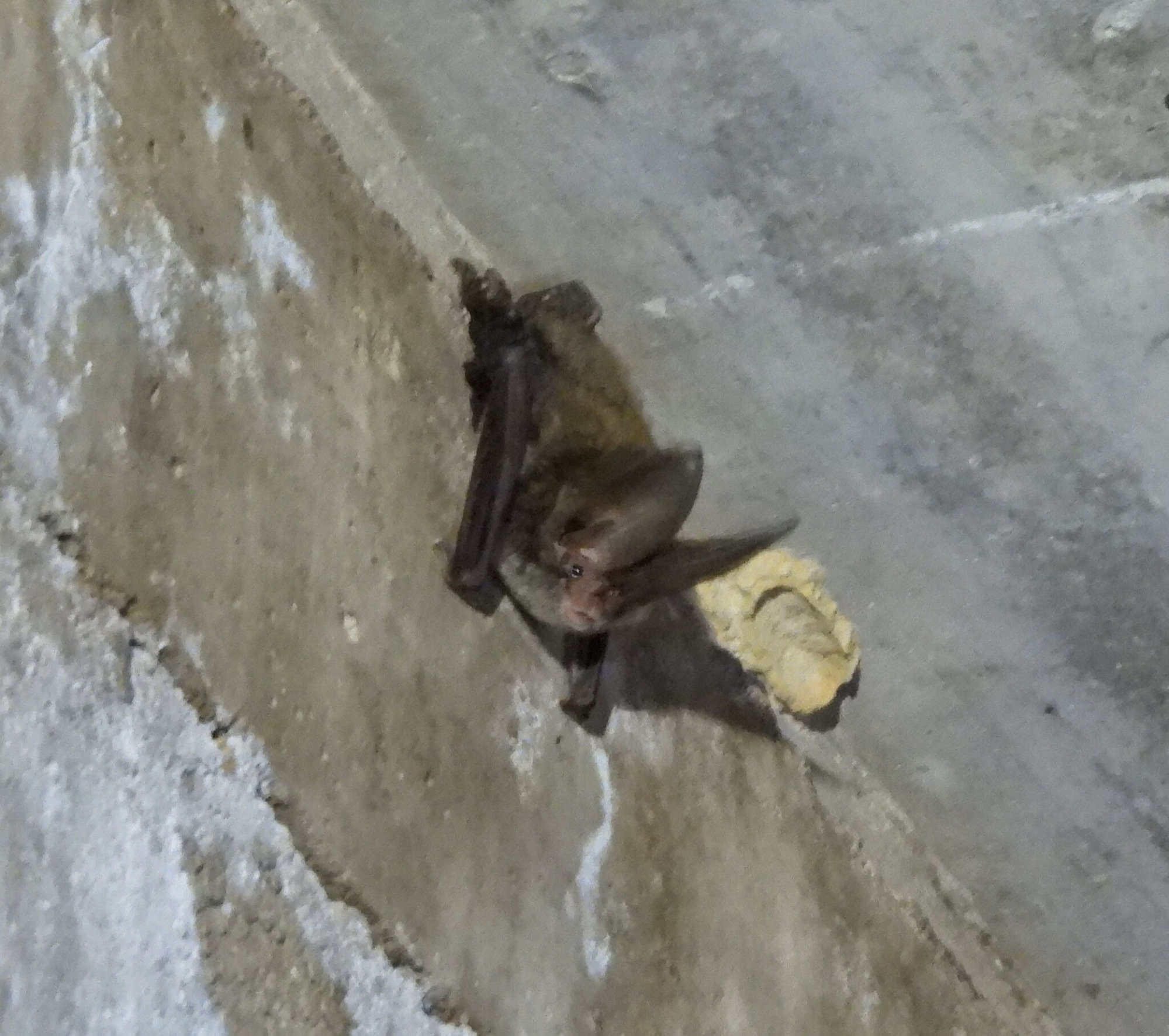
Photo Craig Hensley (opens in a new tab) / iNaturalist, CC BY 4.0 (opens in a new tab)
At a glance
- Size
- Body about 8 to 11 cm; ears about 3 cm long
- Weight
- About 7 to 13 g
- Habitat
- Bottomland hardwood forests, cypress-tupelo swamps and nearby old buildings, bridges and culverts
- Diet
- Moths especially, plus beetles, flies and other insects
- Active
- Night, emerging well after dark
- Roost
- Hollow trees, the undersides of bridges, culverts, wells and abandoned buildings
- Young
- One pup a year
- Rabies vector
- Yes
Identification
- Key marks
- Huge ears joined across the forehead; two lumps on the nose; grey-brown back with white-tipped belly fur
- At rest
- Coils its ears back along the sides of its head so they look like a ram's horns
- Told apart from
- Every other bat in the Southeast by its ears, which are more than twice the length of any other species' ears
- Where to look
- Hanging from the ceilings of old buildings, bridges and large hollow trees in swamp forest
Behaviour
Rafinesque's big-eared bats are quiet, slow, highly manoeuvrable fliers that pick insects off leaves as well as catching them in the air. Their long ears let them hear the tiny sounds of prey moving on vegetation.
They roost in large hollow trees such as tupelo and cypress, and in human structures that imitate them: abandoned houses, cisterns, wells, bridges and culverts. They hang in the open, often from the ceiling, in small groups. In winter they become torpid but wake readily and move between roosts.
Why they matter
This bat is a marker of old, wet forest. Where there are still hollow tupelos and cypresses big enough for a colony, it tends to survive; where the old trees have been cut, it depends on the chance of an abandoned building nearby.
It is rare across its range and considered a species of conservation concern in Georgia and neighbouring states, which makes every known roost worth protecting.
Reproduction and lifecycle
Mating — autumn and winter
Birth — late April to early June, a single pup
Nursing — about two months
Flight — at about three weeks old
Independence — by mid-summer
Lifespan — up to about 10 years has been recorded
Living around people
- An abandoned house, barn or cistern in swamp country may hold a colony; entering it disturbs mothers and pups.
- Bridge and culvert work in summer can harm roosting colonies.
- Protecting large hollow trees in bottomland forests keeps their natural roosts.
- Never handle a bat with bare hands; bats are rabies vector species.
Misconceptions
- Old empty buildings are just eyesores. For this rare bat an abandoned house can be the only roost for miles.
- A bat with huge ears is dangerous. The ears are for hearing insects; the bat is shy and gentle.
- Bats want to fly at people. A bat that flies close in a building is trying to find its way out.
Related species
Seasonal activity
When this species is breeding, and when there are nests on the ground. Mowing during the shaded months is how most nests are found.
| Jan | Feb | Mar | Apr | May | Jun | Jul | Aug | Sep | Oct | Nov | Dec | |
|---|---|---|---|---|---|---|---|---|---|---|---|---|
| Breeding | Jan: no | Feb: no | Mar: no | Apr: no | May: no | Jun: no | Jul: no | Aug: no | Sep: no | Oct: no | Nov: no | Dec: no |
| Active nests | Jan: no | Feb: no | Mar: no | Apr: no | May: no | Jun: no | Jul: no | Aug: no | Sep: no | Oct: no | Nov: no | Dec: no |
| Notes | Torpid on cold days; wakes and moves between roosts | Activity increases on mild nights | Females begin gathering in maternity roosts | Maternity colonies form in hollow trees and buildings | Pups are born, one per female | Young begin to fly at about three weeks old | Young are independent | Colonies begin to disperse | Mating | Mating continues | Bats move to winter roosts | Torpid in cold weather |
Where it lives
Recorded in 18 states and provinces. Each one links to the other animals there, and to the rehabilitators licensed for them.
Treated as a rabies-vector species in Alabama, Arkansas, Florida, Georgia, Illinois, Indiana, Kentucky, Louisiana, Mississippi, Missouri, North Carolina, Ohio, Oklahoma, South Carolina, Tennessee, Texas, Virginia and West Virginia. There, only a certified rehabilitator may take one.
If you found one
Answer a few questions and you will get a specific answer for what you are looking at.
I found an animal