
Species
Southeastern myotis
Myotis austroriparius
A woolly little bat of southern caves, bridges and hollow trees, unusual among its relatives for having twins.
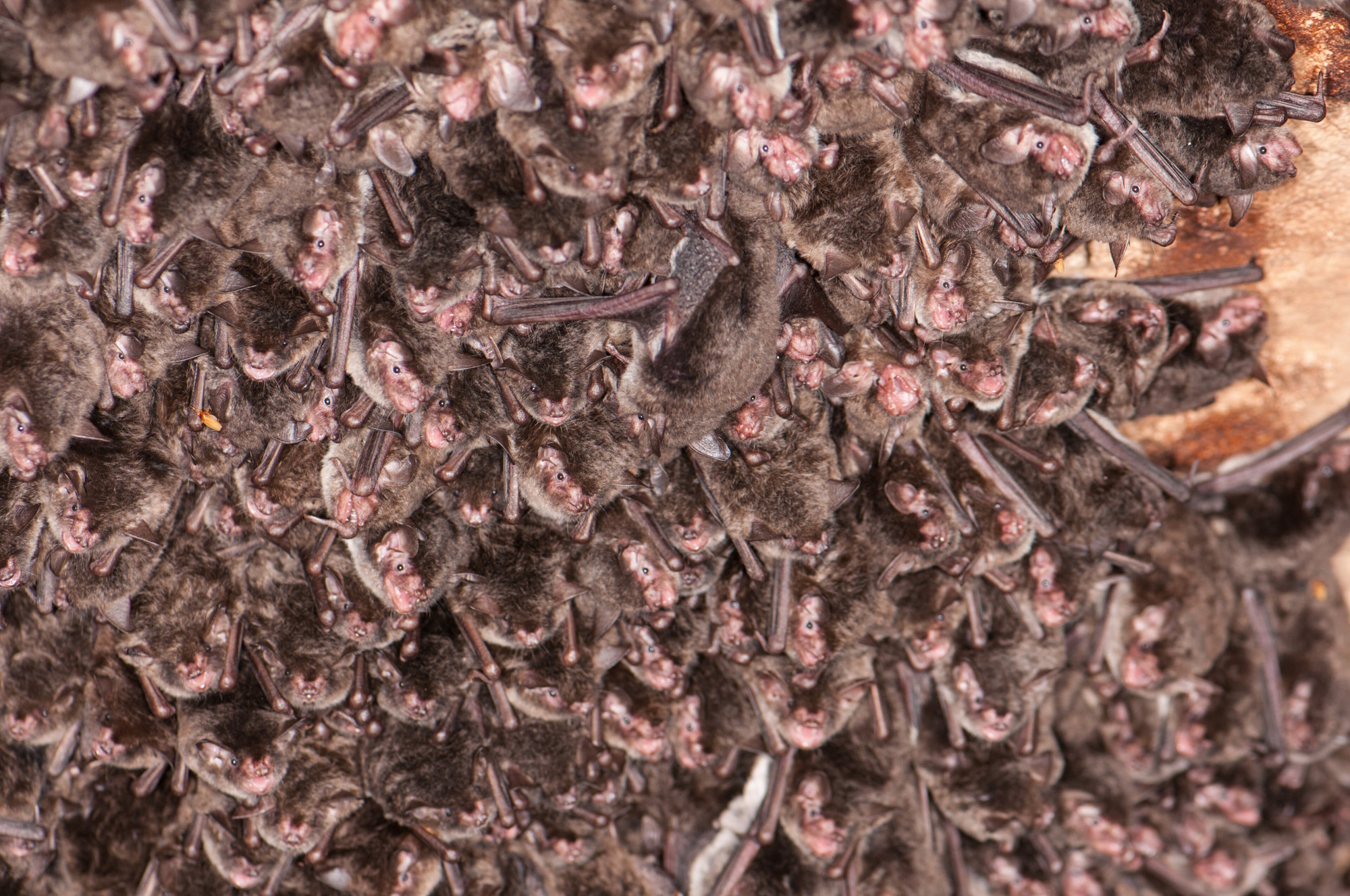
Photo Pete Pattavina, U.S. Fish and Wildlife Service (opens in a new tab) / Wikimedia Commons, Public domain (opens in a new tab)
At a glance
- Size
- Body about 8 to 10 cm; wingspan about 24 to 27 cm
- Weight
- About 5 to 8 g
- Habitat
- Swamps, river bottoms and forests near water across the Southeast
- Diet
- Mosquitoes, midges, caddisflies, moths, beetles and other insects caught over water
- Active
- Night, from dusk
- Roost
- Caves, culverts, bridges, hollow trees and buildings
- Young
- Usually twins
- Rabies vector
- Yes
Identification
- Key marks
- Thick, woolly fur, grey to orange-brown; belly fur whitish at the tips; long pointed tragus inside the ear; large feet with long toe hairs
- Told apart from
- Little brown bat, which has glossy rather than woolly fur and occurs mainly farther north
- Told apart from
- Evening bat, which has a short, blunt tragus
- Where to look
- Under bridges and in culverts over water; in caves in the Florida and southern Georgia limestone country
Behaviour
Southeastern myotis bats forage low over water — ponds, swamps, slow rivers — catching insects close to the surface. By day they roost in caves, culverts, the undersides of bridges, hollow trees such as tupelos, and buildings.
Where caves are available, especially in Florida, females gather in large maternity colonies that can number in the thousands. Elsewhere, including much of Georgia, colonies are smaller and scattered in hollow trees and structures. They do not hibernate as deeply as northern bats, and in the South they may be active on mild winter nights.
Why they matter
Because they hunt so close to the water, southeastern myotis bats feed heavily on insects that emerge from it, including mosquitoes and midges, and they are part of the link between swamp water and the forest around it.
They are also unusual among North American myotis bats in regularly giving birth to twins, and they were confirmed in 2017 as one of the species affected by white-nose syndrome.
Reproduction and lifecycle
Mating — autumn, with fertilisation delayed until spring
Birth — late April and May, usually two pups
Nursing — pups are left clustered in the roost while mothers feed
Flight — at about five to six weeks old
Independence — by early summer
Lifespan — not well recorded in the wild
Living around people
- Bridge and culvert repairs in spring and summer can harm maternity colonies; bats should be checked for before work begins.
- Caves used by colonies should not be entered while bats are present.
- Protecting hollow trees in swamp forests keeps natural roosts.
- Never handle a bat with bare hands; bats are rabies vector species.
Misconceptions
- Bats under a bridge are a nuisance to be moved on. They are hunting the insects that breed in the water below.
- All small brown bats are the same species. Several look alike; this one is woolly-furred and southern.
- Bats that live in caves never leave them. Southeastern myotis bats move between caves, trees, bridges and buildings.
Related species
Seasonal activity
When this species is breeding, and when there are nests on the ground. Mowing during the shaded months is how most nests are found.
| Jan | Feb | Mar | Apr | May | Jun | Jul | Aug | Sep | Oct | Nov | Dec | |
|---|---|---|---|---|---|---|---|---|---|---|---|---|
| Breeding | Jan: no | Feb: no | Mar: no | Apr: no | May: no | Jun: no | Jul: no | Aug: no | Sep: no | Oct: no | Nov: no | Dec: no |
| Active nests | Jan: no | Feb: no | Mar: no | Apr: no | May: no | Jun: no | Jul: no | Aug: no | Sep: no | Oct: no | Nov: no | Dec: no |
| Notes | Torpid in caves, culverts and hollow trees; active on warm nights | Activity increases | Females gather in maternity roosts; pregnancies begin | Maternity colonies grow | Pups are born, usually twins | Young begin to fly at about five to six weeks old | Young are independent | Colonies begin to disperse | Autumn mating | Bats move to winter roosts | Activity slows in cool weather | Torpid in cold spells |
Where it lives
Recorded in 16 states and provinces. Each one links to the other animals there, and to the rehabilitators licensed for them.
Treated as a rabies-vector species in Alabama, Arkansas, Florida, Georgia, Illinois, Indiana, Kentucky, Louisiana, Mississippi, Missouri, North Carolina, Oklahoma, South Carolina, Tennessee, Texas and Virginia. There, only a certified rehabilitator may take one.
If you found one
Answer a few questions and you will get a specific answer for what you are looking at.
I found an animal