
Species
Silver-haired bat
Lasionycteris noctivagans
A black bat frosted with silver, a slow and graceful flier that winters in the South.
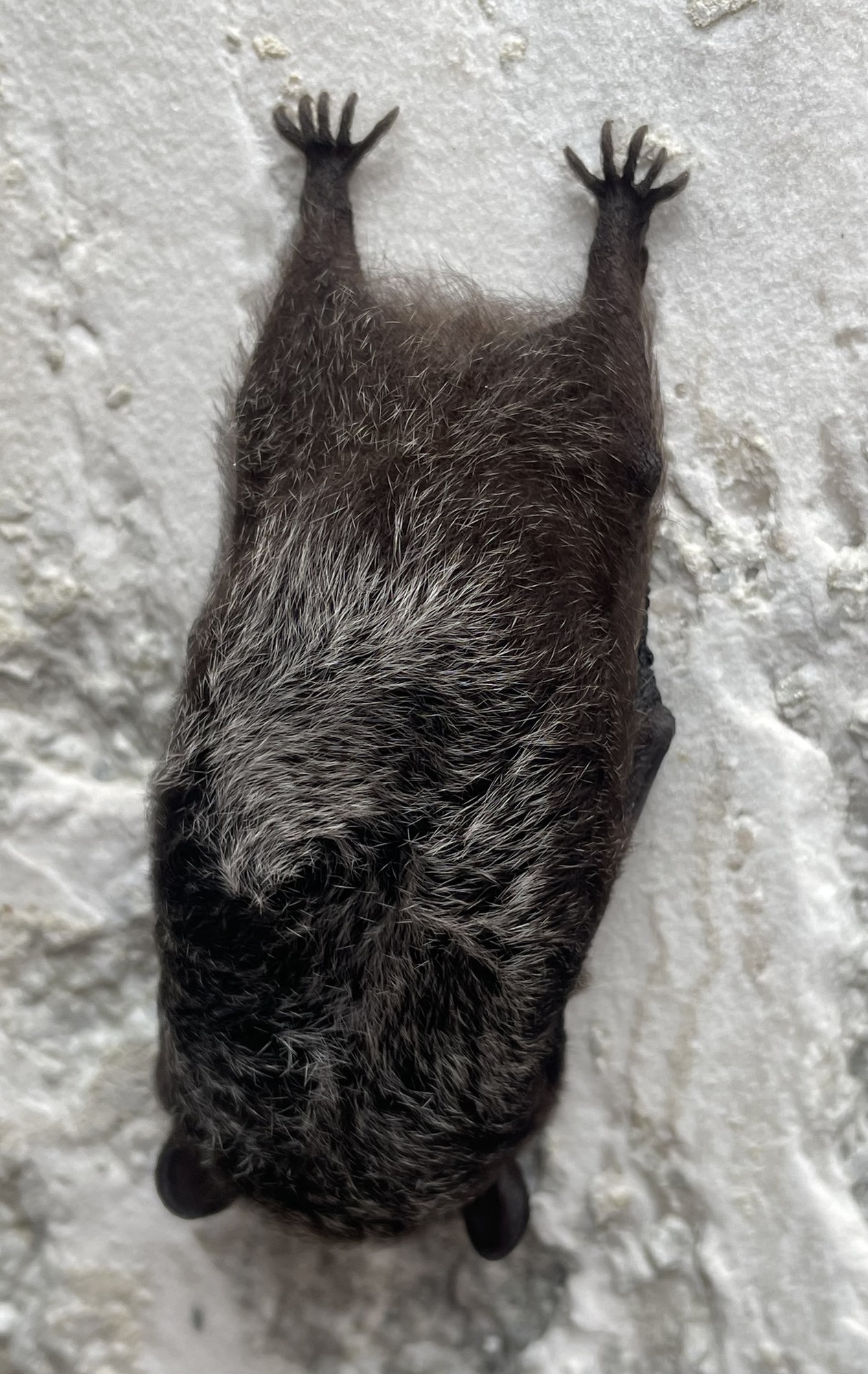
Photo Sam Kieschnick (opens in a new tab) / iNaturalist, CC BY 4.0 (opens in a new tab)
At a glance
- Size
- Body about 9 to 11 cm; wingspan about 27 to 31 cm
- Weight
- About 8 to 12 g
- Habitat
- Forests, especially near water, and wooded neighbourhoods
- Diet
- Moths, flies, midges, caddisflies, beetles and other soft-bodied insects
- Active
- Night, emerging later than most bats
- Roost
- Behind loose bark, in tree cracks and cavities, and sometimes in woodpiles and buildings
- Young
- Usually two pups
- Rabies vector
- Yes
Identification
- Key marks
- Black to dark brown fur with silver-white tips on the back, giving a frosted look; short, rounded, bare black ears
- Tail membrane
- Furred only on its upper surface near the body
- Told apart from
- Hoary bat, which is larger, brown and yellow-throated
- Told apart from
- Big brown bat, which is plain brown without silver tips
- Where to look
- Winter roosts in woodpiles, under bark and in outbuildings in the South; foraging over ponds and streams
Behaviour
Silver-haired bats are slow, agile fliers that hunt low over water, along forest trails and in clearings. They usually emerge late in the evening, which is where their scientific name, "night-wandering", comes from.
They are migrants. Many spend the summer in northern forests and move south for the winter, and in Georgia they are mainly winter residents, sheltering behind bark, in tree hollows, rock crevices, woodpiles and sheds, and waking on mild nights to feed.
Why they matter
Silver-haired bats feed heavily on the small, soft insects that rise from ponds and streams — midges, caddisflies and mayflies — and on moths, linking the insect life of the water to the forest around it.
They also show how much wildlife depends on dead wood. Loose bark, hollow trees and old woodpiles are their bedrooms, and a tidy woodland with every dead tree removed has nowhere for them to sleep.
Reproduction and lifecycle
Mating — autumn; fertilisation is delayed until spring
Gestation — about 50 to 60 days after fertilisation
Birth — June and early July, usually two pups
Flight — at about three to four weeks old
Independence — by late summer
Lifespan — up to about 12 years has been recorded; much less is usual
Living around people
- Check stacked firewood before moving it in winter; silver-haired bats sometimes sleep between the logs.
- Leaving standing dead trees where they are safe gives roosts.
- Never handle a bat with bare hands; a variant of rabies associated with silver-haired and tricolored bats has been involved in a notable share of the rare human rabies cases in the United States.
- A bat found in a woodpile or shed in winter is usually just asleep; leave it where it is.
Misconceptions
- A bat sleeping in a woodpile is sick. In winter this is normal for silver-haired bats.
- Only a bite you can feel matters. Bat teeth are tiny; anyone who wakes to find a bat in the room, or who has handled one, should speak to a doctor.
- Bats that live in the north stay there all winter. Many silver-haired bats fly hundreds of kilometres south.
Related species
Seasonal activity
When this species is breeding, and when there are nests on the ground. Mowing during the shaded months is how most nests are found.
| Jan | Feb | Mar | Apr | May | Jun | Jul | Aug | Sep | Oct | Nov | Dec | |
|---|---|---|---|---|---|---|---|---|---|---|---|---|
| Breeding | Jan: no | Feb: no | Mar: no | Apr: no | May: no | Jun: no | Jul: no | Aug: no | Sep: no | Oct: no | Nov: no | Dec: no |
| Active nests | Jan: no | Feb: no | Mar: no | Apr: no | May: no | Jun: no | Jul: no | Aug: no | Sep: no | Oct: no | Nov: no | Dec: no |
| Notes | Wintering bats roost in the South; torpid in cold weather | Active on warm nights | Northward migration begins | Most leave the Southeast for northern summer ranges | Females gather in small maternity colonies in tree cavities in the north | Pups are born, usually two | Young begin to fly at about three to four weeks old | Young are independent | Southward migration begins | Migrants arrive in the Southeast | Wintering bats settle into bark crevices, woodpiles and outbuildings | Mostly torpid; active on mild evenings |
Where it lives
Recorded in 58 states and provinces. Each one links to the other animals there, and to the rehabilitators licensed for them.
Treated as a rabies-vector species in Alabama, Alaska, Arizona, Arkansas, California, Colorado, Connecticut, Delaware, District of Columbia, Florida, Georgia, Idaho, Illinois, Indiana, Iowa, Kansas, Kentucky, Louisiana, Maine, Maryland, Massachusetts, Michigan, Minnesota, Mississippi, Missouri, Montana, Nebraska, Nevada, New Hampshire, New Jersey, New Mexico, New York, North Carolina, North Dakota, Ohio, Oklahoma, Oregon, Pennsylvania, Rhode Island, South Carolina, South Dakota, Tennessee, Texas, Utah, Vermont, Virginia, Washington, West Virginia, Wisconsin, Wyoming, Alberta, British Columbia, Manitoba, New Brunswick, Nova Scotia, Ontario, Quebec and Saskatchewan. There, only a certified rehabilitator may take one.
United States
- Alabama
- Alaska
- Arizona
- Arkansas
- California
- Colorado
- Connecticut
- Delaware
- District of Columbia
- Florida
- Georgia
- Idaho
- Illinois
- Indiana
- Iowa
- Kansas
- Kentucky
- Louisiana
- Maine
- Maryland
- Massachusetts
- Michigan
- Minnesota
- Mississippi
- Missouri
- Montana
- Nebraska
- Nevada
- New Hampshire
- New Jersey
- New Mexico
- New York
- North Carolina
- North Dakota
- Ohio
- Oklahoma
- Oregon
- Pennsylvania
- Rhode Island
- South Carolina
- South Dakota
- Tennessee
- Texas
- Utah
- Vermont
- Virginia
- Washington
- West Virginia
- Wisconsin
- Wyoming
If you found one
Answer a few questions and you will get a specific answer for what you are looking at.
I found an animal