
Species
Hoary bat
Lasiurus cinereus
The largest bat in eastern North America, frosted silver, and a traveller of remarkable distances.
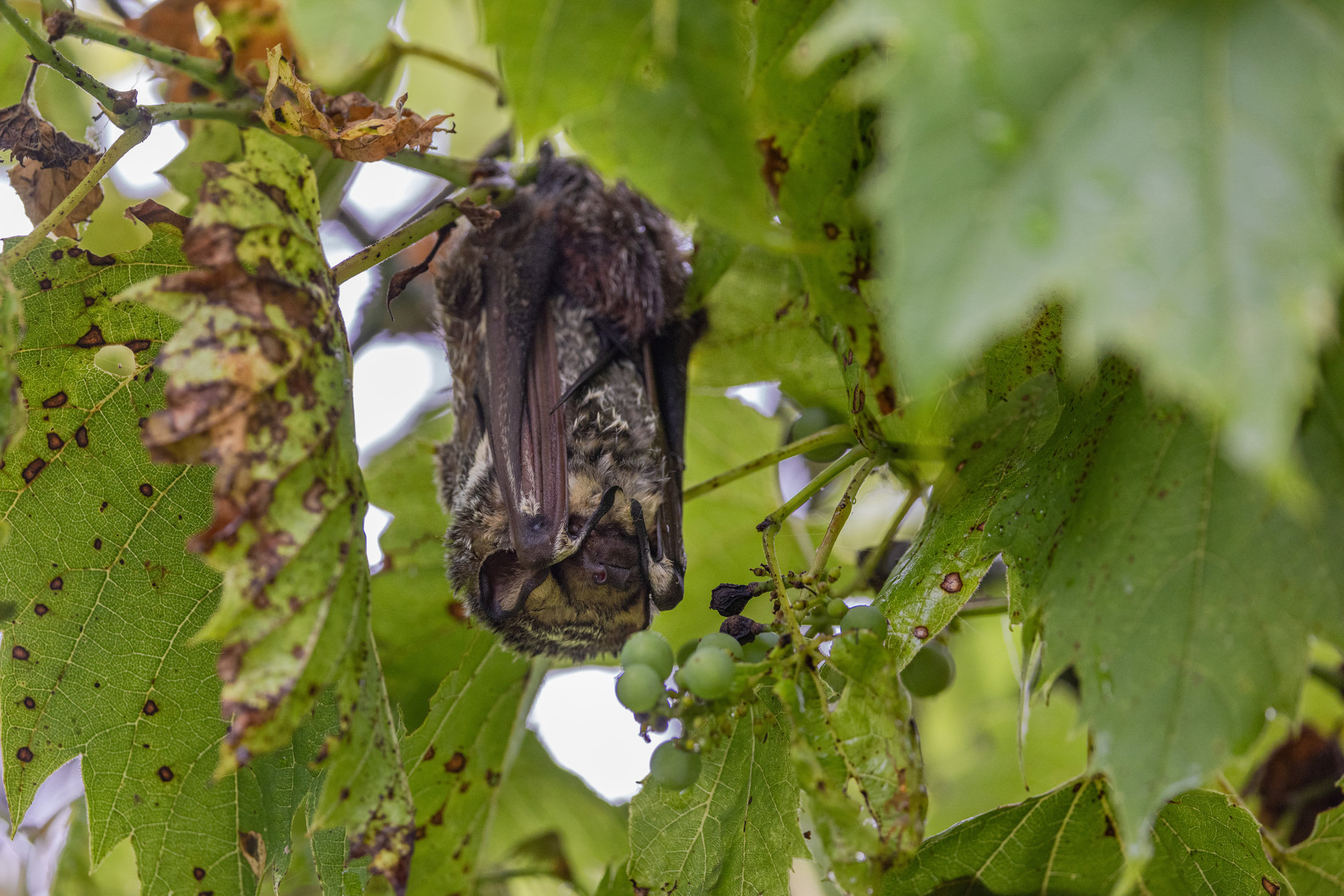
Photo Kalvin Chan (opens in a new tab) / iNaturalist, CC BY 4.0 (opens in a new tab)
At a glance
- Size
- Body about 13 to 15 cm; wingspan up to about 40 cm
- Weight
- About 20 to 35 g
- Habitat
- Forests and wooded edges across most of the continent
- Diet
- Moths above all, with beetles, flies, grasshoppers and dragonflies
- Active
- Night, usually starting well after dark
- Roost
- Alone in tree foliage, a few metres up
- Young
- Usually two pups
- Rabies vector
- Yes
Identification
- Key marks
- Large; dense mahogany-brown fur heavily frosted with white, giving a silvery look; yellowish throat and yellow-rimmed ears
- Tail membrane
- Thickly furred, used as a blanket
- Told apart from
- Eastern red bat, which is smaller and red-orange
- Told apart from
- Silver-haired bat, which is black with silver tips and has a bare tail membrane
- Where to look
- Almost never seen roosting; most sightings are of bats flying high over open ground at night, or during migration
Behaviour
Hoary bats are solitary tree bats that spend the day hidden in the leaves near the ends of branches, usually at the forest edge. They are fast, direct fliers and hunt high over clearings, lakes and treetops, typically emerging later in the evening than most bats.
They are long-distance migrants. Many that summer in the north travel to the southern United States and Mexico for the winter, and in the Southeast, including Georgia, they are seen mostly during migration and winter.
Their calls are lower in pitch than most bats', and some are audible to people with good hearing as faint ticking.
Why they matter
Hoary bats hunt large, strong-flying insects — big moths and beetles — that smaller bats cannot manage, over open landscapes that few other predators patrol at night.
They are also a warning signal. Hoary bats are the species most often killed at wind turbines in North America, and researchers study them to work out how turbines can be operated more safely for all migrating bats.
Reproduction and lifecycle
Mating — thought to be in autumn, during migration; fertilisation is delayed until spring
Gestation — about 90 days after fertilisation
Birth — June, usually two pups
Nursing — pups cling to their mother at first, then wait in the roost while she hunts
Flight — at about four to five weeks old
Independence — by late summer
Lifespan — not well recorded in the wild
Living around people
- Wind turbines are the greatest known human-caused threat to this bat.
- Hoary bats seldom come near buildings, so most encounters are with a bat found on the ground during migration.
- A grounded hoary bat should never be picked up with bare hands; bats are rabies vector species.
- Keeping large trees at field and forest edges keeps roosting places for migrants.
Misconceptions
- A big bat is a vampire bat. Vampire bats live in Latin America; the hoary bat eats insects, and its size is simply what a long-distance flier needs.
- Bats hibernate in caves all winter. Hoary bats migrate instead, and winter in trees in the South.
- A bat found on the ground can be put back in a tree. A grounded bat usually has something wrong with it and needs a licensed wildlife rehabilitator, not handling.
Related species
Seasonal activity
When this species is breeding, and when there are nests on the ground. Mowing during the shaded months is how most nests are found.
| Jan | Feb | Mar | Apr | May | Jun | Jul | Aug | Sep | Oct | Nov | Dec | |
|---|---|---|---|---|---|---|---|---|---|---|---|---|
| Breeding | Jan: no | Feb: no | Mar: no | Apr: no | May: no | Jun: no | Jul: no | Aug: no | Sep: no | Oct: no | Nov: no | Dec: no |
| Active nests | Jan: no | Feb: no | Mar: no | Apr: no | May: no | Jun: no | Jul: no | Aug: no | Sep: no | Oct: no | Nov: no | Dec: no |
| Notes | Wintering bats present in the South; mostly torpid, active on mild nights | Wintering bats begin to stir | Northward migration begins | Migrants pass through the Southeast heading north | Females reach summer ranges, mostly farther north | Pups are born, usually twins | Young begin to fly at about four to five weeks old | Young are independent; migration begins in the north | Southward migration; mating is thought to happen now | Migration peaks through the Southeast | Wintering bats settle in the southern states and Mexico | Mostly torpid; active on mild evenings |
Where it lives
Recorded in 85 states and provinces. Each one links to the other animals there, and to the rehabilitators licensed for them.
Treated as a rabies-vector species in Alabama, Alaska, Arizona, Arkansas, California, Colorado, Connecticut, Delaware, District of Columbia, Florida, Georgia, Idaho, Illinois, Indiana, Iowa, Kansas, Kentucky, Louisiana, Maine, Maryland, Massachusetts, Michigan, Minnesota, Mississippi, Missouri, Montana, Nebraska, Nevada, New Hampshire, New Jersey, New Mexico, New York, North Carolina, North Dakota, Ohio, Oklahoma, Oregon, Pennsylvania, Rhode Island, South Carolina, South Dakota, Tennessee, Texas, Utah, Vermont, Virginia, Washington, West Virginia, Wisconsin, Wyoming, Alberta, British Columbia, Manitoba, New Brunswick, Newfoundland and Labrador, Nova Scotia, Ontario, Prince Edward Island, Quebec, Saskatchewan, Baja California, Baja California Sur, Chihuahua, Coahuila, Durango, Guanajuato, Guerrero, Hidalgo, Jalisco, Mexico City, Michoacan, Morelos, Nayarit, Nuevo Leon, Oaxaca, Puebla, Queretaro, San Luis Potosi, Sinaloa, Sonora, State of Mexico, Tamaulipas, Tlaxcala, Veracruz and Zacatecas. There, only a certified rehabilitator may take one.
United States
- Alabama
- Alaska
- Arizona
- Arkansas
- California
- Colorado
- Connecticut
- Delaware
- District of Columbia
- Florida
- Georgia
- Idaho
- Illinois
- Indiana
- Iowa
- Kansas
- Kentucky
- Louisiana
- Maine
- Maryland
- Massachusetts
- Michigan
- Minnesota
- Mississippi
- Missouri
- Montana
- Nebraska
- Nevada
- New Hampshire
- New Jersey
- New Mexico
- New York
- North Carolina
- North Dakota
- Ohio
- Oklahoma
- Oregon
- Pennsylvania
- Rhode Island
- South Carolina
- South Dakota
- Tennessee
- Texas
- Utah
- Vermont
- Virginia
- Washington
- West Virginia
- Wisconsin
- Wyoming
Canada
If you found one
Answer a few questions and you will get a specific answer for what you are looking at.
I found an animal