
Species
Eastern small-footed bat
Myotis leibii
The smallest myotis bat in the East, black-masked, and a sleeper in rock cracks and talus.
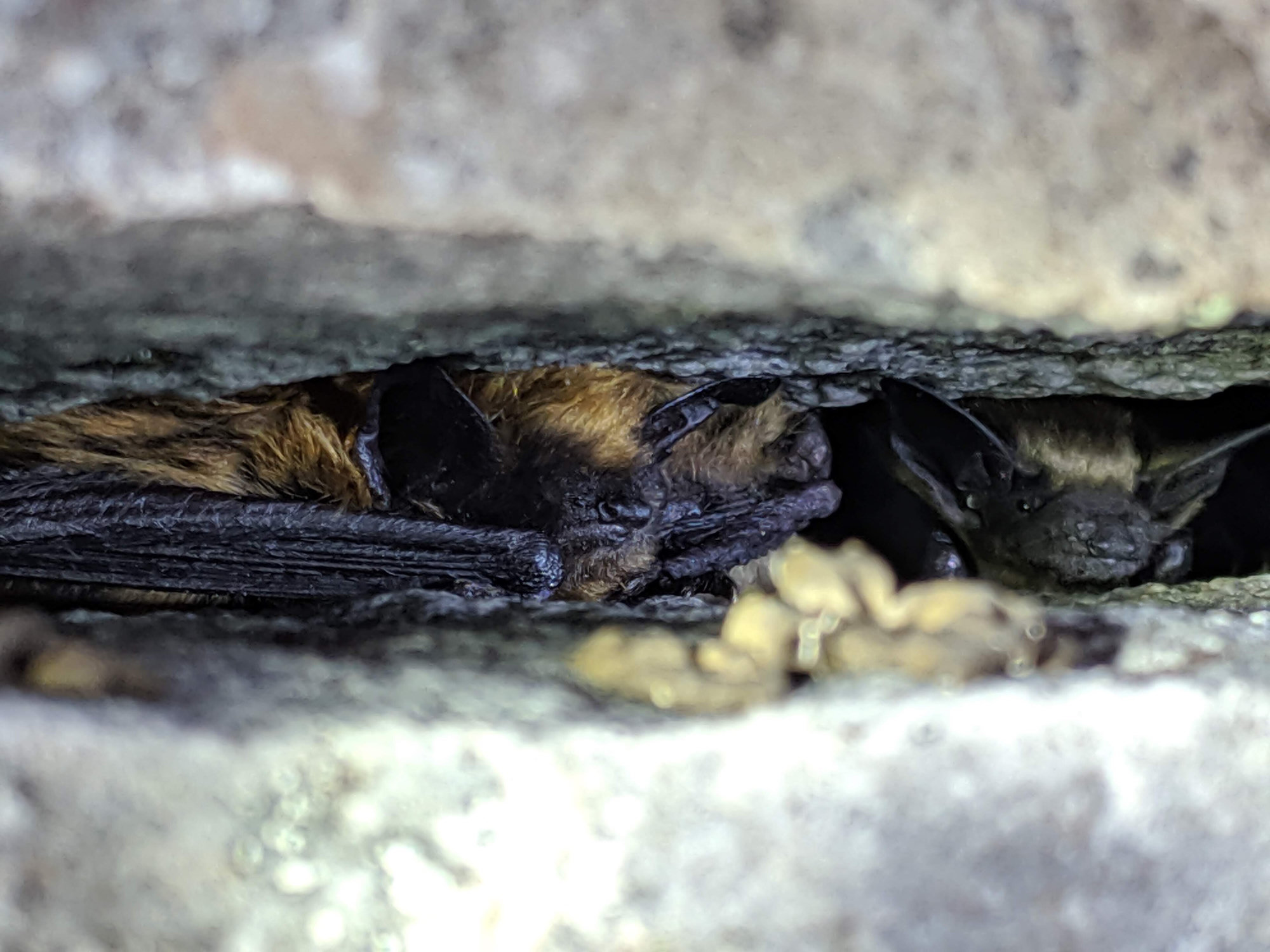
Photo Talus.rock (opens in a new tab) / Wikimedia Commons, CC BY-SA 4.0 (opens in a new tab)
At a glance
- Size
- Body about 7 to 8 cm; wingspan about 21 to 25 cm
- Weight
- About 3 to 6 g
- Habitat
- Mountain forests with rock outcrops, cliffs, talus and boulder fields
- Diet
- Small flying insects, including moths, flies, beetles and mosquitoes
- Active
- Night, often flying slowly and low
- Roost
- Crevices in rocks, cliffs and talus; also under bridges and in buildings
- Young
- One pup a year
- Rabies vector
- Yes
Identification
- Key marks
- Tiny; glossy yellowish-brown fur; a distinct black mask across the face; black ears; very small feet
- Told apart from
- Little brown bat, which is larger with no black mask
- Told apart from
- Tricolored bat, which has pink forearms and no mask
- Where to look
- Deep in cracks in rock outcrops and among talus boulders on mountain slopes
Behaviour
Eastern small-footed bats are among the smallest bats in North America. By day they tuck themselves into narrow cracks in rock — cliffs, outcrops, the spaces between talus boulders — and sometimes under bridges or in building walls.
They hunt with slow, fluttering flight close to the ground and over streams. In winter they hibernate in caves and mines, often near the entrance in cold, dry spots, and are among the last bats to enter hibernation in autumn and the first to leave in spring.
They are rare throughout their range, and in Georgia are known only from the mountains of the north.
Why they matter
These bats are part of the life of mountain rock — a habitat most people think of as bare — and they show how important cliffs, outcrops and scree slopes are to wildlife.
Because they are so small and so hard to find, much of their biology is still poorly known, and every colony discovered adds to what scientists understand about them.
Reproduction and lifecycle
Mating — autumn, with fertilisation delayed until spring
Birth — June, a single pup
Flight — at about four weeks old
Independence — by midsummer
Lifespan — up to about 12 years has been recorded
Living around people
- Rock climbers and hikers moving rocks in talus fields can disturb roosting bats; look before reaching into crevices.
- Stay out of caves and mines where bats hibernate in winter.
- Never handle a bat with bare hands; bats are rabies vector species.
Misconceptions
- Bare rock slopes have no wildlife. Talus and outcrops hide some of our rarest bats.
- All bats roost in caves in summer. This one spends summer days in rock cracks outside.
- Tiny bats are babies. Adults weigh about as much as a coin.
Related species
Seasonal activity
When this species is breeding, and when there are nests on the ground. Mowing during the shaded months is how most nests are found.
| Jan | Feb | Mar | Apr | May | Jun | Jul | Aug | Sep | Oct | Nov | Dec | |
|---|---|---|---|---|---|---|---|---|---|---|---|---|
| Breeding | Jan: no | Feb: no | Mar: no | Apr: no | May: no | Jun: no | Jul: no | Aug: no | Sep: no | Oct: no | Nov: no | Dec: no |
| Active nests | Jan: no | Feb: no | Mar: no | Apr: no | May: no | Jun: no | Jul: no | Aug: no | Sep: no | Oct: no | Nov: no | Dec: no |
| Notes | Hibernating in cold, dry parts of caves and mines | Hibernation continues | Among the first bats to leave hibernation | Moving to summer rock roosts | Females gather in small maternity groups in rock crevices | Pups are born, one per female | Young begin to fly | Young are independent | Swarming and mating at cave entrances | Late into hibernation | Hibernating | Hibernating |
Where it lives
Recorded in 23 states and provinces. Each one links to the other animals there, and to the rehabilitators licensed for them.
Treated as a rabies-vector species in Alabama, Arkansas, Connecticut, Georgia, Kentucky, Maine, Maryland, Massachusetts, Missouri, New Hampshire, New Jersey, New York, North Carolina, Ohio, Oklahoma, Pennsylvania, South Carolina, Tennessee, Vermont, Virginia, West Virginia, Ontario and Quebec. There, only a certified rehabilitator may take one.
United States
If you found one
Answer a few questions and you will get a specific answer for what you are looking at.
I found an animal