
Species
Southern short-tailed shrew
Blarina carolinensis
A small grey shrew of southern woods and fields with a venomous bite and a restless appetite.
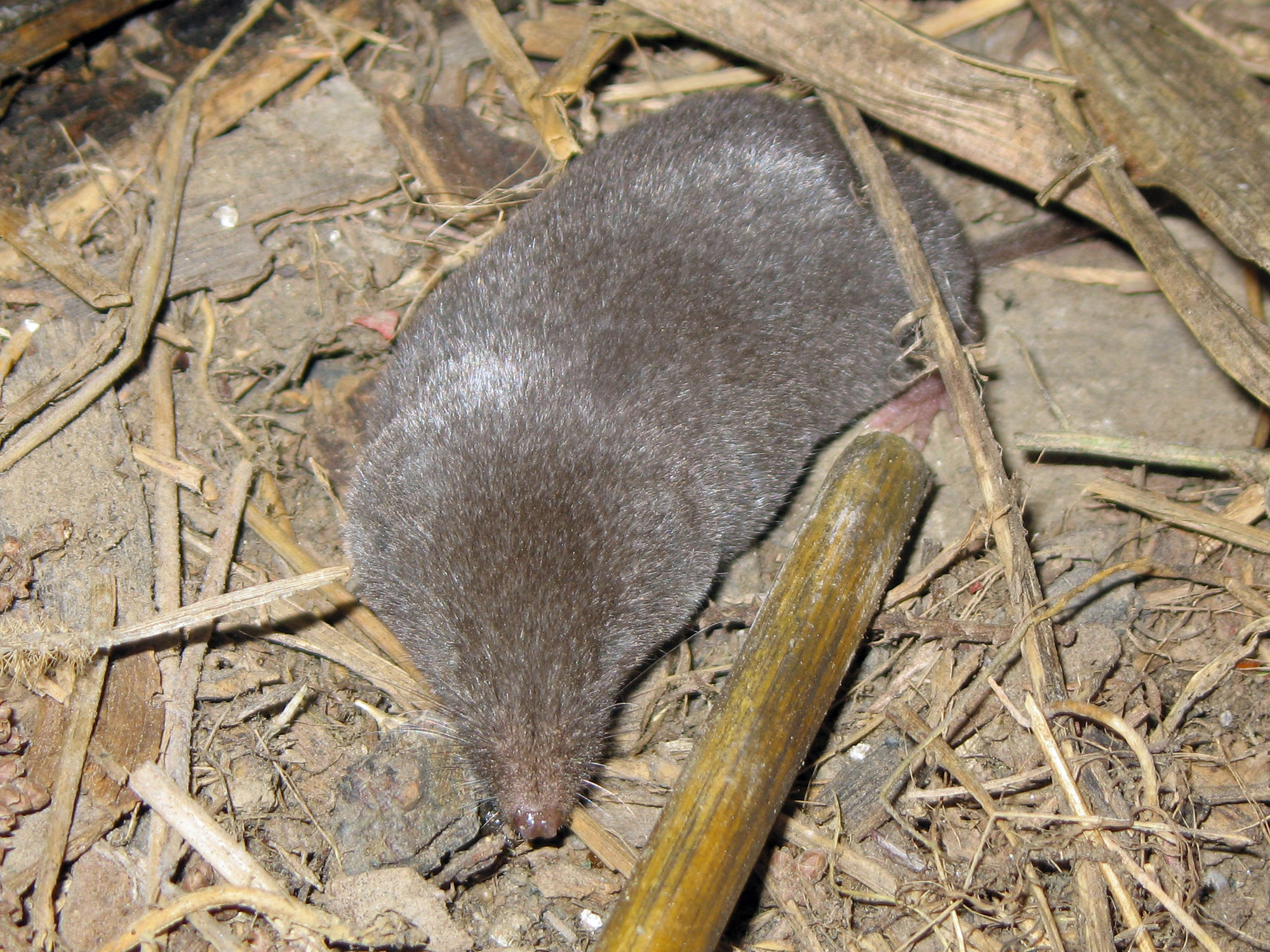
Photo Greg Schechter from San Francisco, USA (opens in a new tab) / Wikimedia Commons, CC BY 2.0 (opens in a new tab)
At a glance
- Size
- Body about 7 to 9 cm; tail about 2 cm
- Weight
- About 7 to 15 g
- Habitat
- Forests, fields, swamp edges and gardens with leaf litter or loose soil
- Diet
- Earthworms, insects, snails, spiders, fungi and seeds
- Active
- Day and night, all year
- Shelter
- Runways under leaf litter and shallow burrows
- Lifespan
- Usually a year or two
- Rabies vector
- No
Identification
- Key marks
- Dark grey, velvety fur; short tail; tiny eyes; ears hidden in the fur
- Told apart from
- Northern short-tailed shrew, which is larger and lives mainly north of Georgia's Fall Line
- Told apart from
- Least shrew, which is smaller and brown
- Told apart from
- Southeastern shrew, which has a long tail
- Where to look
- Under logs, boards and leaf litter; crossing paths; in Georgia, most of the coastal plain and piedmont
Behaviour
Southern short-tailed shrews live under the leaf litter and in the top layer of soil, running through their own tunnels and those of moles and voles. They hunt constantly, because their small bodies burn energy fast.
Like their northern relative, they have toxic saliva that helps them subdue prey, and they will cache food. They are active all year.
Why they matter
These shrews are one of the most common predators of soil insects and snails in southern woods and gardens, and in turn a food source for owls, hawks, foxes and snakes.
They are also a good example of how much life happens in the leaf layer that tidy gardens remove.
Reproduction and lifecycle
Breeding — much of the year in the South, with spring and autumn peaks
Gestation — about three weeks
Litter — usually two to six young, born in a nest of leaves and grass
Weaning — at about three weeks old
Lifespan — usually no more than two years
Living around people
- Cats kill many shrews, often without eating them.
- Leaf litter under shrubs and in beds is where shrews hunt; leaving some is good for them.
- A shrew in a building can be guided out with a container and a sheet of card; wear gloves, as its bite can hurt.
Misconceptions
- Shrews are rodents. They are insect-eaters more closely related to moles.
- Shrews damage plants. They eat insects and snails, not roots.
- A small grey animal in the leaves is a baby mouse. It is often an adult shrew.
Related species
Seasonal activity
When this species is breeding, and when there are nests on the ground. Mowing during the shaded months is how most nests are found.
| Jan | Feb | Mar | Apr | May | Jun | Jul | Aug | Sep | Oct | Nov | Dec | |
|---|---|---|---|---|---|---|---|---|---|---|---|---|
| Breeding | Jan: no | Feb: no | Mar: no | Apr: no | May: no | Jun: no | Jul: no | Aug: no | Sep: no | Oct: no | Nov: no | Dec: no |
| Active nests | Jan: no | Feb: no | Mar: no | Apr: no | May: no | Jun: no | Jul: no | Aug: no | Sep: no | Oct: no | Nov: no | Dec: no |
| Notes | Active in leaf litter; breeding may continue in mild weather | Breeding | Litters born in underground nests | Young leave the nest | Breeding continues | Young of the year disperse | Active; foraging slows in the hottest weather | Breeding continues in some areas | Autumn litters | Young disperse; many seen crossing paths | Active under leaves | Active; breeding in mild spells |
Where it lives
Recorded in 14 states and provinces. Each one links to the other animals there, and to the rehabilitators licensed for them.
If you found one
Answer a few questions and you will get a specific answer for what you are looking at.
I found an animal