
Species
Least shrew
Cryptotis parvus
A tiny brown shrew of grassy fields, unusually sociable for its kind.
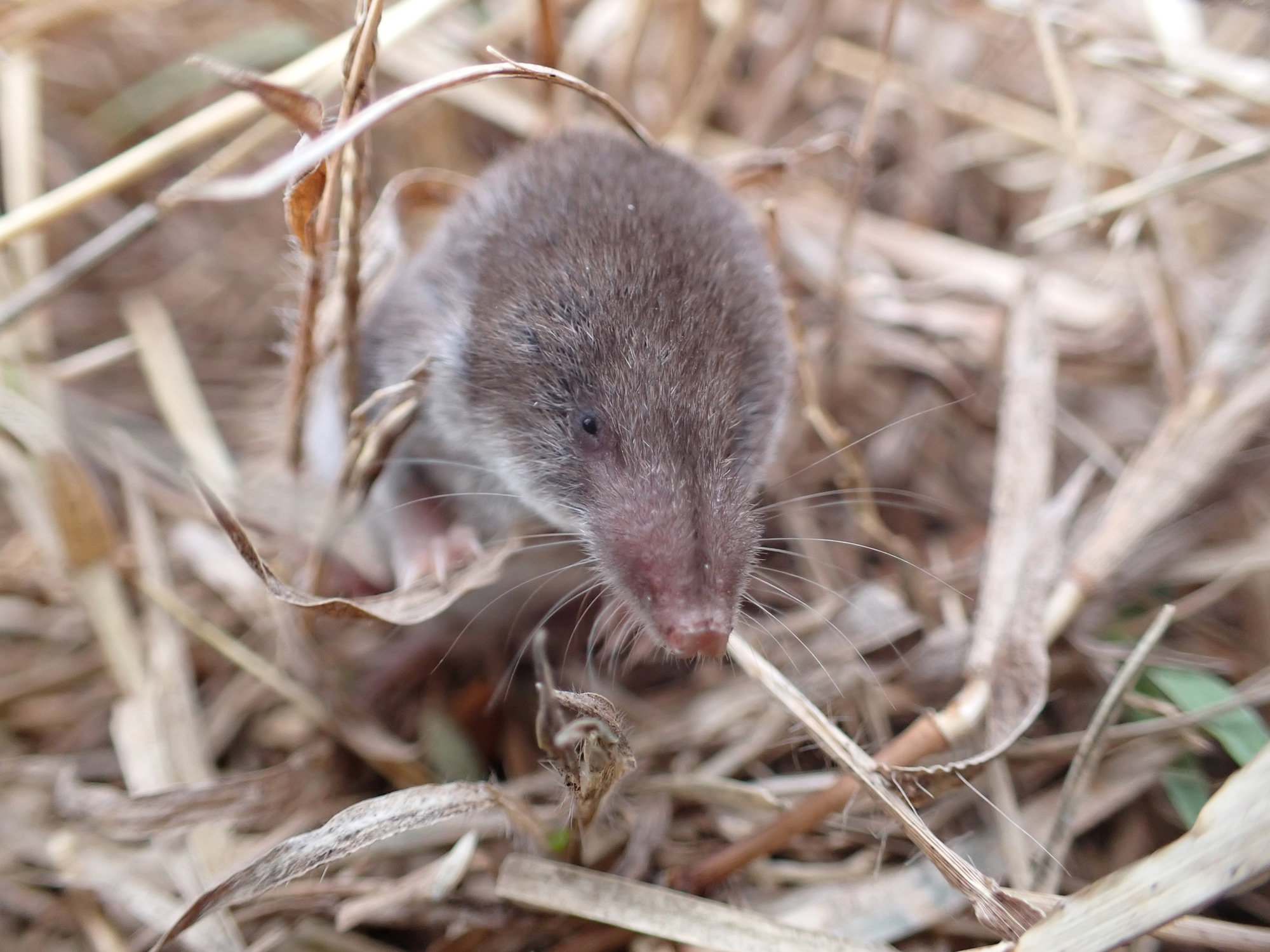
Photo Eric Cormier (opens in a new tab) / iNaturalist, CC BY-NC 4.0 (opens in a new tab)
At a glance
- Size
- Body about 5 to 6 cm; tail about 1.5 cm
- Weight
- About 4 to 7 g
- Habitat
- Grassy fields, meadows, pasture edges and brushy clearings
- Diet
- Insects and their larvae, earthworms, spiders, snails and centipedes
- Active
- Day and night, all year
- Shelter
- Nests under logs and stones and in shallow burrows
- Lifespan
- Usually a year or less in the wild
- Rabies vector
- No
Identification
- Key marks
- Tiny; brown back and paler grey belly; very short tail; tiny eyes and ears hidden in the fur
- Told apart from
- Short-tailed shrews, which are larger and grey
- Told apart from
- Southeastern shrew, which has a long tail
- Told apart from
- Harvest mice and other mice, which have large ears and eyes and long tails
- Where to look
- Under boards and logs in fields; in grass runways
Behaviour
Least shrews live in grassy places, using runways through the grass and the burrows of other small animals. Unusually for shrews, which are mostly solitary, several may share a nest, and groups have been found huddling together, which may help them keep warm.
They are fierce hunters for their size, attacking insects and even larger prey, and they sometimes enter beehives to eat the brood, which is where the name "bee shrew" comes from.
Why they matter
Least shrews are among the smallest mammals in North America, and they live at a pace that most animals cannot match, eating a large share of their weight in insects every day.
In grassland they are part of the base of the food web, eaten by owls, hawks, snakes and foxes, and they take many crop and pasture insects in return.
Reproduction and lifecycle
Breeding — much of the year in the South
Gestation — about three weeks
Litter — usually three to six young
Weaning — at about three weeks old
Maturity — within a month or two
Lifespan — rarely more than a year in the wild
Living around people
- Mowing fields in spring and summer destroys nests; mowing later or leaving strips of uncut grass helps.
- Cats kill many least shrews.
- A shrew in a building can be guided out with a container.
Misconceptions
- A tiny brown animal in the grass is a baby mouse. It is often a fully grown least shrew.
- Shrews live alone. Least shrews often share nests.
- Shrews eat seeds and plants. They are almost entirely insect-eaters.
Related species
Seasonal activity
When this species is breeding, and when there are nests on the ground. Mowing during the shaded months is how most nests are found.
| Jan | Feb | Mar | Apr | May | Jun | Jul | Aug | Sep | Oct | Nov | Dec | |
|---|---|---|---|---|---|---|---|---|---|---|---|---|
| Breeding | Jan: no | Feb: no | Mar: no | Apr: no | May: no | Jun: no | Jul: no | Aug: no | Sep: no | Oct: no | Nov: no | Dec: no |
| Active nests | Jan: no | Feb: no | Mar: no | Apr: no | May: no | Jun: no | Jul: no | Aug: no | Sep: no | Oct: no | Nov: no | Dec: no |
| Notes | Active; groups may share warm nests | Breeding begins in mild areas | Breeding | Litters born in grass nests | Young leave the nest at about three weeks old | Breeding continues | Young disperse through fields | Breeding continues | Autumn litters | Numbers at their highest | Groups may nest together as it cools | Active through winter |
Where it lives
Recorded in 46 states and provinces. Each one links to the other animals there, and to the rehabilitators licensed for them.
United States
- Alabama
- Arkansas
- Colorado
- Connecticut
- Delaware
- District of Columbia
- Florida
- Georgia
- Illinois
- Indiana
- Iowa
- Kansas
- Kentucky
- Louisiana
- Maryland
- Michigan
- Minnesota
- Mississippi
- Missouri
- Nebraska
- New Jersey
- New Mexico
- New York
- North Carolina
- Ohio
- Oklahoma
- Pennsylvania
- South Carolina
- South Dakota
- Tennessee
- Texas
- Virginia
- West Virginia
- Wisconsin
Canada
If you found one
Answer a few questions and you will get a specific answer for what you are looking at.
I found an animal