
Species
Eastern harvest mouse
Reithrodontomys humulis
A tiny grassland mouse that weaves ball-shaped nests of grass above the ground.
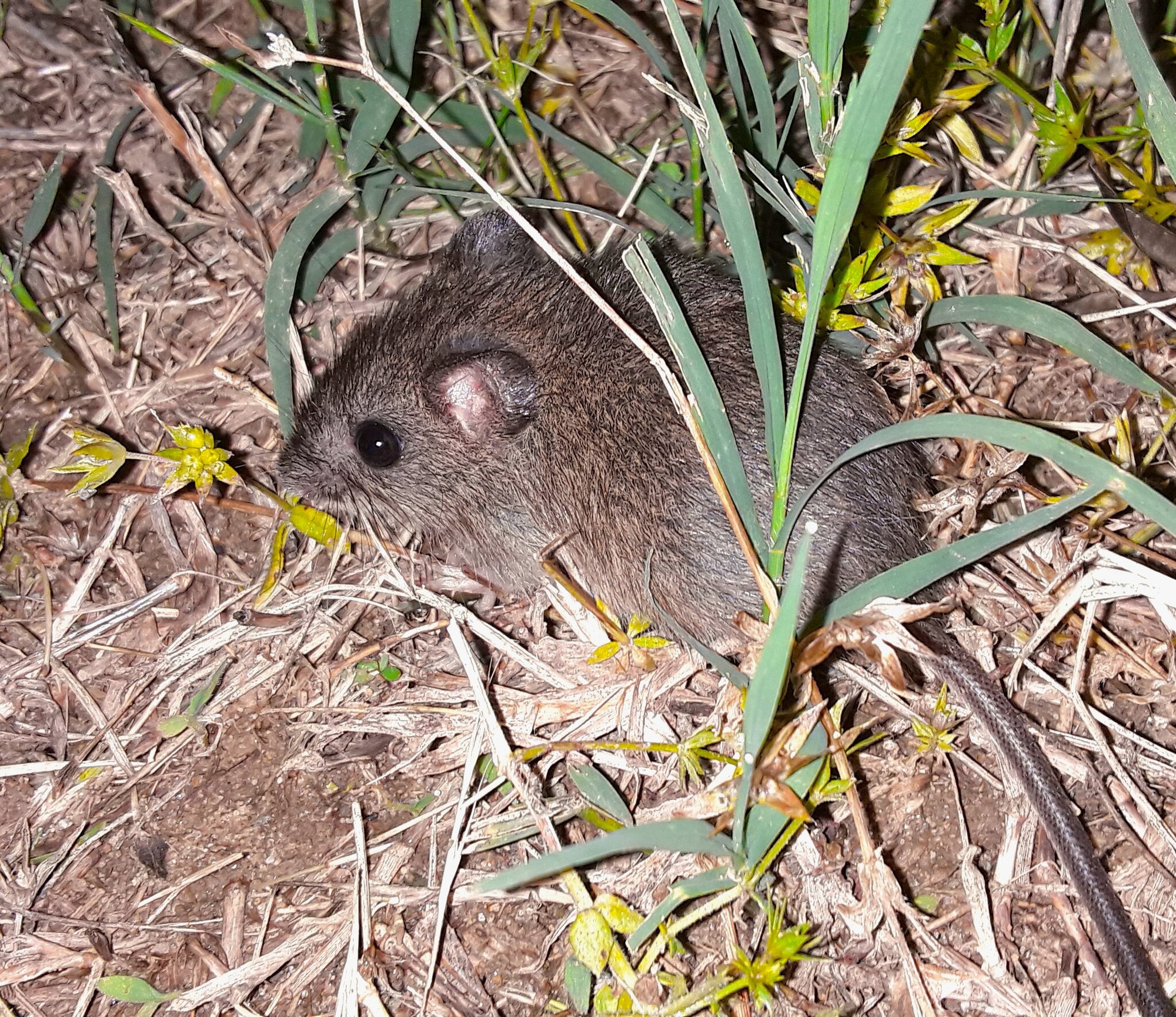
Photo stumpgazer (opens in a new tab) / iNaturalist, CC BY-NC 4.0 (opens in a new tab)
At a glance
- Size
- Body about 5 to 7 cm; tail about 5 to 6 cm
- Weight
- About 6 to 11 g
- Habitat
- Grassy fields, pastures, road edges and brushy clearings
- Diet
- Grass seeds, weed seeds, green shoots and some insects
- Active
- Night
- Shelter
- Ball-shaped nests of woven grass in dense grass or low shrubs
- Lifespan
- Usually a year or less
- Rabies vector
- No
Identification
- Key marks
- Tiny; brown back, often with a darker stripe down the middle; grey belly; long tail; each upper front tooth has a groove down its front
- Told apart from
- House mouse, which has a scaly, less furred tail and no grooved teeth
- Told apart from
- White-footed and deer mice, which are larger with bigger eyes and ears
- Where to look
- Tall grass and weedy fields; its woven nests may be found low in grass or shrubs
Behaviour
Eastern harvest mice are small, nimble climbers of grass stems. They weave round nests about the size of a tennis ball from shredded grass, usually a little above the ground in thick vegetation, and sometimes take over old bird nests.
They feed at night on seeds, climbing stems to reach seed heads, and use the runways of other small mammals to move through thick grass.
Why they matter
Harvest mice eat the seeds of many weedy plants, and they are a staple food for owls, foxes, snakes and other predators of fields and meadows.
Their nests are small works of craft, woven from hundreds of blades of grass.
Reproduction and lifecycle
Breeding — spring to autumn, and in mild winters in the South
Gestation — about three to four weeks
Litter — usually two to five young
Weaning — at about three weeks old
Lifespan — rarely more than a year
Living around people
- Mowing fields in spring and summer destroys nests; leaving strips of tall grass helps.
- Cats kill many small mice near homes.
- Like other wild rodents, they can carry diseases; avoid handling them.
Misconceptions
- All small mice are house mice. Many are native field mice, like this one, that never enter buildings.
- A ball of grass in a shrub is a bird nest. It may be a harvest mouse's home.
Related species
Seasonal activity
When this species is breeding, and when there are nests on the ground. Mowing during the shaded months is how most nests are found.
| Jan | Feb | Mar | Apr | May | Jun | Jul | Aug | Sep | Oct | Nov | Dec | |
|---|---|---|---|---|---|---|---|---|---|---|---|---|
| Breeding | Jan: no | Feb: no | Mar: no | Apr: no | May: no | Jun: no | Jul: no | Aug: no | Sep: no | Oct: no | Nov: no | Dec: no |
| Active nests | Jan: no | Feb: no | Mar: no | Apr: no | May: no | Jun: no | Jul: no | Aug: no | Sep: no | Oct: no | Nov: no | Dec: no |
| Notes | Active; several mice may share a nest for warmth | Active | Breeding begins | Litters born in woven nests | Breeding continues | Young leave the nest at about three weeks old | Breeding | Breeding continues | Numbers are at their highest | Autumn litters | Active on seeds in fields | Sharing nests in cold weather |
Where it lives
Recorded in 16 states and provinces. Each one links to the other animals there, and to the rehabilitators licensed for them.
If you found one
Answer a few questions and you will get a specific answer for what you are looking at.
I found an animal