
Species
House mouse
Mus musculus
A small, grey-brown mouse that came to North America with people and has lived alongside us ever since.
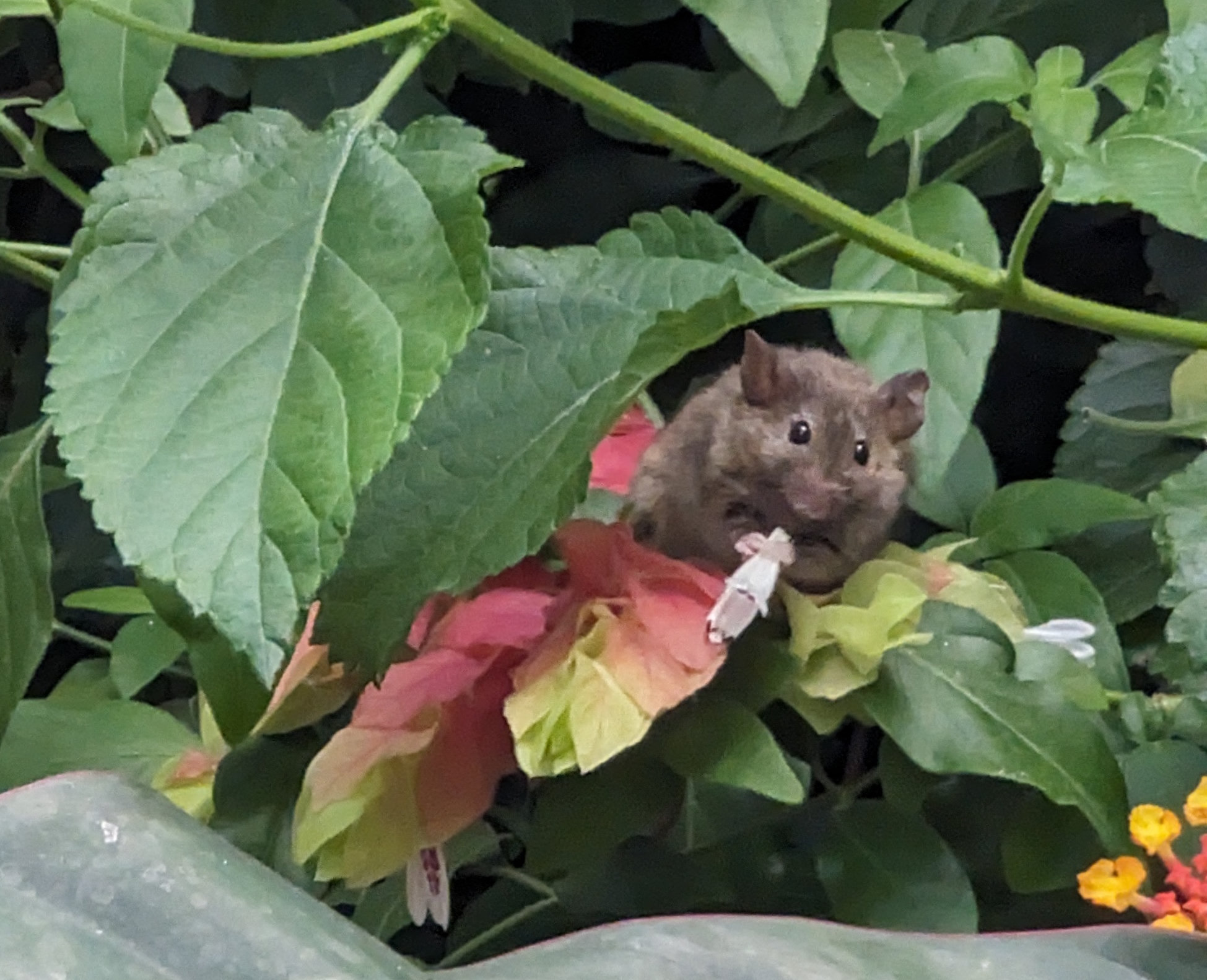
Photo Unknown photographer (opens in a new tab) / iNaturalist, CC0 1.0 (opens in a new tab)
At a glance
- Size
- Body about 7 to 10 cm; tail about 7 to 10 cm
- Weight
- About 12 to 30 g
- Habitat
- Buildings, farms, barns and fields near people, across North America
- Diet
- Seeds, grain and almost any human food, plus insects
- Active
- Mostly night
- Shelter
- Nests of shredded paper, fabric and insulation in walls, cupboards, sheds and burrows
- Origin
- Introduced from Europe and Asia with early settlers
- Rabies vector
- No
Identification
- Key marks
- Uniform grey-brown back, slightly paler belly; nearly naked, scaly tail about as long as the body; small eyes; large ears
- Signs
- Small dark droppings, gnawed packaging and a musky smell
- Told apart from
- White-footed and deer mice, which have white bellies and feet, bigger eyes and two-coloured tails
- Told apart from
- Young rats, which have larger heads and feet
- Where to look
- Buildings, barns and nearby fields
Behaviour
House mice live closely with people, in homes, barns and warehouses, and in fields nearby. They are curious, quick and good climbers, and live in family groups in which a dominant male and several females share a territory.
Males court females with complex ultrasonic songs, too high for people to hear. Scent marks in urine carry information about each mouse's identity, sex and status.
Why they matter
The house mouse is one of the most widespread mammals on Earth, and one of the most important to human knowledge: as the laboratory mouse, it has been central to research in genetics and medicine for more than a century.
In the wild it is also food for owls, hawks, snakes, foxes and cats, and a reminder that the animals living closest to us are wildlife too.
Reproduction and lifecycle
Breeding — all year indoors; spring to autumn outdoors
Gestation — about 19 to 21 days
Litter — usually five to eight young, born hairless and blind
Eyes open — at about two weeks old
Weaning — at about three weeks old
Maturity — at about six weeks old
Lifespan — usually less than a year in the wild
Living around people
- Sealing gaps around pipes and doors keeps mice out more lastingly than traps.
- Glue traps cause slow, painful deaths and catch other animals too.
- Rodent poisons move up the food chain and kill owls, hawks, foxes and pets.
- Store food in sealed containers and clean up spills.
Misconceptions
- Mice love cheese. They prefer grain, seeds and sweet foods.
- Poison is the tidy solution. Poisoned mice can die in walls, and poisoned mice are eaten by owls, hawks and cats.
- A mouse in the house means the house is dirty. Mice enter clean houses too, through tiny gaps, looking for warmth.
Related species
Seasonal activity
When this species is breeding, and when there are nests on the ground. Mowing during the shaded months is how most nests are found.
| Jan | Feb | Mar | Apr | May | Jun | Jul | Aug | Sep | Oct | Nov | Dec | |
|---|---|---|---|---|---|---|---|---|---|---|---|---|
| Breeding | Jan: no | Feb: no | Mar: no | Apr: no | May: no | Jun: no | Jul: no | Aug: no | Sep: no | Oct: no | Nov: no | Dec: no |
| Active nests | Jan: no | Feb: no | Mar: no | Apr: no | May: no | Jun: no | Jul: no | Aug: no | Sep: no | Oct: no | Nov: no | Dec: no |
| Notes | Active and breeding indoors | Breeding | Breeding increases outdoors | Breeding | Breeding; outdoor populations grow | Breeding | Breeding | Breeding | Moving from fields into buildings as it cools | Moving indoors continues | Active indoors | Breeding indoors |
Where it lives
Recorded in 95 states and provinces. Each one links to the other animals there, and to the rehabilitators licensed for them.
United States
- Alabamaintroduced
- Alaskaintroduced
- Arizonaintroduced
- Arkansasintroduced
- Californiaintroduced
- Coloradointroduced
- Connecticutintroduced
- Delawareintroduced
- District of Columbiaintroduced
- Floridaintroduced
- Georgiaintroduced
- Hawaiiintroduced
- Idahointroduced
- Illinoisintroduced
- Indianaintroduced
- Iowaintroduced
- Kansasintroduced
- Kentuckyintroduced
- Louisianaintroduced
- Maineintroduced
- Marylandintroduced
- Massachusettsintroduced
- Michiganintroduced
- Minnesotaintroduced
- Mississippiintroduced
- Missouriintroduced
- Montanaintroduced
- Nebraskaintroduced
- Nevadaintroduced
- New Hampshireintroduced
- New Jerseyintroduced
- New Mexicointroduced
- New Yorkintroduced
- North Carolinaintroduced
- North Dakotaintroduced
- Ohiointroduced
- Oklahomaintroduced
- Oregonintroduced
- Pennsylvaniaintroduced
- Rhode Islandintroduced
- South Carolinaintroduced
- South Dakotaintroduced
- Tennesseeintroduced
- Texasintroduced
- Utahintroduced
- Vermontintroduced
- Virginiaintroduced
- Washingtonintroduced
- West Virginiaintroduced
- Wisconsinintroduced
- Wyomingintroduced
Canada
Mexico
- Aguascalientesintroduced
- Baja Californiaintroduced
- Baja California Surintroduced
- Campecheintroduced
- Chiapasintroduced
- Chihuahuaintroduced
- Coahuilaintroduced
- Colimaintroduced
- Durangointroduced
- Guanajuatointroduced
- Guerrerointroduced
- Hidalgointroduced
- Jaliscointroduced
- Mexico Cityintroduced
- Michoacanintroduced
- Morelosintroduced
- Nayaritintroduced
- Nuevo Leonintroduced
- Oaxacaintroduced
- Pueblaintroduced
- Queretarointroduced
- Quintana Roointroduced
- San Luis Potosiintroduced
- Sinaloaintroduced
- Sonoraintroduced
- State of Mexicointroduced
- Tabascointroduced
- Tamaulipasintroduced
- Tlaxcalaintroduced
- Veracruzintroduced
- Yucatanintroduced
- Zacatecasintroduced
If you found one
Answer a few questions and you will get a specific answer for what you are looking at.
I found an animal