
Species
Norway rat
Rattus norvegicus
A large, sociable, burrowing rat from Asia that followed people around the world.
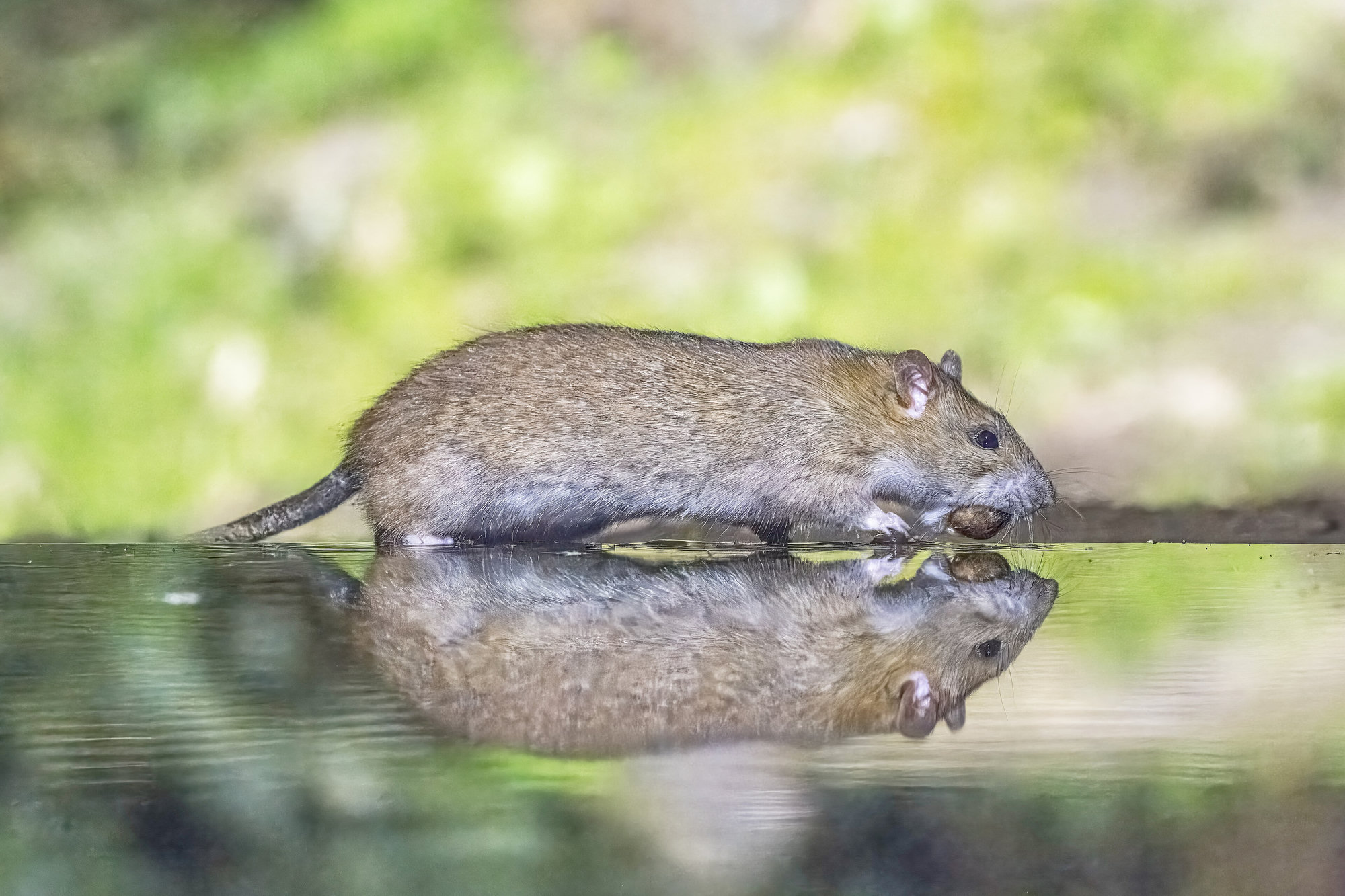
Photo Charles J. Sharp (opens in a new tab) / Wikimedia Commons, CC BY-SA 4.0 (opens in a new tab)
At a glance
- Size
- Body about 20 to 27 cm; tail about 17 to 23 cm
- Weight
- About 200 to 500 g
- Habitat
- Towns, farms, docks, riverbanks and wherever people store food and rubbish
- Diet
- Almost anything: grain, seeds, fruit, meat, fish, insects and human food
- Active
- Mostly night
- Shelter
- Burrows in soil and banks, and nests in buildings, sewers and rubbish
- Origin
- Native to northern China and Mongolia; introduced to North America in the 1700s
- Rabies vector
- No
Identification
- Key marks
- Large and heavy; coarse brown-grey fur, paler belly; blunt muzzle; small ears; thick, scaly tail shorter than the head and body
- Signs
- Burrow entrances along walls and banks; large droppings; greasy rub marks along runways
- Told apart from
- Black rat, which is slimmer with large ears, a pointed muzzle and a tail longer than its body
- Told apart from
- Eastern woodrat, which has soft fur, big ears and a furred tail
- Where to look
- Around buildings, docks, compost and rubbish at night
Behaviour
Norway rats are burrowers and strong swimmers, living in colonies with complex social lives. They explore cautiously, avoid new objects at first, and learn quickly from each other what is safe to eat.
Laboratory studies of the same species have shown rats freeing trapped companions and making ultrasonic calls during play that researchers have compared to laughter.
Why they matter
Norway rats have shaped human history, as carriers of disease and as the laboratory rat, one of the most important animals in medical research.
Their intelligence, social learning and adaptability are exactly what have let them live alongside people on every continent except Antarctica. Alberta, in Canada, is a rare exception: it has kept itself free of established rats since the 1950s by constant vigilance at its borders.
Reproduction and lifecycle
Breeding — all year where food and shelter allow
Gestation — about 21 to 23 days
Litter — usually six to twelve young
Eyes open — at about two weeks old
Weaning — at about three to four weeks old
Maturity — at about two to three months old
Lifespan — usually a year or less in the wild
Living around people
- Sealing openings, securing rubbish and removing food sources prevents rats more lastingly than killing them.
- Rats can carry diseases such as leptospirosis; wear gloves to clean up after them.
- Rodent poisons move up the food chain and kill owls, hawks, foxes, cats and dogs.
- Glue traps cause slow, painful deaths.
Misconceptions
- Norway rats come from Norway. They came from Asia; the name is an old mistake.
- Rats are dirty animals. Rats groom constantly; the dirt is in the places people leave for them.
- Poison is a clean solution. Poisoned rats are eaten by owls, hawks and pets, which are poisoned in turn.
Related species
Seasonal activity
When this species is breeding, and when there are nests on the ground. Mowing during the shaded months is how most nests are found.
| Jan | Feb | Mar | Apr | May | Jun | Jul | Aug | Sep | Oct | Nov | Dec | |
|---|---|---|---|---|---|---|---|---|---|---|---|---|
| Breeding | Jan: no | Feb: no | Mar: no | Apr: no | May: no | Jun: no | Jul: no | Aug: no | Sep: no | Oct: no | Nov: no | Dec: no |
| Active nests | Jan: no | Feb: no | Mar: no | Apr: no | May: no | Jun: no | Jul: no | Aug: no | Sep: no | Oct: no | Nov: no | Dec: no |
| Notes | Active and breeding in sheltered sites | Breeding | Breeding increases | Breeding | Breeding peaks outdoors | Breeding | Breeding | Breeding | Breeding peaks again in autumn | Moving into buildings as it cools | Breeding continues in shelter | Active in buildings and burrows |
Where it lives
Recorded in 92 states and provinces. Each one links to the other animals there, and to the rehabilitators licensed for them.
United States
- Alabamaintroduced
- Alaskaintroduced
- Arizonaintroduced
- Arkansasintroduced
- Californiaintroduced
- Coloradointroduced
- Connecticutintroduced
- Delawareintroduced
- District of Columbiaintroduced
- Floridaintroduced
- Georgiaintroduced
- Hawaiiintroduced
- Idahointroduced
- Illinoisintroduced
- Indianaintroduced
- Iowaintroduced
- Kansasintroduced
- Kentuckyintroduced
- Louisianaintroduced
- Maineintroduced
- Marylandintroduced
- Massachusettsintroduced
- Michiganintroduced
- Minnesotaintroduced
- Mississippiintroduced
- Missouriintroduced
- Montanaintroduced
- Nebraskaintroduced
- Nevadaintroduced
- New Hampshireintroduced
- New Jerseyintroduced
- New Mexicointroduced
- New Yorkintroduced
- North Carolinaintroduced
- North Dakotaintroduced
- Ohiointroduced
- Oklahomaintroduced
- Oregonintroduced
- Pennsylvaniaintroduced
- Rhode Islandintroduced
- South Carolinaintroduced
- South Dakotaintroduced
- Tennesseeintroduced
- Texasintroduced
- Utahintroduced
- Vermontintroduced
- Virginiaintroduced
- Washingtonintroduced
- West Virginiaintroduced
- Wisconsinintroduced
- Wyomingintroduced
Canada
Mexico
- Aguascalientesintroduced
- Baja Californiaintroduced
- Baja California Surintroduced
- Campecheintroduced
- Chiapasintroduced
- Chihuahuaintroduced
- Coahuilaintroduced
- Colimaintroduced
- Durangointroduced
- Guanajuatointroduced
- Guerrerointroduced
- Hidalgointroduced
- Jaliscointroduced
- Mexico Cityintroduced
- Michoacanintroduced
- Morelosintroduced
- Nayaritintroduced
- Nuevo Leonintroduced
- Oaxacaintroduced
- Pueblaintroduced
- Queretarointroduced
- Quintana Roointroduced
- San Luis Potosiintroduced
- Sinaloaintroduced
- Sonoraintroduced
- State of Mexicointroduced
- Tabascointroduced
- Tamaulipasintroduced
- Tlaxcalaintroduced
- Veracruzintroduced
- Yucatanintroduced
- Zacatecasintroduced
If you found one
Answer a few questions and you will get a specific answer for what you are looking at.
I found an animal