
Species
Eastern woodrat
Neotoma floridana
A soft-furred native rat that builds large houses of sticks and collects odd objects.
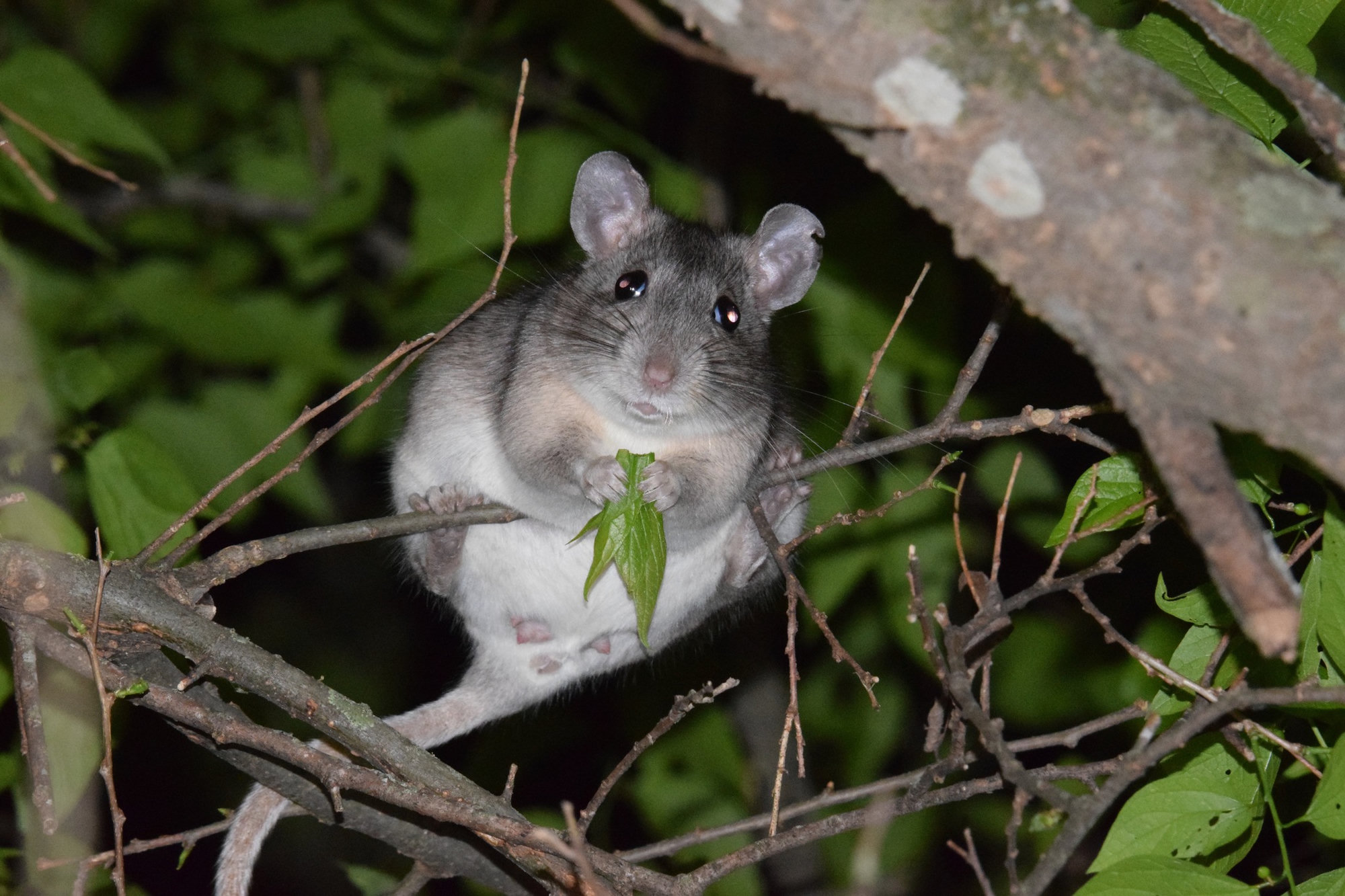
Photo Ari Rice (opens in a new tab) / iNaturalist, CC BY-NC 4.0 (opens in a new tab)
At a glance
- Size
- Body about 18 to 23 cm; tail about 15 to 20 cm
- Weight
- About 200 to 400 g
- Habitat
- Bottomland and upland forests, swamps, rocky bluffs, thickets and old buildings
- Diet
- Leaves, fruit, seeds, nuts, fungi and green plants
- Active
- Night
- Shelter
- Large houses of sticks, leaves and debris at the base of trees, in thickets and rock crevices, or in buildings
- Lifespan
- A few years
- Rabies vector
- No
Identification
- Key marks
- Soft grey-brown fur; white belly and feet; large, rounded ears; big dark eyes; furred tail, darker above and pale below
- Signs
- Piles of sticks and debris a metre or more across at the base of trees or in thickets
- Told apart from
- Norway rat, which has coarser fur, smaller ears and a scaly, nearly naked tail
- Where to look
- Stick houses in swamps, thickets and rocky woods across Georgia
Behaviour
Eastern woodrats build houses: large piles of sticks, bark, leaves and debris with nest chambers inside, sometimes used by generations of woodrats. They stock these houses with food for the winter and with a curious collection of other objects.
They are known as pack rats for their habit of carrying away small, often shiny items — bottle caps, coins, bits of foil — and sometimes leaving something else in their place, which gave them the name "trade rat".
Why they matter
Woodrat houses are shelters for many other animals, including insects, salamanders, snakes, lizards and small mammals, making the woodrat a builder of habitat for others.
Woodrats are also a native rat, very different from the introduced Norway and black rats, and they seldom live near people.
Reproduction and lifecycle
Breeding — spring and summer, with one or two litters a year
Gestation — about 33 to 35 days
Litter — usually two to four young
Eyes open — at about two to three weeks old
Weaning — at about four weeks old
Lifespan — a few years
Living around people
- A woodrat in an old building or shed has usually moved into a structure that stands empty.
- Leaving brush piles and stick houses in woods keeps their homes and those of the animals that share them.
- Like other wild rodents, they can carry diseases; avoid handling them.
Misconceptions
- All rats are dirty city pests. The woodrat is a native forest animal with soft fur and big eyes.
- A pile of sticks in the woods is rubbish. It may be a woodrat's house, and home to many other animals.
Related species
Seasonal activity
When this species is breeding, and when there are nests on the ground. Mowing during the shaded months is how most nests are found.
| Jan | Feb | Mar | Apr | May | Jun | Jul | Aug | Sep | Oct | Nov | Dec | |
|---|---|---|---|---|---|---|---|---|---|---|---|---|
| Breeding | Jan: no | Feb: no | Mar: no | Apr: no | May: no | Jun: no | Jul: no | Aug: no | Sep: no | Oct: no | Nov: no | Dec: no |
| Active nests | Jan: no | Feb: no | Mar: no | Apr: no | May: no | Jun: no | Jul: no | Aug: no | Sep: no | Oct: no | Nov: no | Dec: no |
| Notes | Living on food stored in the house | Breeding begins in the South | First litters born in the house | Young leave the nest at about four weeks old | Breeding continues | Young disperse to find or build houses | Active at night | Second litters in some areas | Collecting food for winter | Stocking the house | Stocking continues | Living on stored food |
Where it lives
Recorded in 18 states and provinces. Each one links to the other animals there, and to the rehabilitators licensed for them.
If you found one
Answer a few questions and you will get a specific answer for what you are looking at.
I found an animal