
Species
Hispid cotton rat
Sigmodon hispidus
A coarse-furred, grizzled rodent of southern fields, and one of the most important foods for predators there.
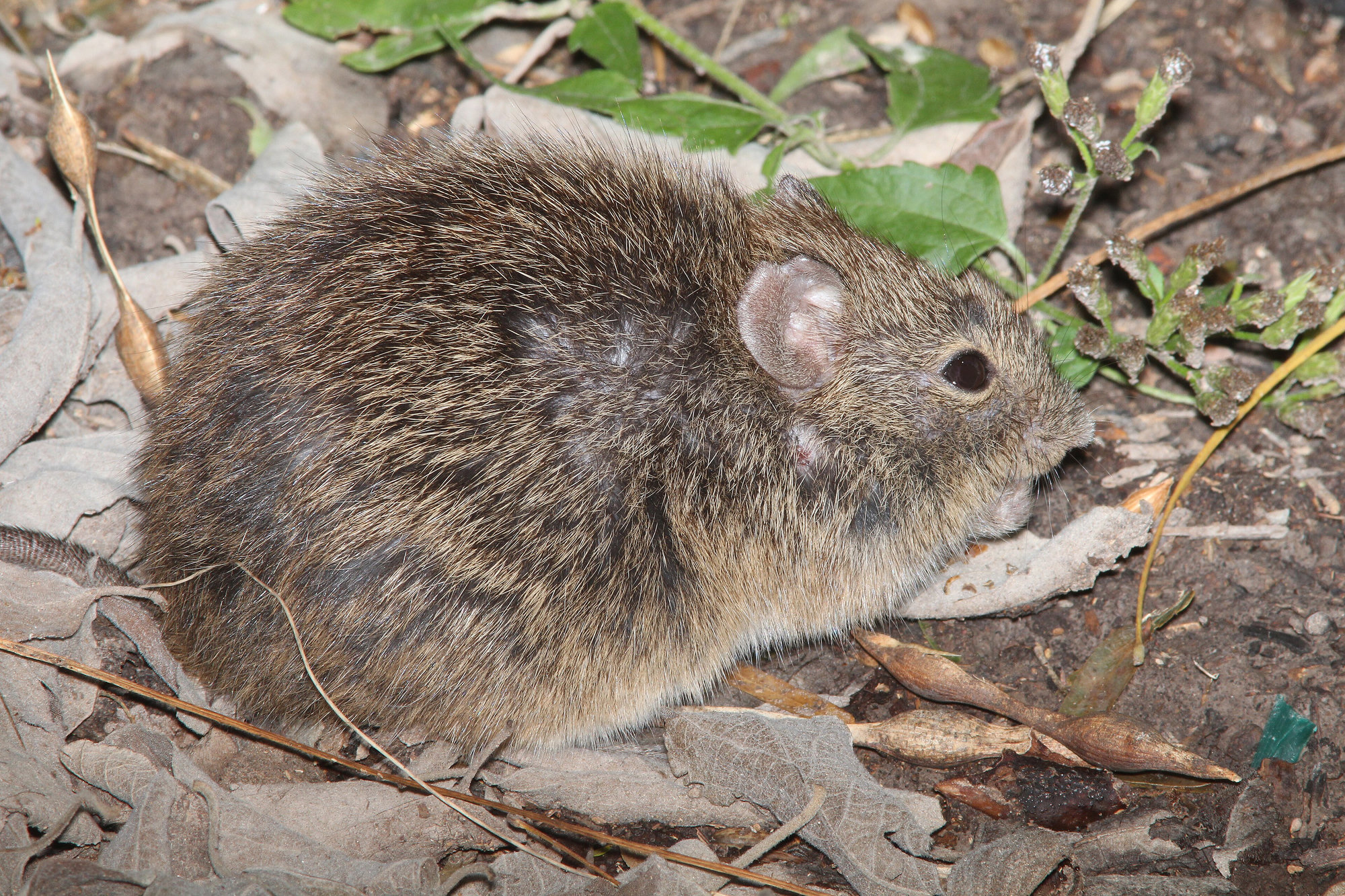
Photo ALAN SCHMIERER (opens in a new tab) / Wikimedia Commons, CC0 (opens in a new tab)
At a glance
- Size
- Body about 13 to 20 cm; tail about 8 to 16 cm
- Weight
- About 100 to 225 g
- Habitat
- Grassy and weedy fields, pastures, roadsides, marsh edges and young pine plantations
- Diet
- Grasses, sedges, seeds and green plants, plus insects and some eggs
- Active
- Day and night
- Shelter
- Runways through thick grass; nests of woven grass on the ground or in shallow burrows
- Lifespan
- Usually less than a year in the wild
- Rabies vector
- No
Identification
- Key marks
- Coarse, bristly fur grizzled black and buff; grey-white belly; tail shorter than the body and scaly; small ears
- Signs
- Well-worn runways through grass with clipped grass stems
- Told apart from
- Norway rat, which is larger and heavier with a longer tail and smoother fur
- Told apart from
- Marsh rice rat, which has smoother, grey-brown fur and a long tail
- Where to look
- Tall, thick grass in fields and along roadsides across Georgia
Behaviour
Cotton rats live in thick grass, cutting networks of runways through it and feeding on grasses and seeds. They are active by day and night and often very numerous.
They breed fast. Young are born with fur and open their eyes within a day or two, are weaned in two weeks, and can breed themselves at about six weeks old. In good years, populations can grow very quickly.
Why they matter
In much of the South, cotton rats are the main food for hawks, owls, foxes, coyotes, bobcats and snakes. When cotton rat numbers rise, many predators raise more young.
They are also one of the few rodents that can live on grasses alone, which lets them thrive in open fields where few other mammals can.
Reproduction and lifecycle
Breeding — most of the year, with peaks in spring and autumn
Gestation — about 27 days
Litter — usually four to eight young, born furred
Eyes open — within about a day
Weaning — at about two weeks old
Maturity — at about six weeks old
Lifespan — usually less than a year in the wild
Living around people
- Cotton rats seldom enter houses; they live in fields and gardens.
- Like other wild rodents, they can carry diseases, including hantaviruses; avoid handling them.
- Poisons used on field rodents kill the hawks, owls and snakes that eat them.
- Leaving uncut grass at field edges supports cotton rats and their predators.
Misconceptions
- Any rat in a field is a pest escaped from town. Cotton rats are native animals of grassland.
- More predators would mean fewer cotton rats. It is mostly the other way round: cotton rat numbers drive predator numbers.
Related species
Seasonal activity
When this species is breeding, and when there are nests on the ground. Mowing during the shaded months is how most nests are found.
| Jan | Feb | Mar | Apr | May | Jun | Jul | Aug | Sep | Oct | Nov | Dec | |
|---|---|---|---|---|---|---|---|---|---|---|---|---|
| Breeding | Jan: no | Feb: no | Mar: no | Apr: no | May: no | Jun: no | Jul: no | Aug: no | Sep: no | Oct: no | Nov: no | Dec: no |
| Active nests | Jan: no | Feb: no | Mar: no | Apr: no | May: no | Jun: no | Jul: no | Aug: no | Sep: no | Oct: no | Nov: no | Dec: no |
| Notes | Breeding slows in cold weather | Breeding resumes | Breeding | Litters born in grass nests | Breeding continues; numbers rise | Breeding | Breeding | Breeding | Numbers at their highest | Breeding continues | Breeding slows | Active in thick grass; breeding in mild spells |
Where it lives
Recorded in 23 states and provinces. Each one links to the other animals there, and to the rehabilitators licensed for them.
United States
If you found one
Answer a few questions and you will get a specific answer for what you are looking at.
I found an animal