
Species
Marsh rice rat
Oryzomys palustris
A swimming, diving rat of southern marshes that eats more crabs and snails than most rodents.
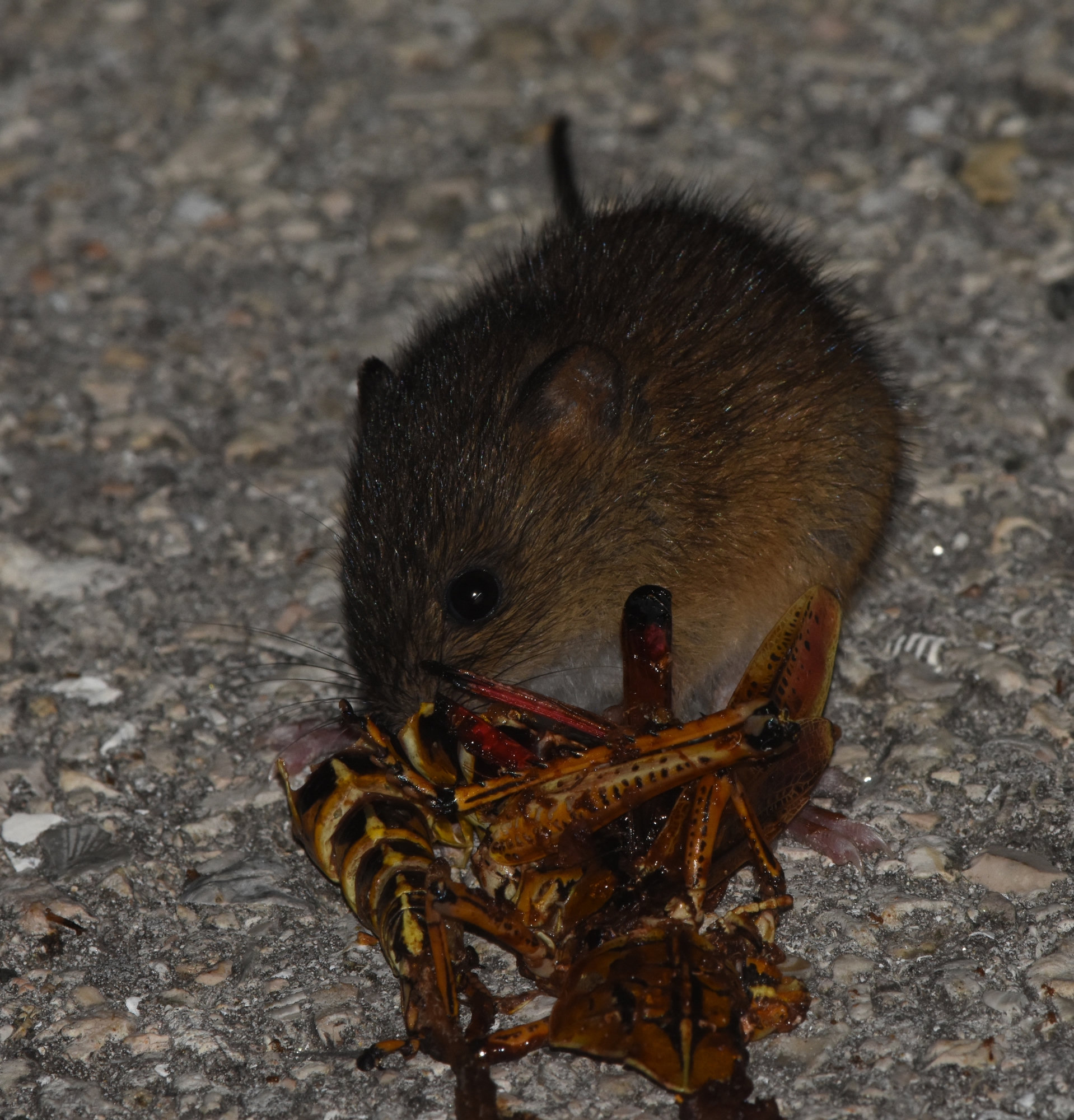
Photo Joe MDO (opens in a new tab) / iNaturalist, CC BY-NC 4.0 (opens in a new tab)
At a glance
- Size
- Body about 11 to 13 cm; tail about 11 to 13 cm
- Weight
- About 40 to 80 g
- Habitat
- Salt and freshwater marshes, swamp edges, wet meadows and ditch banks
- Diet
- Seeds and green plants, plus crabs, snails, insects, fish and bird eggs
- Active
- Mostly night
- Shelter
- Woven grass nests above the high-water line, and burrows in banks
- Lifespan
- Usually a year or less in the wild
- Rabies vector
- No
Identification
- Key marks
- Grey-brown back, pale grey-white belly; long, sparsely haired tail about as long as the body; large feet
- Told apart from
- Norway rat, which is larger and heavier with a thick, scaly tail shorter than its body
- Told apart from
- Hispid cotton rat, which has coarse, grizzled fur and a shorter tail
- Where to look
- Marsh edges, levees and ditches, especially along the Georgia coast
Behaviour
Marsh rice rats are at home in water. They swim well at the surface and under it, dive to escape predators, and forage along the edges of marshes and ditches at night.
They eat more animal food than most rodents: fiddler crabs, snails, insects and small fish, as well as seeds and green shoots. Their nests are balls of woven grass and sedge built above the high-water line, often in dense marsh plants.
Why they matter
Rice rats are one of the most important small prey animals in southern marshes, eaten by owls, hawks, herons, snakes, raccoons and mink. They also shape the life of the marsh by eating snails and crabs.
They breed quickly and repeatedly, which is what allows them to support so many predators.
Reproduction and lifecycle
Breeding — most of the year in the South
Gestation — about 25 days
Litter — usually three to five young
Eyes open — at about six days old
Weaning — at about two weeks old
Maturity — at about seven weeks old
Lifespan — rarely more than a year in the wild
Living around people
- Like other wild rodents, rice rats can carry diseases, including hantaviruses; avoid handling them and wear gloves to clean up nests or droppings.
- Draining and filling marshes removes their habitat.
- A rice rat in a boathouse or shed can usually be let out through an open door.
Misconceptions
- Every rat is a pest from a city. The marsh rice rat is a native animal of wild marshes.
- Rodents only eat plants. Rice rats catch crabs, snails and insects.
Related species
Seasonal activity
When this species is breeding, and when there are nests on the ground. Mowing during the shaded months is how most nests are found.
| Jan | Feb | Mar | Apr | May | Jun | Jul | Aug | Sep | Oct | Nov | Dec | |
|---|---|---|---|---|---|---|---|---|---|---|---|---|
| Breeding | Jan: no | Feb: no | Mar: no | Apr: no | May: no | Jun: no | Jul: no | Aug: no | Sep: no | Oct: no | Nov: no | Dec: no |
| Active nests | Jan: no | Feb: no | Mar: no | Apr: no | May: no | Jun: no | Jul: no | Aug: no | Sep: no | Oct: no | Nov: no | Dec: no |
| Notes | Breeding may continue in mild weather | Breeding increases | Litters born in woven nests | Breeding | Young leave the nest at about two weeks old | Breeding continues | Young of the year disperse | Breeding continues | Numbers are at their highest | Active along marsh edges at night | Breeding slows | Active; breeding in warm spells |
Where it lives
Recorded in 13 states and provinces. Each one links to the other animals there, and to the rehabilitators licensed for them.
If you found one
Answer a few questions and you will get a specific answer for what you are looking at.
I found an animal