
Species
Round-tailed muskrat
Neofiber alleni
A small, round-tailed marsh rodent of Florida and the Okefenokee Swamp that builds grass houses in the marsh.
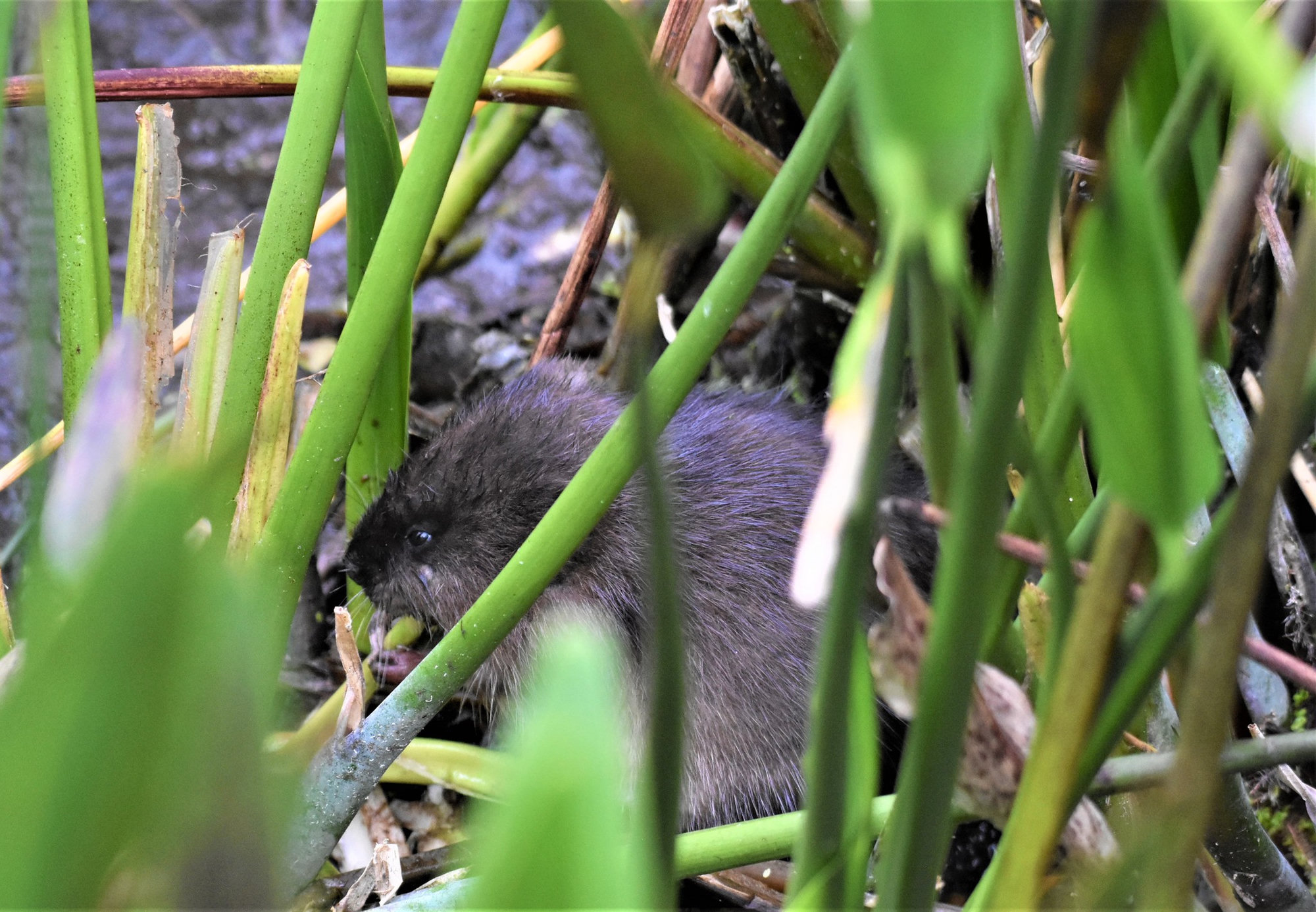
Photo Daniel Alempijevic (opens in a new tab) / iNaturalist, CC BY-NC 4.0 (opens in a new tab)
At a glance
- Size
- Body about 20 to 23 cm; tail about 10 to 17 cm
- Weight
- About 200 to 350 g
- Habitat
- Shallow freshwater marshes, wet prairies and bogs with dense grasses, sedges and maidencane
- Diet
- Maidencane, pickerelweed, sedges, grasses and other marsh plants
- Active
- Mostly night
- Shelter
- Small domed houses of woven marsh plants, and feeding platforms
- Lifespan
- Usually a year or two
- Rabies vector
- No
Identification
- Key marks
- Dense, glossy dark brown fur; round, nearly naked tail; small ears
- Size
- About a third the weight of a muskrat
- Told apart from
- Muskrat, which is larger with a flattened tail, and which is absent from most of Florida
- Told apart from
- Marsh rice rat, which is much smaller with a long, thin tail
- Where to look
- In Georgia, only in the Okefenokee Swamp area of the southeast; its grass houses and feeding platforms in marsh
Behaviour
Round-tailed muskrats build small domed houses of woven grass and sedge in shallow marshes, with entrances below the water, and small feeding platforms where they eat. They are active mostly at night, feeding on marsh plants.
Their populations rise and fall with water levels; drought and flood both push them out of their houses.
Why they matter
Round-tailed muskrats are a species of the southeastern marshes found almost nowhere else — mostly Florida, with a small part of their range in southeast Georgia. They are food for owls, hawks, alligators, snakes and otters.
Their houses and runways are part of the structure of the marsh, and they depend on marsh water levels staying within a natural range.
Reproduction and lifecycle
Breeding — much of the year
Gestation — about four weeks
Litter — usually one to four young
Weaning — at about three weeks old
Lifespan — usually a year or two
Living around people
- Draining marshes and altering water levels removes their habitat.
- Fire and drought can leave populations stranded; natural marshes with varied water recover.
- Like other wild rodents, they can carry diseases; avoid handling them.
Misconceptions
- A small muskrat is a baby muskrat. In the Okefenokee it may be a round-tailed muskrat, a separate species.
- Every rat-like animal in a marsh is a pest. This is a native animal found in very few places.
Related species
Seasonal activity
When this species is breeding, and when there are nests on the ground. Mowing during the shaded months is how most nests are found.
| Jan | Feb | Mar | Apr | May | Jun | Jul | Aug | Sep | Oct | Nov | Dec | |
|---|---|---|---|---|---|---|---|---|---|---|---|---|
| Breeding | Jan: no | Feb: no | Mar: no | Apr: no | May: no | Jun: no | Jul: no | Aug: no | Sep: no | Oct: no | Nov: no | Dec: no |
| Active nests | Jan: no | Feb: no | Mar: no | Apr: no | May: no | Jun: no | Jul: no | Aug: no | Sep: no | Oct: no | Nov: no | Dec: no |
| Notes | Breeding may continue in mild weather | Breeding | Litters born in grass houses | Breeding | Breeding | Breeding | Young disperse through the marsh | Breeding | Breeding | Active at night | Breeding slows | Active; breeding in mild spells |
Where it lives
Recorded in 2 states and provinces. Each one links to the other animals there, and to the rehabilitators licensed for them.
If you found one
Answer a few questions and you will get a specific answer for what you are looking at.
I found an animal