
Species
Black rat
Rattus rattus
A slender, big-eared climbing rat of southern towns and coasts, also called the roof rat.
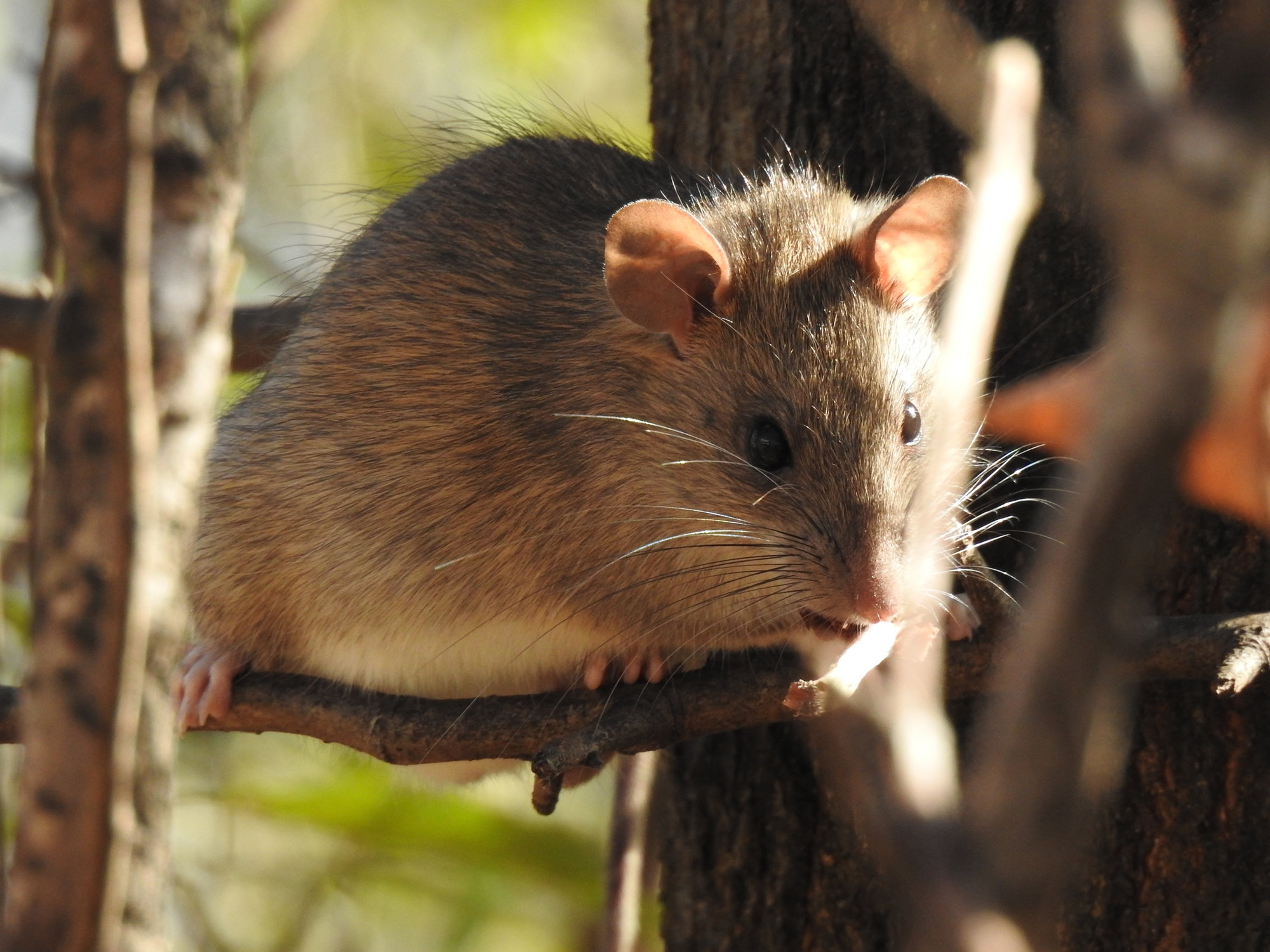
Photo Laura Mae (opens in a new tab) / iNaturalist, CC BY 4.0 (opens in a new tab)
At a glance
- Size
- Body about 16 to 22 cm; tail about 19 to 25 cm
- Weight
- About 150 to 250 g
- Habitat
- Towns, docks, coastal areas, orchards and palm trees in the warmer South
- Diet
- Fruit, seeds, nuts, grain, snails, insects and human food
- Active
- Night
- Shelter
- Nests in attics, roofs, trees, palms and dense vines
- Origin
- Native to South Asia; brought to the Americas on ships from the 1500s
- Rabies vector
- No
Identification
- Key marks
- Slender; black to grey-brown fur, belly grey or white; large, thin, nearly naked ears; pointed muzzle; tail longer than the head and body
- Colour
- Despite the name, many are brown
- Told apart from
- Norway rat, which is heavier with small ears, a blunt muzzle and a shorter tail
- Told apart from
- Eastern woodrat, which has soft fur and a furred tail
- Where to look
- Running along wires, fences and roof lines at night; in palms and vine-covered fences
Behaviour
Black rats are agile climbers that live above ground: in roofs and attics, in trees and palms, and in thick vines. They run along power lines and fences, and in the South they often nest in palm trees and citrus.
They are shyer and more wary than Norway rats, and in many places the two species divide the town between them, the black rat up high and the Norway rat below.
Why they matter
Black rats spread around the world with ships, and their history is tied to human trade, disease and exploration. On islands where they were introduced, they have harmed many native birds and reptiles.
In the South they are part of town and coastal wildlife, and are eaten by owls, hawks, snakes and cats.
Reproduction and lifecycle
Breeding — much of the year in warm climates
Gestation — about 21 to 23 days
Litter — usually five to ten young
Weaning — at about three to four weeks old
Maturity — at about three to four months old
Lifespan — usually a year or less in the wild
Living around people
- Trimming trees and vines away from roofs and sealing roof openings keeps them out.
- Rodent poisons move up the food chain and kill owls, hawks and pets.
- Rats can carry diseases; wear gloves to clean up after them.
Misconceptions
- Black rats are always black. Many are brown.
- Rats only live at ground level. Black rats live in roofs and trees.
- Poison is a clean solution. Poisoned rats are eaten by owls, hawks and pets.
Related species
Seasonal activity
When this species is breeding, and when there are nests on the ground. Mowing during the shaded months is how most nests are found.
| Jan | Feb | Mar | Apr | May | Jun | Jul | Aug | Sep | Oct | Nov | Dec | |
|---|---|---|---|---|---|---|---|---|---|---|---|---|
| Breeding | Jan: no | Feb: no | Mar: no | Apr: no | May: no | Jun: no | Jul: no | Aug: no | Sep: no | Oct: no | Nov: no | Dec: no |
| Active nests | Jan: no | Feb: no | Mar: no | Apr: no | May: no | Jun: no | Jul: no | Aug: no | Sep: no | Oct: no | Nov: no | Dec: no |
| Notes | Active and breeding in sheltered sites | Breeding | Breeding increases | Breeding | Breeding | Breeding peaks | Breeding | Breeding | Breeding | Moving into attics as it cools | Active indoors | Active in roofs and trees |
Where it lives
Recorded in 52 states and provinces. Each one links to the other animals there, and to the rehabilitators licensed for them.
United States
- Alabamaintroduced
- Arizonaintroduced
- Arkansasintroduced
- Californiaintroduced
- Floridaintroduced
- Georgiaintroduced
- Hawaiiintroduced
- Louisianaintroduced
- Mississippiintroduced
- Nevadaintroduced
- New Mexicointroduced
- North Carolinaintroduced
- Oklahomaintroduced
- Oregonintroduced
- South Carolinaintroduced
- Tennesseeintroduced
- Texasintroduced
- Virginiaintroduced
- Washingtonintroduced
Mexico
- Aguascalientesintroduced
- Baja Californiaintroduced
- Baja California Surintroduced
- Campecheintroduced
- Chiapasintroduced
- Chihuahuaintroduced
- Coahuilaintroduced
- Colimaintroduced
- Durangointroduced
- Guanajuatointroduced
- Guerrerointroduced
- Hidalgointroduced
- Jaliscointroduced
- Mexico Cityintroduced
- Michoacanintroduced
- Morelosintroduced
- Nayaritintroduced
- Nuevo Leonintroduced
- Oaxacaintroduced
- Pueblaintroduced
- Queretarointroduced
- Quintana Roointroduced
- San Luis Potosiintroduced
- Sinaloaintroduced
- Sonoraintroduced
- State of Mexicointroduced
- Tabascointroduced
- Tamaulipasintroduced
- Tlaxcalaintroduced
- Veracruzintroduced
- Yucatanintroduced
- Zacatecasintroduced
If you found one
Answer a few questions and you will get a specific answer for what you are looking at.
I found an animal