
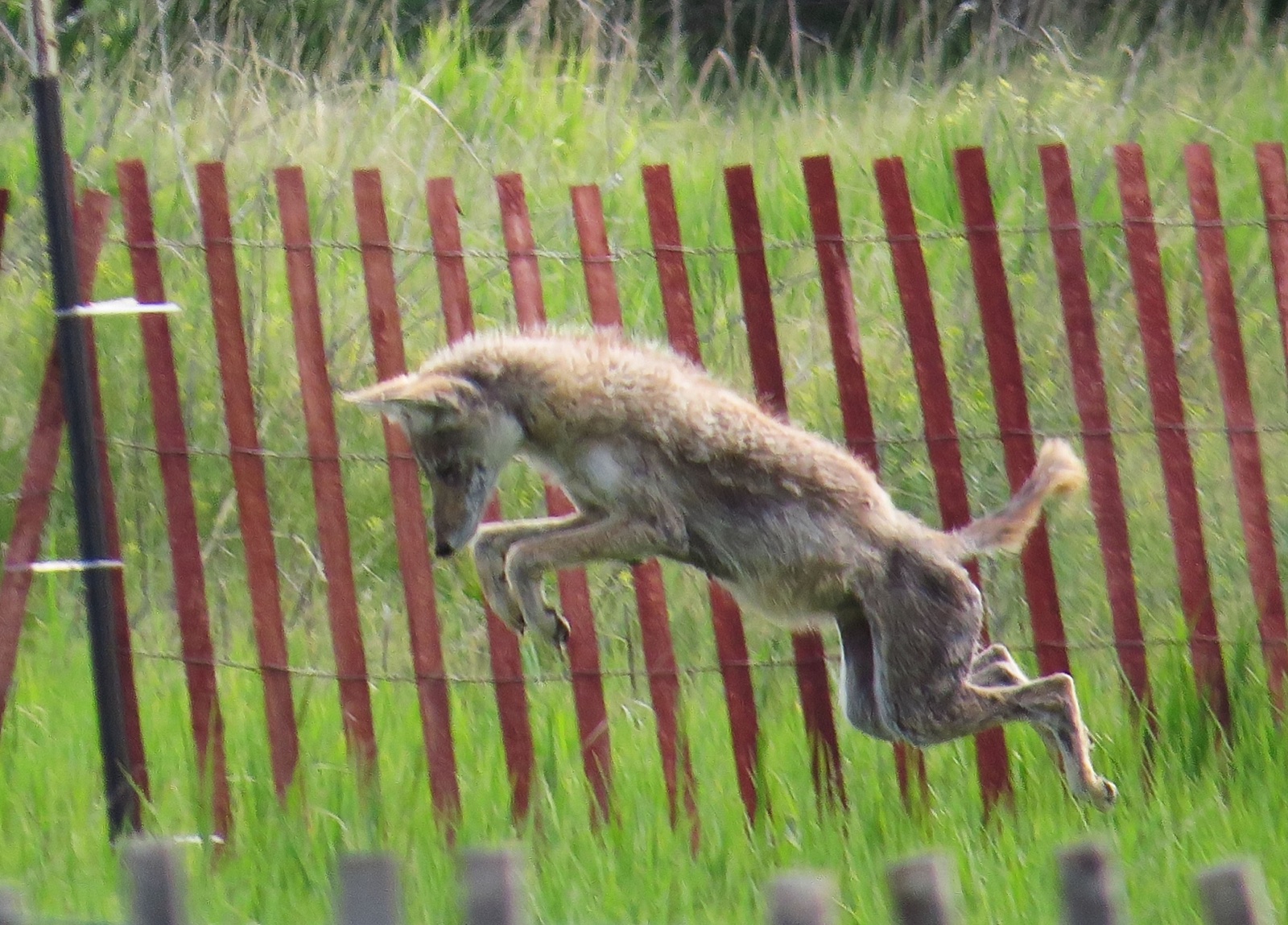
Photo Jim Kennedy (nature80020) (opens in a new tab), CC BY 2.0 (opens in a new tab)
Treat the animal where it lives
A coyote or fox with mange can sometimes be treated successfully while remaining completely wild, without trapping it or bringing it into captivity.
The central challenge is not simply finding a medicine that kills mange mites. It is getting the correct treatment into one specific animal, called the target animal, while positively confirming that animal consumed it and preventing every other animal from gaining access.
That requires patience before medication begins. First learn where and when the target animal appears. Then establish a brief feeding routine known only to that animal. Only after that routine is reliable should medication be introduced under the direction of a licensed wildlife rehabilitator or veterinarian.
Do not scatter medicated food, leave medication unattended or put it somewhere that another wild or domestic animal might consume it.
What mange does
Sarcoptic mange is a parasitic skin disease caused by mites that infest the skin.
The disease commonly begins with intense itching. The coyote or fox scratches repeatedly as its skin becomes irritated, dry and damaged. Hair begins falling out and continued scratching can further compromise already unhealthy skin.
As the disease progresses, the animal can develop substantial hair loss, thickened or brittle skin and open wounds. Those wounds may develop secondary bacterial infections. A badly affected animal is dealing not only with mites, but also pain, severe itching, loss of its insulating coat and the possibility of serious infection.
Once systemic illness or sepsis develops, saving the animal becomes much more difficult even with veterinary care.
The earlier an affected animal can be identified and appropriately treated, the better its opportunity for recovery.
Daylight does not make a mangy coyote or fox dangerous
A coyote or fox with advanced mange may become much more visible than a healthy animal.
An affected animal may appear in open areas during daylight, lie in direct sunlight or spend time on warm pavement or concrete. An animal whose coat and skin have been severely compromised may seek warmth and temporary physical relief wherever it can find it.
This change in behaviour can cause people to assume the animal has suddenly become aggressive or has lost its natural fear of people. What they may actually be seeing is a sick animal trying to cope with a painful disease.
Give it space. Do not approach, corner or attempt to touch it.
Decide whether field treatment is still appropriate
Field treatment works best when the target animal is still mobile, eating and following a reasonably predictable routine.
A severely debilitated animal may need more help than remote treatment can provide. Open infected wounds, profound weakness, inability to travel normally, collapse or other evidence that the animal is critically ill should prompt consultation with a licensed wildlife rehabilitator.
Remote treatment is meant to intervene before mange reaches that point.
Identify one target animal
Choose one identifiable coyote or fox and treat that individual as the target animal throughout the protocol.
Learn its appearance well enough to distinguish it from other coyotes, foxes and neighborhood animals. Coat pattern, degree and location of hair loss, body size, scars, tail appearance and other visible features can help.
Photographs and video are useful because memory alone is unreliable, particularly when several animals move through the same area.
The objective is not to medicate "a fox" or "a coyote". It is to medicate one particular animal whose identity you can verify.
Build a sighting log
Before putting out food, learn the target animal's routine.
Record every reliable sighting:
- The date.
- The exact location.
- The time.
- Which direction the animal came from.
- Which direction it travelled afterwards.
- Whether other animals were present.
- How long the target animal remained in the area.
Continue until a pattern emerges.
Coyotes and foxes frequently use familiar travel routes. If the same animal repeatedly passes the same location within a reasonably predictable time window, that pattern gives you an opportunity to intercept it without chasing, trapping or restraining it.
The narrower and more reliable that window becomes, the safer the eventual medication delivery will be.
Find a time and place that belong to the target animal
The ideal treatment location is a place the target animal visits predictably when no other animal is present.
This isolation is the most important part of the protocol.
Medication cannot be left somewhere and merely hoped to reach the correct animal. A raccoon, opossum, neighbourhood dog, another fox, another coyote or any other animal that discovers the food could consume it instead.
Once other animals learn that food routinely appears at the location, the site becomes much less useful for controlled medication.
The goal is therefore to create a feeding opportunity that exists only briefly and only when the target animal is expected.
Use a motion-activated camera
Aim a motion-activated camera at the feeding location before beginning the feeding routine.
The camera needs to show the food clearly enough to determine:
- Which animal approached.
- Whether it was definitely the target animal.
- Whether another animal approached before or afterwards.
- Whether the food was consumed.
- When the food was consumed.
A night-vision camera is particularly valuable because coyotes and foxes often visit after dark.
Camera confirmation becomes essential once medication is introduced. You need positive evidence that the target animal, and not merely some animal, consumed the complete medicated portion.
Establish the feeding routine
Put out a small bowl of enticing food shortly before the target animal's predicted arrival and remove it shortly afterwards.
A starting meal can consist of:
- One cup of puppy kibble.
- Small pieces of meat from a rotisserie chicken.
- One intact hard-boiled egg with the shell removed.
The purpose at this stage is not medication. It is to teach one particular animal that a small meal appears at this precise place during this precise time window.
If the target animal finds and eats the food, it is likely to check the location again, especially during the same time window each day - and maybe more often.
Meet that expectation with a fresh bowl during the next predicted visit.
Do not leave the bowl out continuously.
The short feeding window is critical
Put food out shortly before the target animal is expected and remove it shortly after the window closes, whether the target animal appeared or not.
This cannot be treated like ordinary wildlife feeding.
A bowl that remains outside for hours will eventually be discovered by other animals. Once multiple animals begin visiting the location expecting food, the site's usefulness for controlled medication is compromised.
Only the target animal should learn the routine.
Continue narrowing the schedule until you can predict with reasonable confidence that the target animal will arrive during a short period and that no competing animal normally visits at the same time.
This is the lock-in period.
Do not medicate until the routine is reliable
Keep providing the unmedicated meal until the target animal is reliably appearing and consuming it under camera observation.
You should already know the answer to three questions before medication is introduced:
- Which animal will probably arrive.
- Approximately when it will arrive.
- Whether it normally consumes the complete meal.
If you cannot answer all three, continue the lock-in period.
There is no benefit to rushing this step. A medication dose consumed by the wrong animal is both a treatment failure and an unnecessary drug exposure for that animal.
Use an appropriate mange medication
Medication choice and dose must be determined for the individual target animal by a licensed wildlife rehabilitator.
Modern isoxazoline antiparasitic drugs are important options for treating mite infestations. Active ingredients in this class include:
- Sarolaner (brands: Simparica and Simparica Trio)
- Fluralaner (brand: Bravecto)
- Afoxolaner (brands: NexGard and NexGard Plus)
- Lotilaner (brand: Credelio)
These medicines are not interchangeable simply because they belong to the same drug class. They differ in formulation, duration of activity and normal administration schedule.
The amount must be appropriate for the estimated weight and condition of the individual coyote or fox. The timing of any repeat treatment must also be determined for the particular medication being used.
Do not improvise a dose from a pet medication package or assume that a schedule appropriate for one isoxazoline applies to another.
Older drugs including ivermectin and Selamectin (brand: Revolution) have also been used against mange, but the field protocol described here favors modern isoxazolines.
Note: There is a widespread misunderstanding by wildlife rehabilitators (especially those who address raccoons) that drugs in the isoxazoline class are unsafe and should not be used. This misunderstanding originally stemmed from the misinterpretation of an FDA notice that noted "the potential for neurologic adverse events in dogs and cats when treated with drugs that are in the isoxazoline class". Subsequently, some wildlife rehabilitators have been recommending older and less effective medications like ivermectin and Selamectin (brand: Revolution). Such guidance is not consistent with recommendations based in modern veterinary medicine. The original FDA note that wildlife rehabilitators misinterpreted is:
Know what medication is actually in the product
Choose treatment by active ingredient and professional guidance, not merely by recognizing a brand name.
Some veterinary products contain a single relevant active ingredient while others contain several medications combined into one chewable tablet.
A combination product should never be treated as though the mange medication were its only ingredient.
Tell the licensed wildlife rehabilitator exactly which product and strength you have before using it. Let that professional determine whether it is appropriate for the target animal.
Make the medicated portion impossible to miss
Once the target animal is locked into the feeding routine, place the professionally determined medication into a small food item, such as the peeled hard-boiled egg described above - that the animal reliably consumes completely.
The peeled hard-boiled egg can be useful because it is a discrete food item that can be observed on camera and, when accepted by the target animal, is likely to be consumed as a unit.
Do not prepare the medication in a way that changes the formulation unless the licensed wildlife rehabilitator or veterinarian directing treatment has confirmed that it is appropriate.
The objective is complete consumption of the prescribed amount by the target animal.
Verify the treatment on camera
Do not count a dose as administered unless you have positive confirmation that the target animal consumed it.
Review the camera footage.
You need to be able to establish that:
- The animal was the correct target animal.
- It consumed the medicated food.
- The medication was not dropped or abandoned.
- Another animal did not take part of the dose.
- The food was not removed and carried somewhere that prevented confirmation.
If ingestion cannot be verified, do not guess that treatment occurred.
Contact the licensed wildlife rehabilitator or veterinarian directing the treatment before deciding what to do next. Giving another full dose after an uncertain ingestion could result in unintended repeat dosing.
Keep the target animal on its routine during recovery
Continue the established feeding schedule after the first treatment rather than abruptly removing the food.
The supplied field protocol uses puppy kibble for approximately three weeks as temporary nutritional support while the animal begins recovering.
Keep using the same discipline:
- Put the food out only shortly before the target animal's expected arrival.
- Continue camera monitoring.
- Remove uneaten food promptly.
- Do not allow other animals to discover the feeding station.
- Keep notes on changes in appearance and behaviour.
The feeding station remains a treatment tool, not a permanent food source.
Watch for recovery
Use photographs and camera footage to document the animal over time.
Skin and coat recovery will not occur the instant the mites are killed. The body needs time to heal damaged skin and replace lost hair.
Look for changes in the overall direction of the animal's condition, including less scratching, healthier movement, improving body condition and eventual coat regrowth.
Photographs taken from similar angles can make gradual changes easier to recognise.
Continue watching for evidence that the animal is worsening instead. Field medication cannot repair every consequence of advanced disease, particularly serious secondary infections.
Give a repeat treatment only on the correct schedule
The supplied protocol uses an initial treatment followed by a later treatment, but the timing of that later dose must match the specific medicine chosen for the target animal.
Do not automatically give every isoxazoline another dose at three weeks.
The appropriate interval depends on the active ingredient, product and treatment plan established by the licensed wildlife rehabilitator or veterinarian.
When a later dose is due, use the same controlled procedure as before: a short feeding window, a known target animal, a discrete medicated food item and positive camera confirmation of complete ingestion.
Never place a repeat dose where its recipient cannot be verified.
Taper away the food
Once the treatment course and temporary nutritional-support period are complete, gradually discontinue the supplemental food.
The objective was never to make the coyote or fox dependent on people for meals.
The feeding routine existed for a specific medical purpose: to create a predictable, verifiable way to reach one free-ranging animal with treatment while it remained in its own territory.
Reduce and then end the food once that purpose has been fulfilled.
The animal should return to obtaining its food normally from the landscape.
Do not turn one treatment station into a wildlife feeding station
A successful protocol is deliberately narrow.
One animal. One controlled location. One predictable time window. Food present only briefly. Every important event documented by camera.
Leaving food outside for other wildlife works against all of those goals. It attracts animals to the site, makes medication delivery uncertain and encourages continued congregation after treatment is finished.
Precision is what allows a wild animal to receive care without being captured.
When field treatment is not enough
Contact a licensed wildlife rehabilitator if the coyote or fox appears too sick for this protocol.
An animal that is collapsing, profoundly weak, badly wounded, unable to move normally or showing evidence of severe infection may require hands-on medical care rather than another night at a feeding station.
Likewise, seek professional guidance if the diagnosis is uncertain, the animal stops eating, a medication dose cannot be verified or its condition continues to deteriorate after treatment.
Do not attempt to catch, restrain or handle a coyote or fox yourself.
Why this protocol matters
Mange can turn a healthy wild canid's own skin into a source of relentless itching, pain and progressive injury, yet an animal identified early enough may still be traveling its normal territory and fully capable of remaining wild.
That creates an unusual opportunity.
Instead of requiring the animal to understand that a person is trying to help it, the treatment works with behavior the coyote or fox already has: traveling familiar paths, arriving at familiar places and remembering a reliable food opportunity.
Careful observation turns those ordinary habits into a delivery system.
The human role is temporary and precise. Learn the animal's routine, reach only that animal, verify the treatment, support recovery and then disappear from its daily life again.
The best result is a recovered coyote or fox that never had to stop being wild.