
Species
Raccoon
Procyon lotor
A dexterous nocturnal omnivore with sensitive front paws that thrives from wooded swamps to city neighbourhoods.
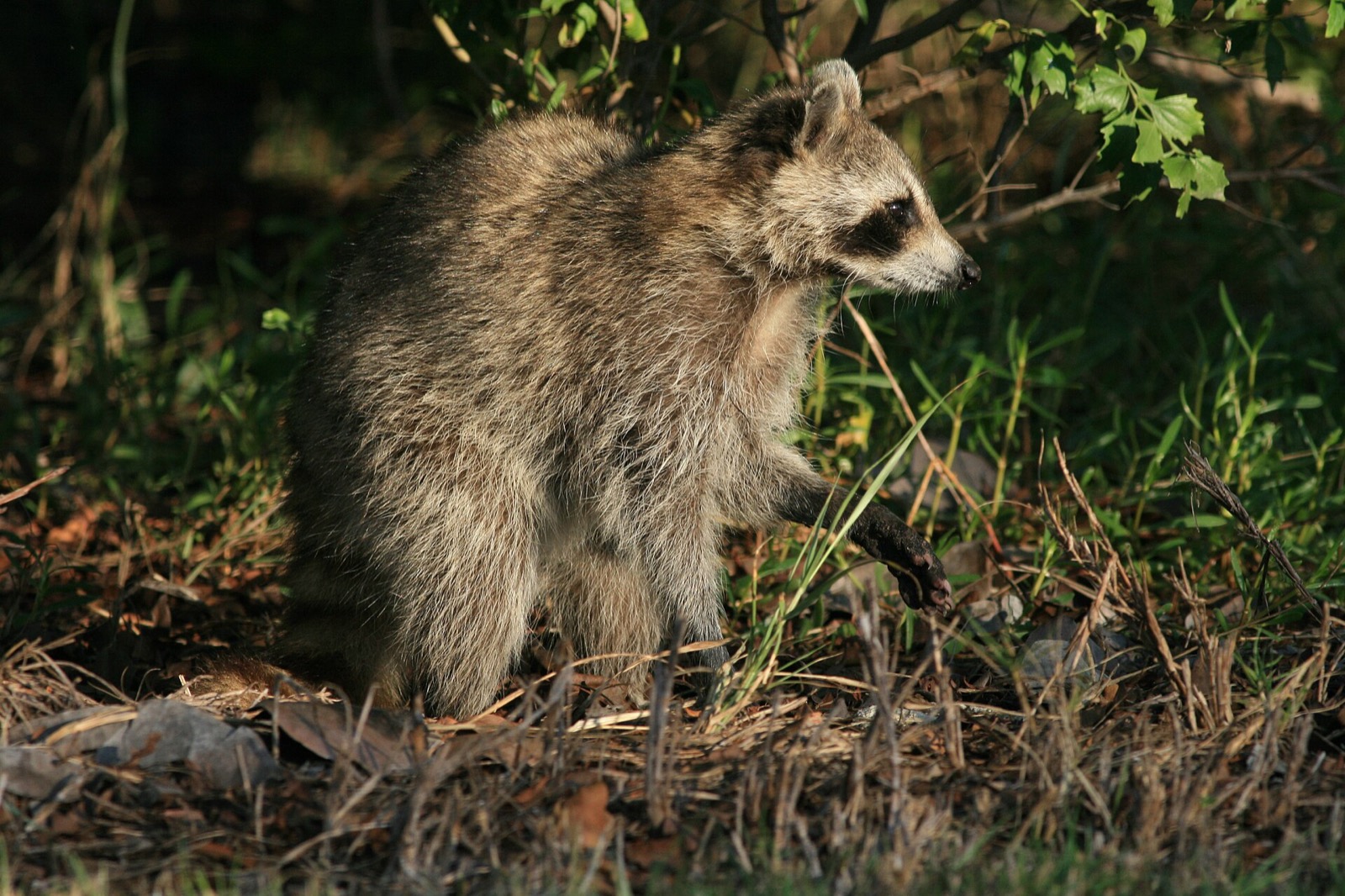
Photo Korall (opens in a new tab), CC BY 3.0 (opens in a new tab)
At a glance
- Occurrence
- Native to North America
- Habitat
- Forests, wetlands, farms, suburbs and cities, especially near water and tree cover
- Diet
- Fruit, nuts, insects, crayfish, eggs, small animals, carrion and human food when accessible
- Activity
- Mostly nocturnal, with some normal daylight activity
- Shelter
- Tree cavities, hollow logs, chimneys, attics and other protected dens
- Social pattern
- Females raise kits; adults otherwise range alone or in loose associations
- Rabies vector
- Yes
Identification
- Key marks
- Black facial mask, ringed furry tail and nimble five-fingered front paws
- Told apart from
- Virginia opossum, which has a pale pointed face and a mostly hairless tail
- Where to look
- Forests, wetlands, farms, suburbs and cities, especially near water and tree cover
Behaviour
It is mostly nocturnal, with some normal daylight activity. It uses habitats including forests, wetlands, farms, suburbs and cities, especially near water and tree cover. It feeds on fruit, nuts, insects, crayfish, eggs, small animals, carrion and human food when accessible.
Raccoons investigate food with highly sensitive front paws and are strong climbers and swimmers. Urban individuals learn quickly where food is predictable.
Raccoon forepaws contain dense touch receptors, and wetting the skin can make tactile information especially useful while feeling for food.
Why they matter
As omnivores, raccoons consume fruit, nuts, insects, crayfish, carrion and many other foods, moving seeds and nutrients across forest, wetland and neighbourhood edges.
The front paws are so touch-sensitive that a raccoon can identify objects without seeing them clearly, especially while foraging in water or darkness.
Reproduction and lifecycle
Mating — mainly January through March, later in the north.
Gestation — about 63 days.
Kits — usually 2–5 are born in a protected den in spring.
Dependency — kits begin leaving the den after roughly 8–10 weeks and remain with the mother through much of their first year.
Living around people
- Secure rubbish, pet food and compost to avoid teaching raccoons to visit homes for meals.
- Cap chimneys and repair attic openings after confirming no dependent young are inside.
- Keep dogs and cats from close contact; raccoons are a rabies vector species.
- Drive carefully at night near streams, wooded corridors and culverts.
Misconceptions
- A raccoon out in daylight is probably rabid. Mothers and other healthy raccoons may forage by day; rabies concern depends on abnormal neurological behaviour, not daylight alone.
- Raccoons wash food because they require clean meals. The behaviour is better explained by tactile exploration with sensitive paws than by hygiene.
- Feeding raccoons is harmless because they already live near people. Predictable feeding can crowd animals together and reduce normal distance from people and pets.
Seasonal activity
When this species is breeding, and when there are nests on the ground. Mowing during the shaded months is how most nests are found.
| Jan | Feb | Mar | Apr | May | Jun | Jul | Aug | Sep | Oct | Nov | Dec | |
|---|---|---|---|---|---|---|---|---|---|---|---|---|
| Breeding | Jan: no | Feb: no | Mar: no | Apr: no | May: no | Jun: no | Jul: no | Aug: no | Sep: no | Oct: no | Nov: no | Dec: no |
| Active nests | Jan: no | Feb: no | Mar: no | Apr: no | May: no | Jun: no | Jul: no | Aug: no | Sep: no | Oct: no | Nov: no | Dec: no |
| Notes | Mating season begins; adults may travel widely at night. | Peak breeding continues and some females begin pregnancy. | Pregnant females select secure den sites. | Many litters are born and kits remain inside dens. | Kits grow rapidly but are still dependent. | Young begin leaving dens on short trips with the mother. | Family groups forage together and young learn climbing and food-finding skills. | Juveniles range farther but often remain with the mother. | Young become increasingly independent. | Autumn foods such as nuts and fruit support heavy foraging. | Raccoons remain active and do not hibernate, though cold spells can reduce movement. | Year-round activity continues on mild nights. |
If you found one
Answer a few questions and you will get a specific answer for what you are looking at.
I found an animal