
Species
Striped skunk
Mephitis mephitis
A black-and-white omnivore whose famous spray is a last-resort defence, not its first response to trouble.
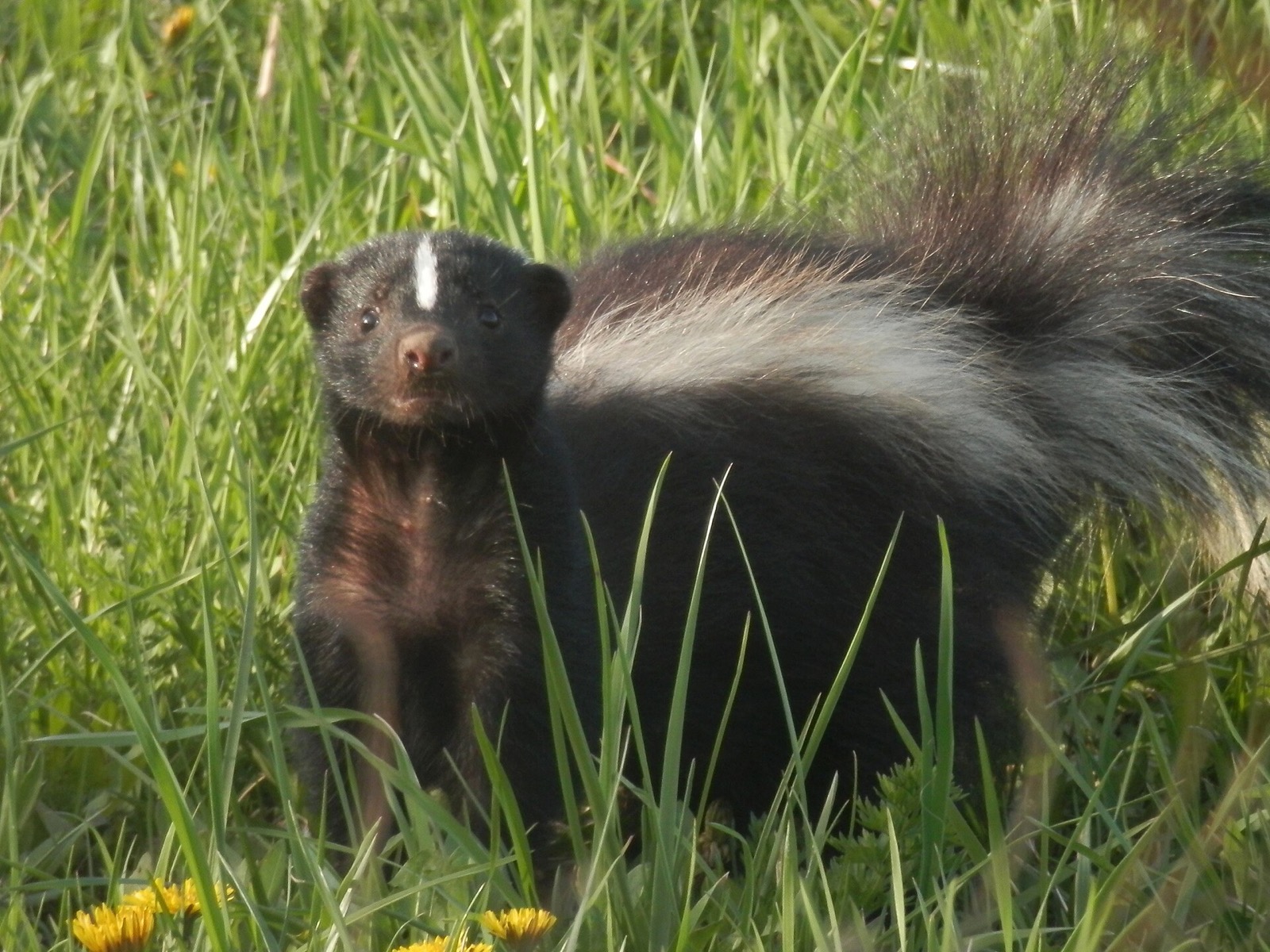
Photo Ryan Hodnett (opens in a new tab), CC BY-SA 4.0 (opens in a new tab)
At a glance
- Occurrence
- Native to North America
- Habitat
- Fields, woodland edges, farms, suburbs and mixed landscapes
- Diet
- Beetle grubs, insects, mice, eggs, fruit, carrion and other available foods
- Activity
- Mostly nocturnal
- Shelter
- Burrows, hollow logs, rock crevices and sheltered spaces under structures
- Social pattern
- Usually solitary, though several may den together in cold weather
- Rabies vector
- Yes
Identification
- Key marks
- Black body with one or two broad white stripes running from the head toward a bushy tail
- Told apart from
- Eastern spotted skunk, which is smaller and patterned with broken white spots and stripes
- Where to look
- Fields, woodland edges, farms, suburbs and mixed landscapes
Behaviour
It is mostly nocturnal. It uses habitats including fields, woodland edges, farms, suburbs and mixed landscapes. It feeds on beetle grubs, insects, mice, eggs, fruit, carrion and other available foods.
Skunks forage slowly with the nose close to the ground, digging for grubs and insects. Before spraying they usually give escalating warnings such as foot-stamping, tail-raising or body postures.
Skunks dig for beetle larvae and other soil invertebrates, providing natural pest control while aerating small patches of soil.
Why they matter
Skunks eat beetle larvae, grasshoppers, mice, carrion and other foods that people often regard as pests. Their small digging pits turn over patches of soil while they hunt.
Spray is chemically expensive to replace, so the animal benefits by warning first and saving it for situations where escape fails.
Reproduction and lifecycle
Mating — usually February through April, earlier in the south and later farther north.
Gestation — about 59–77 days.
Kits — commonly 4–7 are born in a den in spring.
Dependency — kits follow the mother on foraging trips after several weeks and are largely independent by late summer.
Living around people
- Keep dogs on a lead at night where skunks are active; most spraying incidents happen when a pet rushes too close.
- Secure rubbish and pet food.
- Check beneath sheds and porches before blocking den openings, especially during the period when young are dependent.
- Use tight wildlife-safe mesh rather than loose netting that can entangle an animal.
Misconceptions
- A skunk active in daylight is automatically rabid. Daylight activity can be normal, particularly for a parent feeding young; neurological signs matter more than time of day.
- Skunks spray without warning. They usually give conspicuous warnings first and prefer to leave rather than spend their limited spray.
- Skunks are useless around homes. Their diet includes many lawn grubs, insects and small rodents.
Related species
- eastern-spotted-skunk
Seasonal activity
When this species is breeding, and when there are nests on the ground. Mowing during the shaded months is how most nests are found.
| Jan | Feb | Mar | Apr | May | Jun | Jul | Aug | Sep | Oct | Nov | Dec | |
|---|---|---|---|---|---|---|---|---|---|---|---|---|
| Breeding | Jan: no | Feb: no | Mar: no | Apr: no | May: no | Jun: no | Jul: no | Aug: no | Sep: no | Oct: no | Nov: no | Dec: no |
| Active nests | Jan: no | Feb: no | Mar: no | Apr: no | May: no | Jun: no | Jul: no | Aug: no | Sep: no | Oct: no | Nov: no | Dec: no |
| Notes | Activity is reduced during cold spells, but skunks do not remain in continuous deep hibernation. | Mating season begins and adults may travel more widely. | Breeding continues; females seek secure den sites. | Pregnancy and denning increase. | Kits are born and remain in the den. | Young begin following the mother on short foraging trips. | Family groups forage together at night. | Young become increasingly independent. | Juveniles disperse and feed heavily on autumn insects and fruit. | Animals build body reserves and may select winter dens. | Several skunks may share sheltered dens during cold weather. | Activity becomes intermittent during cold spells but resumes on mild nights. |
If you found one
Answer a few questions and you will get a specific answer for what you are looking at.
I found an animal