
Species
Red fox
Vulpes vulpes
A slender, adaptable fox of fields, edges and suburbs, recognised by its black legs and usually white-tipped tail.
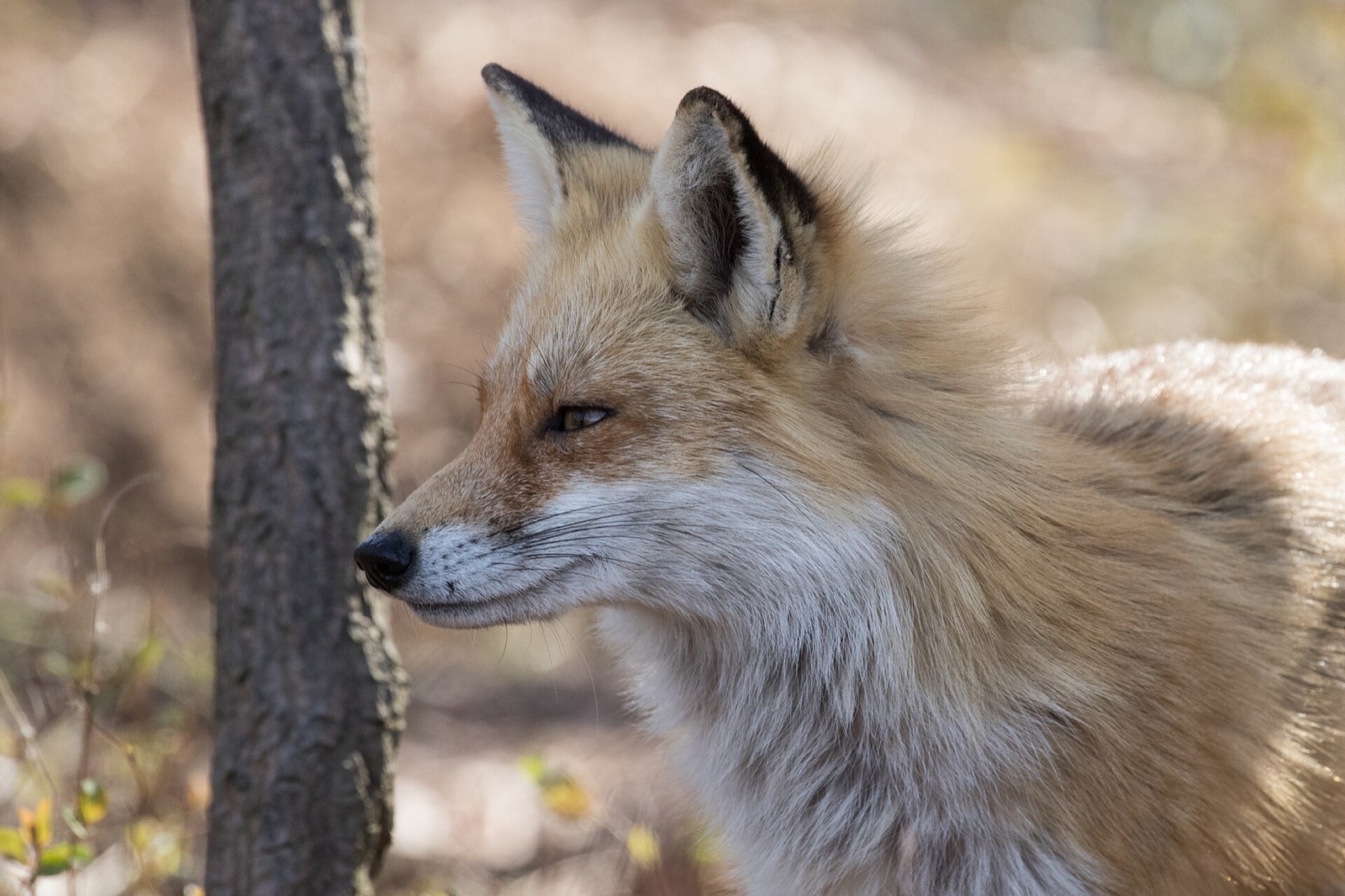
Photo Jennifer Cross / U.S. Fish and Wildlife Service (opens in a new tab), CC BY 2.0 (opens in a new tab)
At a glance
- Occurrence
- Native to North America
- Habitat
- Open fields, farm country, brushy edges, woodland margins and suburbs
- Diet
- Mice, voles, rabbits, insects, fruit, birds and carrion
- Activity
- Mostly nocturnal and crepuscular, with normal daylight activity at times
- Shelter
- Dens in burrows, hollow logs, brush or sheltered structures, especially when raising pups
- Social pattern
- Adults usually travel alone or as a pair; family groups form around pups
- Rabies vector
- Yes
Identification
- Key marks
- Slender build, pointed face, black lower legs and a bushy tail usually ending in white
- Told apart from
- Gray fox, which has a grizzled back, a dark stripe on top of the tail and no white tail tip
- Where to look
- Open fields, farm country, brushy edges, woodland margins and suburbs
Behaviour
It is mostly nocturnal and crepuscular, with normal daylight activity at times. It uses habitats including open fields, farm country, brushy edges, woodland margins and suburbs. It feeds on mice, voles, rabbits, insects, fruit, birds and carrion.
Foxes hunt with hearing and scent, often pausing to listen before pouncing on prey hidden in grass or leaf litter. They also eat fruit and insects, so their diet shifts with season.
Red foxes use exceptionally sensitive hearing to locate small mammals moving under grass or leaf litter.
Why they matter
Foxes suppress populations of mice, voles and other small mammals while also dispersing seeds from fruit. They are flexible mid-sized predators in both rural and suburban food webs.
A fox's large ears are not decoration: precise sound localisation helps it detect prey it cannot see.
Reproduction and lifecycle
Mating — mainly winter, often December through February, later in the north.
Gestation — about 51–53 days.
Pups — commonly 3–6 are born in a den in late winter or spring.
Dependency — pups begin emerging after roughly 4–5 weeks and remain with the family through summer.
Dispersal — young usually leave the natal area in autumn.
Living around people
- Keep small pets supervised, especially around dawn, dusk and night.
- Secure pet food, rubbish and fallen fruit so foxes do not learn to forage beside homes.
- Give dens with pups quiet space; parents may move young if repeatedly disturbed.
- Drive carefully on rural and suburban roads at night.
Misconceptions
- A fox seen in daylight is probably rabid. Healthy foxes may be active by day, especially when feeding growing pups; concern should focus on neurological signs rather than the clock.
- Foxes are looking for people to attack. They normally avoid close contact and focus on small prey and available food.
- Feeding a fox helps it survive. Regular handouts can reduce normal distance from people and increase conflict risk.
Related species
Seasonal activity
When this species is breeding, and when there are nests on the ground. Mowing during the shaded months is how most nests are found.
| Jan | Feb | Mar | Apr | May | Jun | Jul | Aug | Sep | Oct | Nov | Dec | |
|---|---|---|---|---|---|---|---|---|---|---|---|---|
| Breeding | Jan: no | Feb: no | Mar: no | Apr: no | May: no | Jun: no | Jul: no | Aug: no | Sep: no | Oct: no | Nov: no | Dec: no |
| Active nests | Jan: no | Feb: no | Mar: no | Apr: no | May: no | Jun: no | Jul: no | Aug: no | Sep: no | Oct: no | Nov: no | Dec: no |
| Notes | Peak courtship and mating season; pairs may travel and vocalise more. | Mating continues and females begin pregnancy. | Pregnant females select dens; some litters are born late in the month. | Pups remain close to dens while adults make frequent food trips. | Growing pups begin appearing outside dens and playing nearby. | Family groups range more widely as pups learn to hunt. | Young continue developing hunting skills and eating more solid food. | Juveniles travel farther from the den and family movements broaden. | Young begin becoming more independent. | Autumn dispersal increases road crossings and unfamiliar sightings. | Adults settle into winter ranges; prey and fruit remain important foods. | Courtship activity begins increasing again late in the month. |
If you found one
Answer a few questions and you will get a specific answer for what you are looking at.
I found an animal