
Species
Yellow-rumped warbler
Setophaga coronata
The most common warbler in Georgia's winter, surviving on wax myrtle berries.
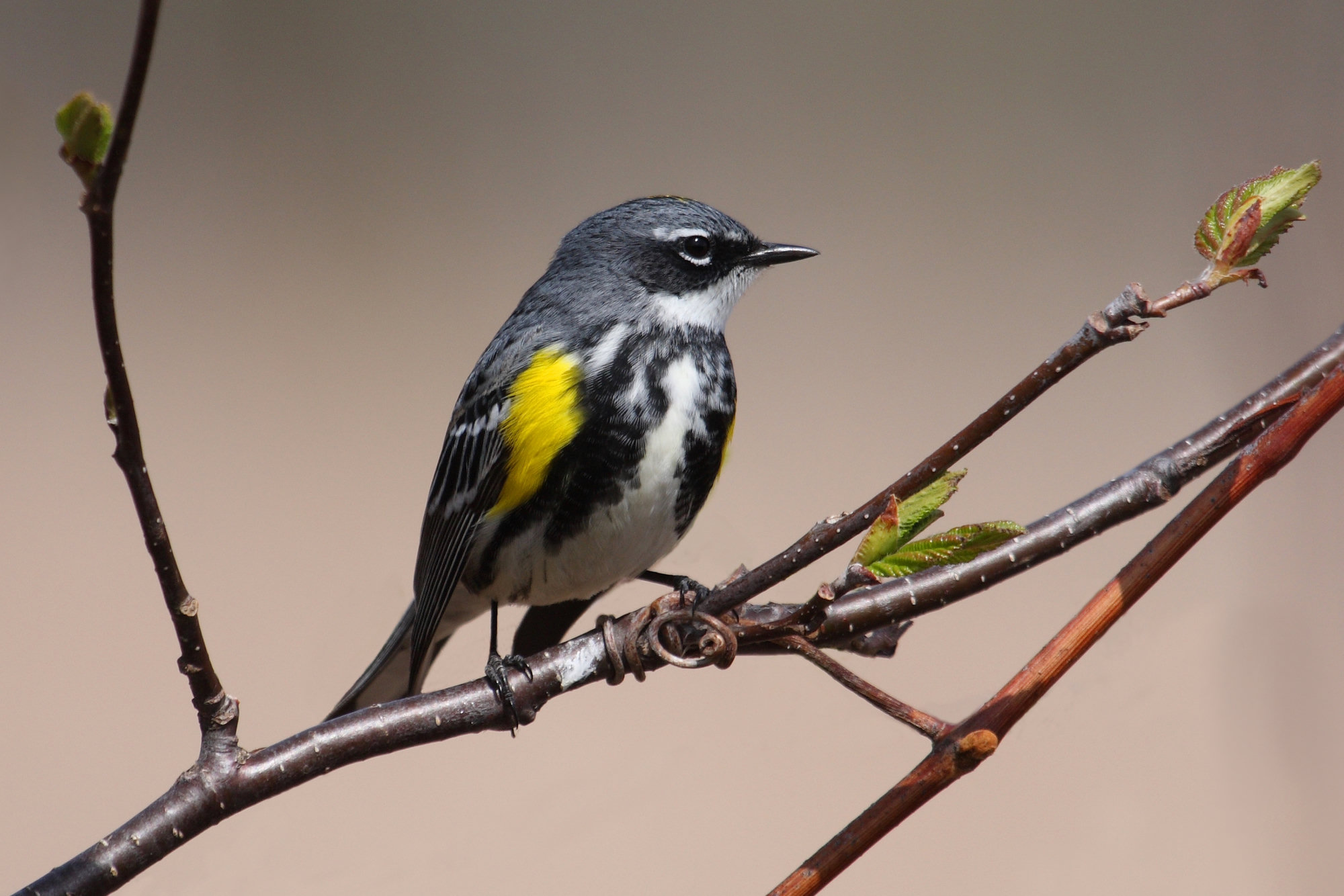
Photo Cephas (opens in a new tab) / Wikimedia Commons, CC BY-SA 3.0 (opens in a new tab)
At a glance
- Size
- About 12 to 14 cm long
- Weight
- About 12 to 13 g
- Habitat
- Woods, thickets, yards and coastal shrubs
- Diet
- Insects and berries, especially wax myrtle and bayberry
- In Georgia
- An abundant winter visitor
- Voice
- A sharp "check"
- Rabies vector
- No
Identification
- Key marks
- Yellow rump; yellow side patches; white throat; streaked grey-brown in winter
- Told apart from
- Palm warbler, which wags its tail and has yellow under the tail
- Where to look
- Almost anywhere in winter
Behaviour
Yellow-rumped warblers can digest the waxy coating of bayberries and wax myrtle berries, which lets them winter farther north than other warblers.
Why they matter
Yellow-rumped warblers are the most abundant winter warbler in Georgia. Their ability to digest wax is unusual among birds.
Reproduction and lifecycle
Nest — A cup in a conifer
Eggs — Usually four or five
Incubation — About 12 to 13 days
Chicks — Fed by both parents
Lifespan — Several years
Living around people
- Wax myrtle hedges feed them in winter.
Misconceptions
- Warblers vanish in winter. Yellow-rumped warblers are abundant in winter.
Related species
Seasonal activity
When this species is breeding, and when there are nests on the ground. Mowing during the shaded months is how most nests are found.
| Jan | Feb | Mar | Apr | May | Jun | Jul | Aug | Sep | Oct | Nov | Dec | |
|---|---|---|---|---|---|---|---|---|---|---|---|---|
| Breeding | Jan: no | Feb: no | Mar: no | Apr: no | May: no | Jun: no | Jul: no | Aug: no | Sep: no | Oct: no | Nov: no | Dec: no |
| Active nests | Jan: no | Feb: no | Mar: no | Apr: no | May: no | Jun: no | Jul: no | Aug: no | Sep: no | Oct: no | Nov: no | Dec: no |
| Notes | Wintering | Wintering | Wintering | Leaving | Nesting in the north | Nesting | Nesting | Present in the north | Migrating | Arriving | Wintering | Wintering |
Where it lives
Recorded in 95 states and provinces. Each one links to the other animals there, and to the rehabilitators licensed for them.
United States
- Alabamain winter
- Alaskabreeding
- Arizonain winter
- Arkansasin winter
- Californiain winter
- Coloradobreeding
- Connecticutin winter
- Delawarein winter
- District of Columbiain winter
- Floridain winter
- Georgiain winter
- Idaho
- Illinoisin winter
- Indianain winter
- Iowapassing through
- Kansasin winter
- Kentuckyin winter
- Louisianain winter
- Mainebreeding
- Marylandin winter
- Massachusettsin winter
- Michiganbreeding
- Minnesotabreeding
- Mississippiin winter
- Missouriin winter
- Montanabreeding
- Nebraskain winter
- Nevada
- New Hampshirebreeding
- New Jerseyin winter
- New Mexico
- New York
- North Carolinain winter
- North Dakotapassing through
- Ohioin winter
- Oklahomain winter
- Oregon
- Pennsylvaniain winter
- Rhode Islandin winter
- South Carolinain winter
- South Dakotabreeding
- Tennesseein winter
- Texasin winter
- Utah
- Vermontbreeding
- Virginiain winter
- Washington
- West Virginia
- Wisconsinbreeding
- Wyomingbreeding
Canada
Mexico
- Aguascalientesin winter
- Baja Californiain winter
- Baja California Surin winter
- Campechein winter
- Chiapasin winter
- Chihuahuain winter
- Coahuilain winter
- Colimain winter
- Durangoin winter
- Guanajuatoin winter
- Guerreroin winter
- Hidalgoin winter
- Jaliscoin winter
- Mexico Cityin winter
- Michoacanin winter
- Morelosin winter
- Nayaritin winter
- Nuevo Leonin winter
- Oaxacain winter
- Pueblain winter
- Queretaroin winter
- Quintana Rooin winter
- San Luis Potosiin winter
- Sinaloain winter
- Sonorain winter
- State of Mexicoin winter
- Tabascoin winter
- Tamaulipasin winter
- Tlaxcalain winter
- Veracruzin winter
- Yucatanin winter
- Zacatecasin winter
If you found one
Answer a few questions and you will get a specific answer for what you are looking at.
I found an animal