
Species
Yellow-bellied flycatcher
Empidonax flaviventris
A small, yellowish flycatcher of northern bogs that slips through Georgia's woods on migration.
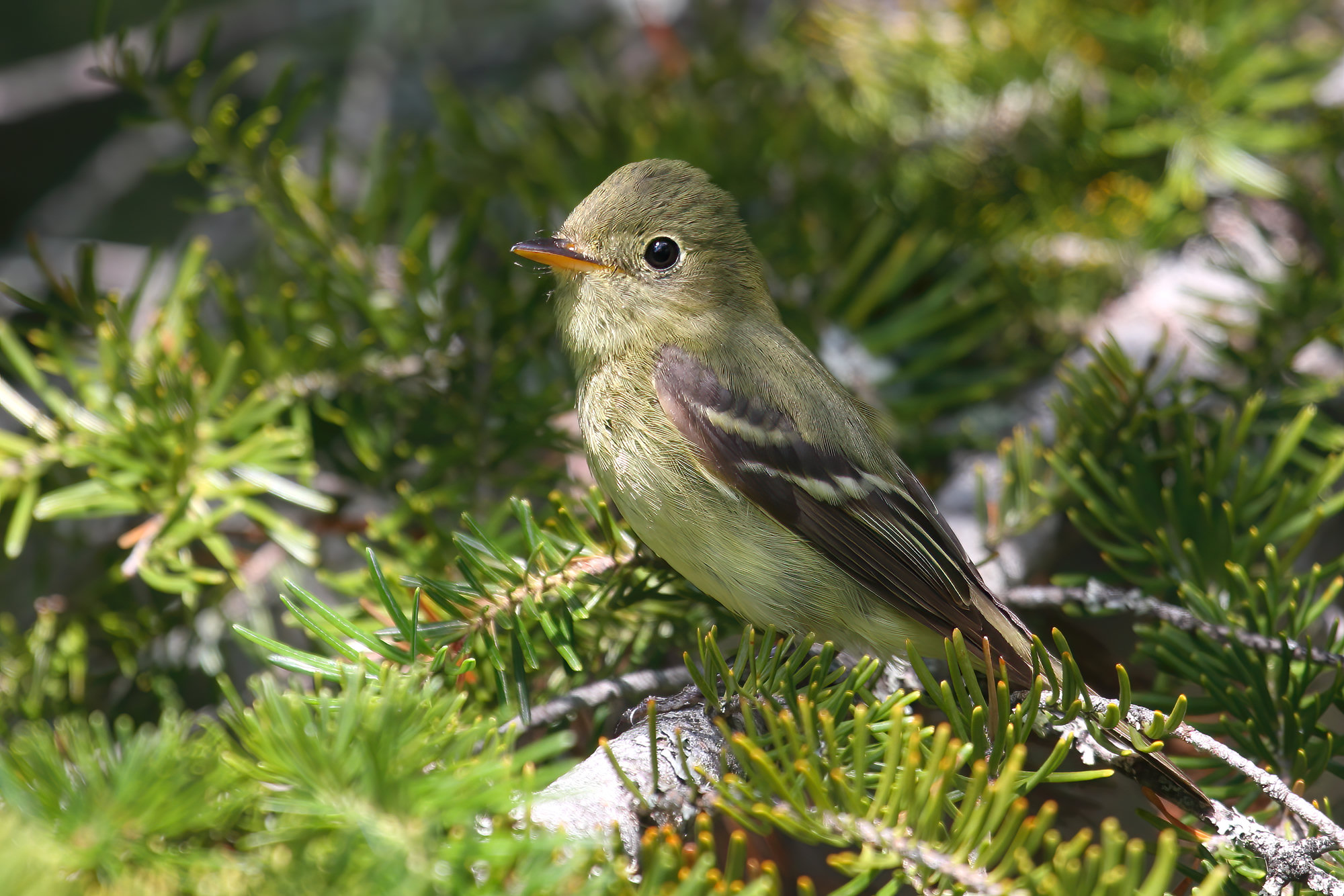
Photo Cephas (opens in a new tab) / Wikimedia Commons, CC BY-SA 3.0 (opens in a new tab)
At a glance
- Size
- About 13 to 15 cm long
- Weight
- About 8 to 16 g
- Habitat
- Northern bogs and spruce forests; any woods on migration
- Diet
- Insects and spiders
- In Georgia
- An uncommon migrant, May and September
- Voice
- A rising "per-wee" and a sneezy "chebunk"
- Rabies vector
- No
Identification
- Key marks
- Olive back; yellowish throat and belly; bold white eye-ring and wing bars
- Told apart from
- Acadian flycatcher, which has a whitish throat
- Told apart from
- Least flycatcher, which is greyer
- Where to look
- Shady woodland understorey during migration
Behaviour
Yellow-bellied flycatchers are shy and stay low in dense, shaded vegetation during migration.
Why they matter
This small flycatcher nests on mossy ground in northern bogs and winters in Central America. Its passage through Georgia is brief and easily missed.
Reproduction and lifecycle
Nest — A cup of moss on or near the ground in a bog
Eggs — Usually three or four
Incubation — About 15 days
Chicks — Fed by both parents
Lifespan — Several years
Living around people
- Migrating flycatchers are often killed by window strikes.
Misconceptions
- Small flycatchers can be identified by sight alone. Most are told apart by voice.
Related species
Seasonal activity
When this species is breeding, and when there are nests on the ground. Mowing during the shaded months is how most nests are found.
| Jan | Feb | Mar | Apr | May | Jun | Jul | Aug | Sep | Oct | Nov | Dec | |
|---|---|---|---|---|---|---|---|---|---|---|---|---|
| Breeding | Jan: no | Feb: no | Mar: no | Apr: no | May: no | Jun: no | Jul: no | Aug: no | Sep: no | Oct: no | Nov: no | Dec: no |
| Active nests | Jan: no | Feb: no | Mar: no | Apr: no | May: no | Jun: no | Jul: no | Aug: no | Sep: no | Oct: no | Nov: no | Dec: no |
| Notes | In Central America | In Central America | In Central America | Migrating north | Migrants in Georgia | Nesting in northern bogs | Nesting | Migrating south | Migrants in Georgia | Last migrants | In Central America | In Central America |
Where it lives
Recorded in 60 states and provinces. Each one links to the other animals there, and to the rehabilitators licensed for them.
United States
- Alabamapassing through
- Alaskabreeding
- Arkansaspassing through
- Connecticutpassing through
- Delawarepassing through
- District of Columbiapassing through
- Georgiapassing through
- Illinoispassing through
- Indianapassing through
- Iowapassing through
- Kansaspassing through
- Kentuckypassing through
- Louisianapassing through
- Mainebreeding
- Marylandpassing through
- Massachusettsbreeding
- Michiganbreeding
- Minnesotabreeding
- Mississippipassing through
- Missouripassing through
- Nebraskapassing through
- New Hampshirebreeding
- New Jerseypassing through
- New Yorkbreeding
- North Carolinapassing through
- North Dakotapassing through
- Ohiopassing through
- Oklahomapassing through
- Pennsylvaniapassing through
- Rhode Islandpassing through
- South Dakotapassing through
- Tennesseepassing through
- Texaspassing through
- Vermontbreeding
- Virginiapassing through
- West Virginiapassing through
- Wisconsinbreeding
Canada
If you found one
Answer a few questions and you will get a specific answer for what you are looking at.
I found an animal