
Species
Acadian flycatcher
Empidonax virescens
A small, greenish flycatcher of shady stream valleys, whose explosive 'peet-sa!' carries through the woods.
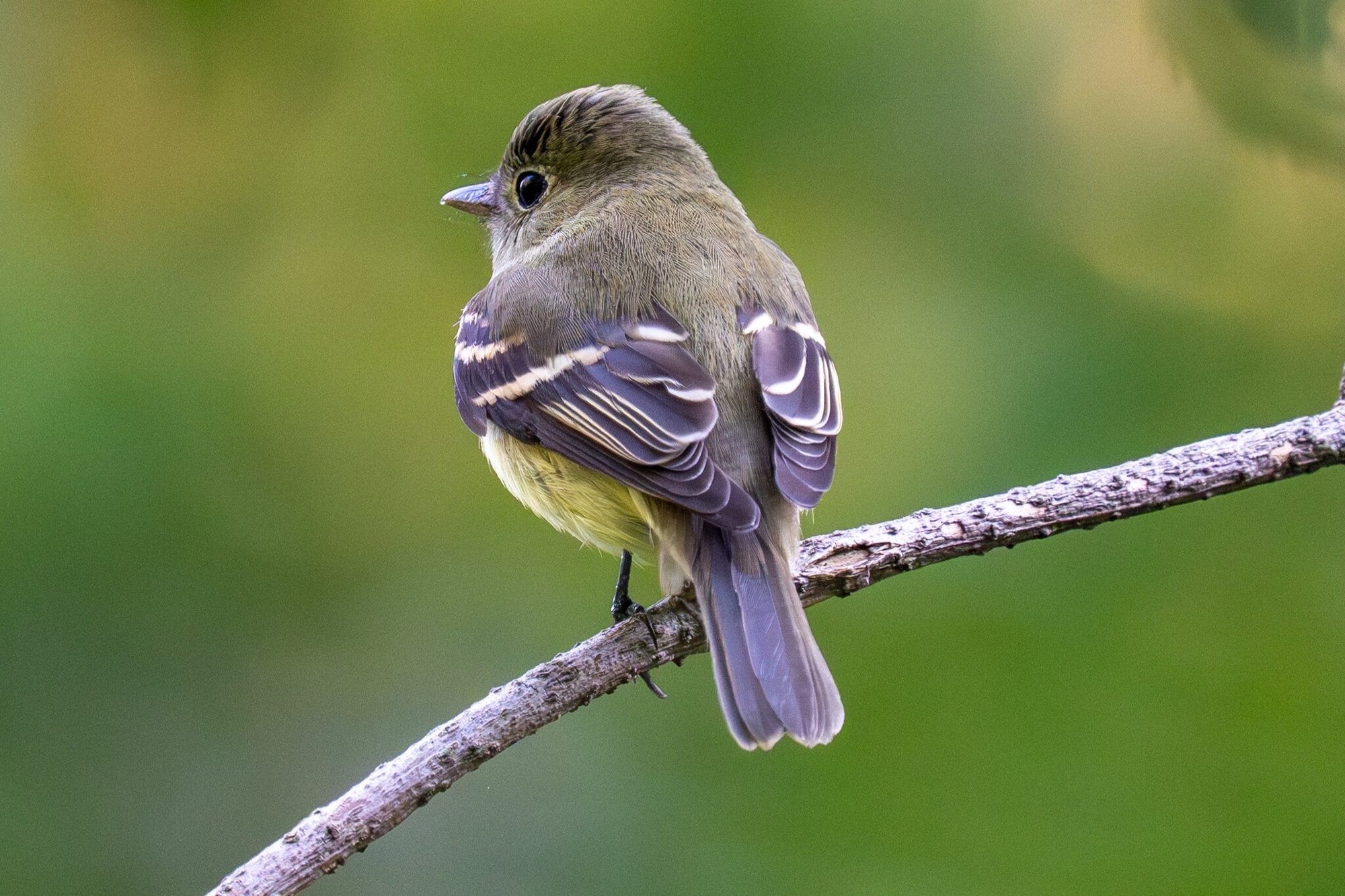
Photo Brandon Johnson (opens in a new tab) / iNaturalist, CC BY 4.0 (opens in a new tab)
At a glance
- Size
- About 13 to 15 cm long
- Weight
- About 11 to 14 g
- Habitat
- Mature, shady woods along streams and in ravines
- Diet
- Insects, caught in flight or picked from leaves
- In Georgia
- A common summer resident, April to September
- Voice
- A loud, sharp "peet-SA!"
- Rabies vector
- No
Identification
- Key marks
- Olive-green back; whitish throat; pale yellow wash below; eye-ring and wing bars; long wings
- Told apart from
- Eastern wood-pewee, which is greyer with no eye-ring
- Told apart from
- Least flycatcher, which is smaller and greyer
- Where to look
- Shady stream valleys; listen for the call
Behaviour
Acadian flycatchers catch insects in short flights from perches in the shaded understorey. They build hammock-like nests hanging from horizontal branches, often over water.
Why they matter
Acadian flycatchers need large tracts of mature forest along streams, and they are sensitive to fragmentation. Their presence shows that a stream valley still has old, shady woods.
Reproduction and lifecycle
Nest — A loose hammock of plant fibres suspended from a branch fork
Eggs — Usually two or three
Incubation — About 13 to 15 days
Chicks — Fed by both parents
Flight — At about 13 to 15 days
Lifespan — Several years
Living around people
- Keeping forested buffers along streams protects their habitat.
Misconceptions
- Birds of dark woods are all dull. The Acadian flycatcher's loud call is one of the most distinctive in the forest.
Related species
Seasonal activity
When this species is breeding, and when there are nests on the ground. Mowing during the shaded months is how most nests are found.
| Jan | Feb | Mar | Apr | May | Jun | Jul | Aug | Sep | Oct | Nov | Dec | |
|---|---|---|---|---|---|---|---|---|---|---|---|---|
| Breeding | Jan: no | Feb: no | Mar: no | Apr: no | May: no | Jun: no | Jul: no | Aug: no | Sep: no | Oct: no | Nov: no | Dec: no |
| Active nests | Jan: no | Feb: no | Mar: no | Apr: no | May: no | Jun: no | Jul: no | Aug: no | Sep: no | Oct: no | Nov: no | Dec: no |
| Notes | In South America | In South America | In South America | Arriving | Nesting | Nesting | Young fledging | Present | Leaving | Last birds | In South America | In South America |
Where it lives
Recorded in 39 states and provinces. Each one links to the other animals there, and to the rehabilitators licensed for them.
United States
- Alabamabreeding
- Arkansasbreeding
- Connecticutbreeding
- Delawarebreeding
- District of Columbiabreeding
- Floridabreeding
- Georgiabreeding
- Illinoisbreeding
- Indianabreeding
- Iowabreeding
- Kansasbreeding
- Kentuckybreeding
- Louisianabreeding
- Marylandbreeding
- Massachusettsbreeding
- Michiganbreeding
- Minnesotabreeding
- Mississippibreeding
- Missouribreeding
- Nebraskabreeding
- New Hampshirebreeding
- New Jerseybreeding
- New Yorkbreeding
- North Carolinabreeding
- Ohiobreeding
- Oklahomabreeding
- Pennsylvaniabreeding
- Rhode Islandbreeding
- South Carolinabreeding
- Tennesseebreeding
- Texasbreeding
- Virginiabreeding
- West Virginiabreeding
- Wisconsinbreeding
Canada
If you found one
Answer a few questions and you will get a specific answer for what you are looking at.
I found an animal