
Species
Woodland vole
Microtus pinetorum
A small, soft-furred vole that lives in shallow tunnels just beneath the leaf litter.
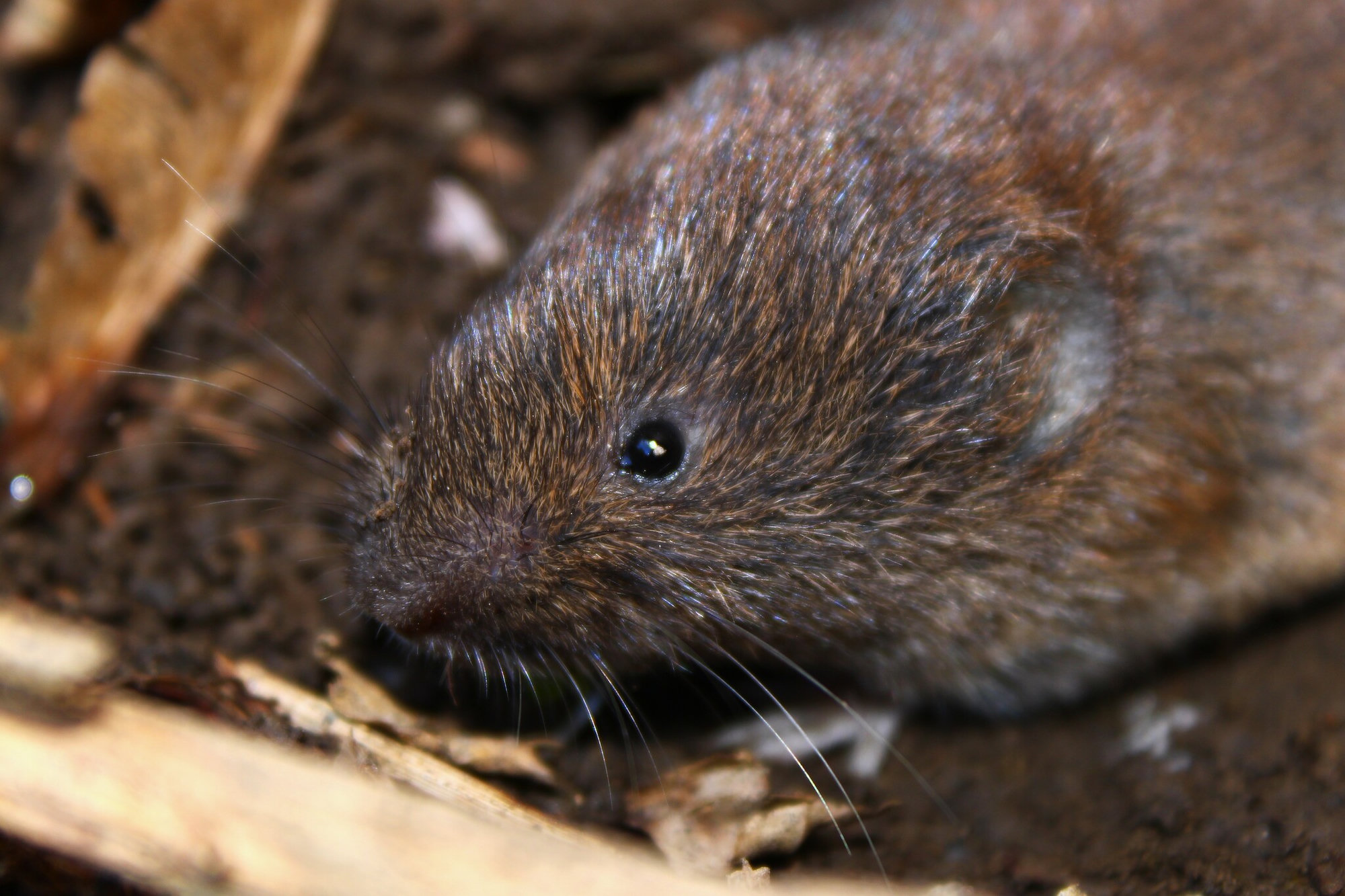
Photo Dominic (opens in a new tab) / iNaturalist, CC BY 4.0 (opens in a new tab)
At a glance
- Size
- Body about 8 to 11 cm; tail about 2 cm
- Weight
- About 20 to 40 g
- Habitat
- Deciduous forests, orchards, gardens and fields with loose soil and leaf litter
- Diet
- Roots, tubers, bulbs, bark, seeds, fruit and green plants
- Active
- Day and night, underground
- Shelter
- Shallow tunnels just beneath the leaf litter or soil surface
- Lifespan
- Usually a year or less
- Rabies vector
- No
Identification
- Key marks
- Short, dense, chestnut-brown fur; very short tail; small eyes and ears nearly hidden in the fur
- Told apart from
- Southern red-backed vole, which has a distinct red stripe down its back
- Told apart from
- Moles, which have large paddle-like forefeet and no visible eyes
- Signs
- Small holes and shallow tunnels just under leaf litter; gnawed roots and bulbs
- Where to look
- Loose soil under leaves in woods, gardens and orchards across Georgia
Behaviour
Woodland voles spend most of their lives in shallow tunnels just under the soil or leaf litter, and often use the tunnels of moles. They feed on roots, tubers and bulbs, and gnaw bark at the base of shrubs and young trees.
They live in small family groups that share tunnels and nests, and breed more slowly than most voles, with small litters.
Why they matter
Woodland voles mix the upper layer of soil as they tunnel and are an important food for owls, snakes, foxes and other predators of the forest floor.
They are also the animal usually responsible for damage blamed on moles: it is the vole, using the mole's tunnels, that eats roots and bulbs.
Reproduction and lifecycle
Breeding — much of the year, with peaks in spring and autumn
Gestation — about 24 days
Litter — usually one to four young
Weaning — at about two to three weeks old
Family — young often stay with their parents' group
Lifespan — usually less than a year
Living around people
- If bulbs or roots are being eaten, the culprit is usually a vole, not a mole.
- Wire mesh around bulbs and gravel around plant roots protect them without killing anything.
- Poisons for voles harm owls, hawks, snakes and pets that eat poisoned animals.
Misconceptions
- Moles eat bulbs and roots. Moles eat worms; voles eat the roots, often from the moles' tunnels.
- Voles are mice. They are a separate group with short tails and small ears.
Related species
Seasonal activity
When this species is breeding, and when there are nests on the ground. Mowing during the shaded months is how most nests are found.
| Jan | Feb | Mar | Apr | May | Jun | Jul | Aug | Sep | Oct | Nov | Dec | |
|---|---|---|---|---|---|---|---|---|---|---|---|---|
| Breeding | Jan: no | Feb: no | Mar: no | Apr: no | May: no | Jun: no | Jul: no | Aug: no | Sep: no | Oct: no | Nov: no | Dec: no |
| Active nests | Jan: no | Feb: no | Mar: no | Apr: no | May: no | Jun: no | Jul: no | Aug: no | Sep: no | Oct: no | Nov: no | Dec: no |
| Notes | Active underground, feeding on roots | Active | Breeding begins | Litters born underground | Breeding continues | Breeding | Breeding slows in heat and drought | Active | Breeding increases | Autumn litters | Gnawing on roots and bark increases | Active underground |
Where it lives
Recorded in 37 states and provinces. Each one links to the other animals there, and to the rehabilitators licensed for them.
United States
- Alabama
- Arkansas
- Connecticut
- Delaware
- District of Columbia
- Florida
- Georgia
- Illinois
- Indiana
- Iowa
- Kansas
- Kentucky
- Louisiana
- Maine
- Maryland
- Massachusetts
- Michigan
- Minnesota
- Mississippi
- Missouri
- Nebraska
- New Hampshire
- New Jersey
- New York
- North Carolina
- Ohio
- Oklahoma
- Pennsylvania
- Rhode Island
- South Carolina
- Tennessee
- Texas
- Vermont
- Virginia
- West Virginia
- Wisconsin
Canada
If you found one
Answer a few questions and you will get a specific answer for what you are looking at.
I found an animal