
Species
Southern red-backed vole
Clethrionomys gapperi
A small forest vole with a chestnut stripe down its back that eats and spreads underground fungi.
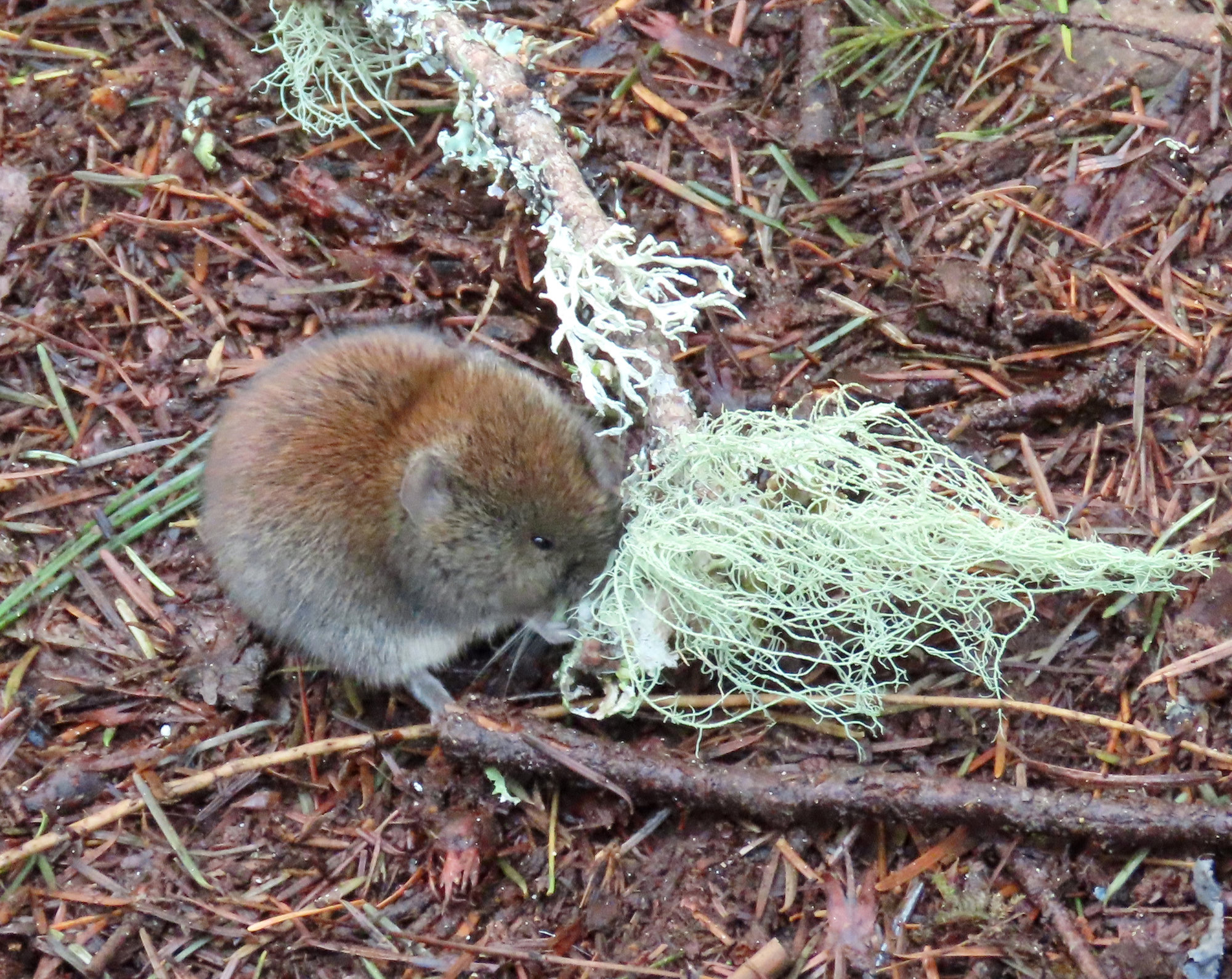
Photo Kathleen Dobson (opens in a new tab) / Wikimedia Commons, CC BY 4.0 (opens in a new tab)
At a glance
- Size
- Body about 9 to 11 cm; tail about 3 to 5 cm
- Weight
- About 15 to 40 g
- Habitat
- Cool, moist forests with logs, moss and rocks; in Georgia, the northeastern mountains
- Diet
- Fungi, including underground truffles, plus seeds, berries, green plants and lichens
- Active
- Day and night, all year
- Shelter
- Runways and nests under logs, moss, roots and rocks
- Lifespan
- Usually a year or less
- Rabies vector
- No
Identification
- Key marks
- A broad, chestnut-red stripe down the back from forehead to rump; grey-brown sides; grey belly; short tail; small ears
- Told apart from
- Woodland vole, which is uniformly chestnut-brown with no distinct back stripe
- Told apart from
- White-footed and deer mice, which have large eyes and ears and long tails
- Where to look
- Mossy logs and rocky forest floors at high elevation in north Georgia
Behaviour
Red-backed voles live in cool forests, moving through runways under logs, roots and moss. They do not hibernate and stay active under the snow.
A large part of their diet is fungi — including truffles that fruit underground — and they are among the forest animals that dig these up and eat them.
Why they matter
When red-backed voles eat underground fungi, they spread the spores in their droppings. Many of these fungi grow on tree roots and help trees take up water and nutrients, so the voles help sustain the forest itself.
They are also a key food for owls, weasels, hawks and foxes in mountain forests.
Reproduction and lifecycle
Breeding — spring to autumn, several litters a year
Gestation — about 17 to 19 days
Litter — usually four to six young
Weaning — at about two to three weeks old
Lifespan — rarely more than a year
Living around people
- Leaving fallen logs, moss and leaf litter in mountain forests keeps their habitat.
- Cats catch voles near cabins in the woods.
Misconceptions
- Voles are just mice. Voles are a separate group, with short tails, small ears and rounded faces.
- Fungi and mammals have nothing to do with each other. Red-backed voles and forest fungi depend on each other.
Related species
Seasonal activity
When this species is breeding, and when there are nests on the ground. Mowing during the shaded months is how most nests are found.
| Jan | Feb | Mar | Apr | May | Jun | Jul | Aug | Sep | Oct | Nov | Dec | |
|---|---|---|---|---|---|---|---|---|---|---|---|---|
| Breeding | Jan: no | Feb: no | Mar: no | Apr: no | May: no | Jun: no | Jul: no | Aug: no | Sep: no | Oct: no | Nov: no | Dec: no |
| Active nests | Jan: no | Feb: no | Mar: no | Apr: no | May: no | Jun: no | Jul: no | Aug: no | Sep: no | Oct: no | Nov: no | Dec: no |
| Notes | Active under snow and logs | Active | Breeding begins | First litters | Breeding continues | Young disperse | Feeding on fungi and berries | Breeding continues | Feeding heavily on fungi | Last litters | Active under leaves and snow | Active under snow |
Where it lives
Recorded in 42 states and provinces. Each one links to the other animals there, and to the rehabilitators licensed for them.
United States
If you found one
Answer a few questions and you will get a specific answer for what you are looking at.
I found an animal