
Species
Eastern deer mouse
Peromyscus maniculatus
A big-eared, long-tailed woodland mouse of the Appalachian forests, white below and brown above.
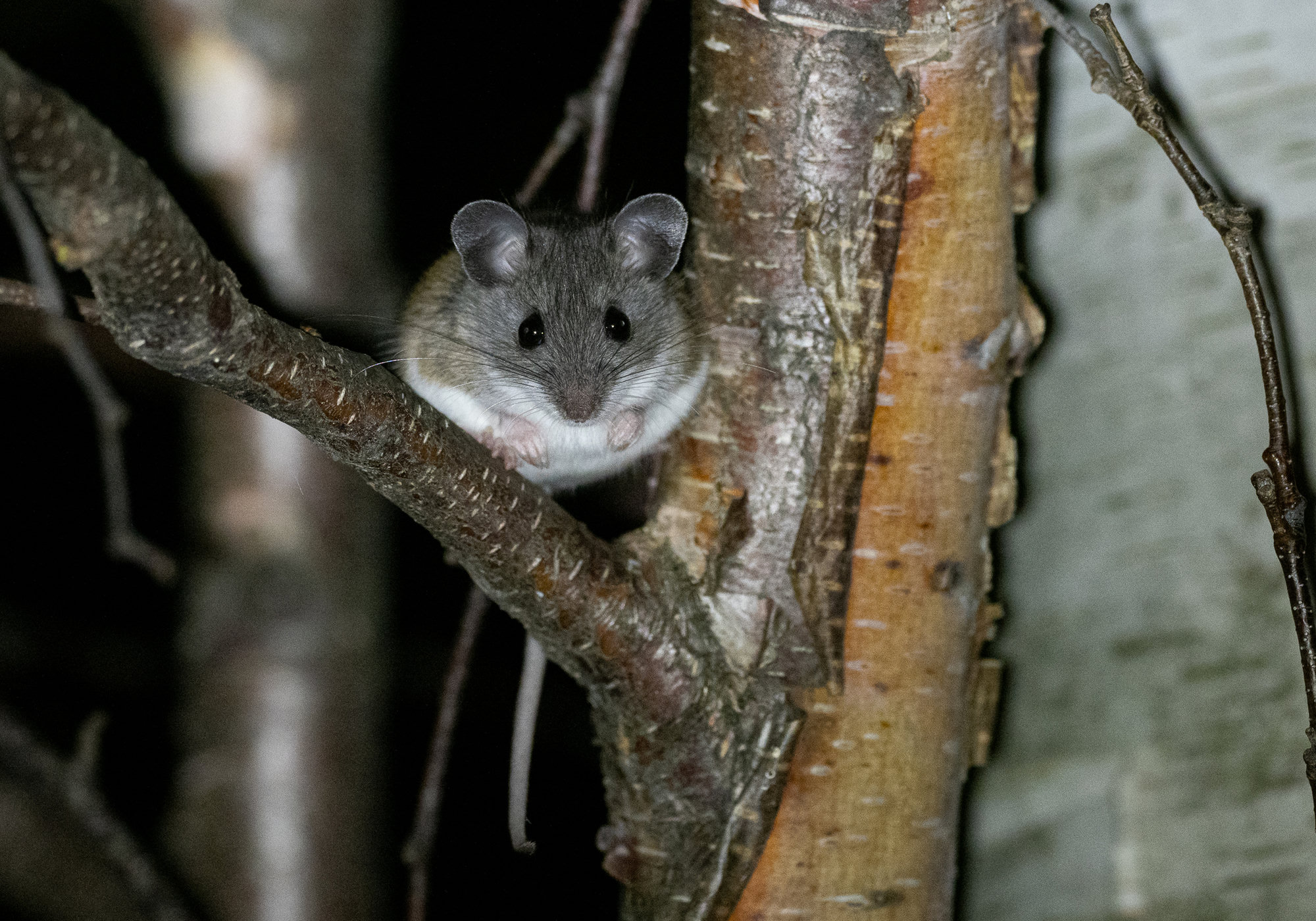
Photo Forest Botial-Jarvis (opens in a new tab) / iNaturalist, CC BY 4.0 (opens in a new tab)
At a glance
- Size
- Body about 8 to 10 cm; tail about 8 to 10 cm
- Weight
- About 15 to 25 g
- Habitat
- Cool mountain forests, especially with rocks, logs and conifers; in Georgia, the northern mountains
- Diet
- Seeds, nuts, fruit, fungi, insects and other invertebrates
- Active
- Night
- Shelter
- Nests in logs, stumps, rock crevices, tree hollows and cabins
- Lifespan
- Usually a year or so in the wild
- Rabies vector
- No
Identification
- Key marks
- Brown back; white belly and feet; large eyes and ears; long tail sharply two-coloured, dark above and white below, often with a tuft at the tip
- Told apart from
- White-footed mouse, which is very similar but usually has a shorter tail with a less sharp colour division
- Told apart from
- Woodland jumping mouse, which has much longer hind feet and a very long, white-tipped tail
- Where to look
- Mountain forests, around rocks, logs and cabins in north Georgia
Behaviour
Eastern deer mice are climbers and seed-cachers of mountain forests. They forage at night among rocks and logs and up into shrubs and trees, storing seeds in hidden caches for the winter.
In 2019, genetic work split the animal once called simply the deer mouse into several species; the eastern deer mouse is the woodland form of eastern Canada, the Northeast and the Appalachians.
Why they matter
Deer mice move and bury tree seeds, eat insect pests, and are a staple food for owls, weasels, foxes and snakes in mountain forests.
They are also one of the most studied mammals in biology, used to understand everything from genetics to how burrowing and parenting behaviour evolve.
Reproduction and lifecycle
Breeding — spring to autumn
Gestation — about 22 to 26 days
Litter — usually three to six young
Weaning — at about three to four weeks old
Maturity — at about six to eight weeks old
Lifespan — usually a year or so in the wild
Living around people
- Deer mice sometimes enter mountain cabins; sealing gaps keeps them out.
- Like other wild rodents, they can carry hantaviruses; clean up droppings wet, with gloves and ventilation, rather than sweeping or vacuuming.
- Poisons harm the owls and foxes that eat mice.
Misconceptions
- Deer mice and house mice are the same. Deer mice are native, with big eyes, white bellies and two-coloured tails.
- Only western deer mice carry hantaviruses. Any wild mouse's droppings should be handled with care.
Related species
Seasonal activity
When this species is breeding, and when there are nests on the ground. Mowing during the shaded months is how most nests are found.
| Jan | Feb | Mar | Apr | May | Jun | Jul | Aug | Sep | Oct | Nov | Dec | |
|---|---|---|---|---|---|---|---|---|---|---|---|---|
| Breeding | Jan: no | Feb: no | Mar: no | Apr: no | May: no | Jun: no | Jul: no | Aug: no | Sep: no | Oct: no | Nov: no | Dec: no |
| Active nests | Jan: no | Feb: no | Mar: no | Apr: no | May: no | Jun: no | Jul: no | Aug: no | Sep: no | Oct: no | Nov: no | Dec: no |
| Notes | Active on stored seeds; may share nests for warmth | Active | Breeding begins | First litters | Young leave the nest at about three weeks old | Breeding continues | Breeding | Breeding | Autumn litters; caching seeds | Caching seeds and nuts | Some move into cabins and outbuildings | Active on stored food |
Where it lives
Recorded in 27 states and provinces. Each one links to the other animals there, and to the rehabilitators licensed for them.
United States
If you found one
Answer a few questions and you will get a specific answer for what you are looking at.
I found an animal