
Species
Woodland jumping mouse
Napaeozapus insignis
A leaping mountain mouse with golden sides and a long, white-tipped tail.
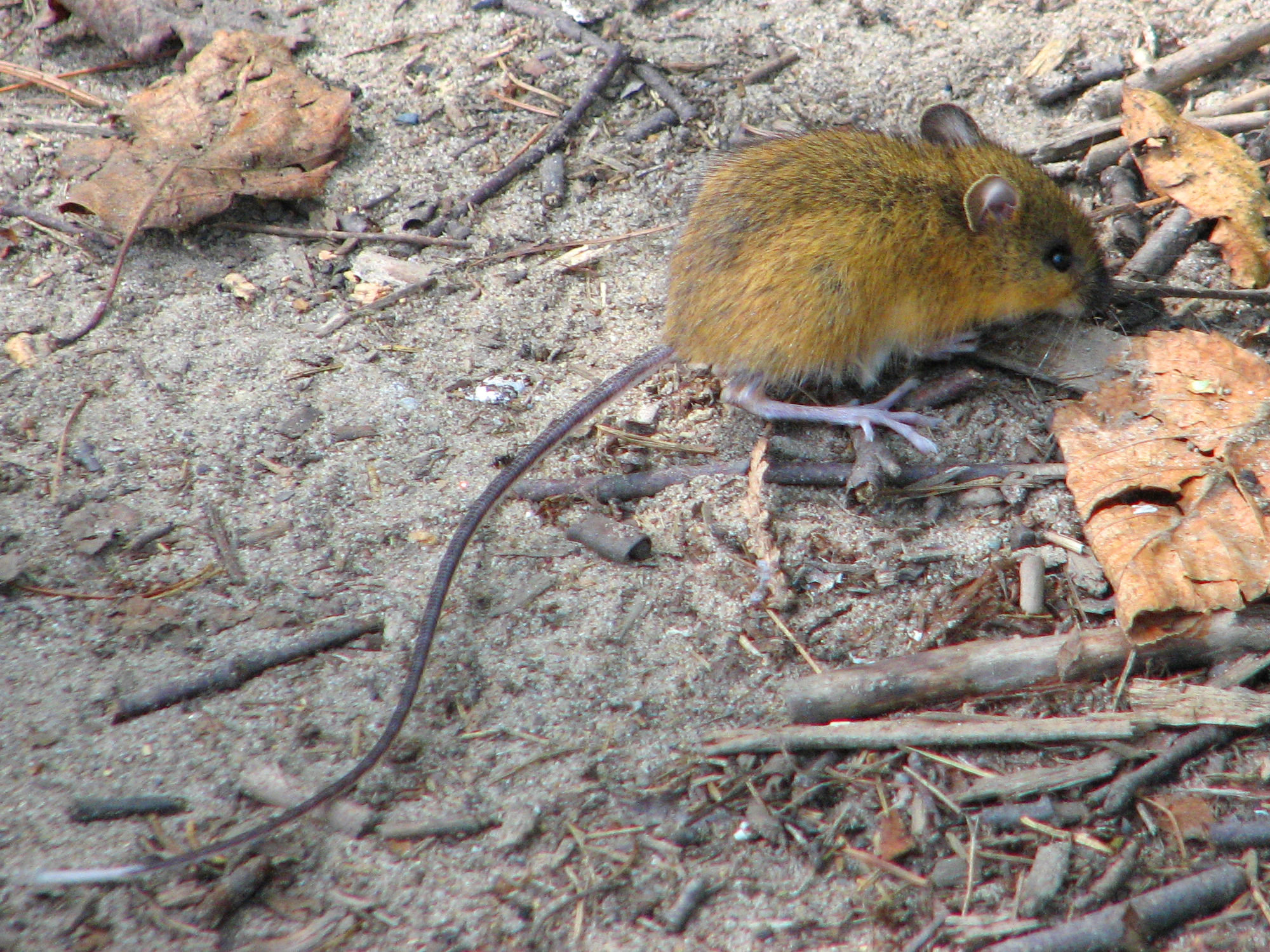
Photo D Gordon E. Robertson (opens in a new tab) / Wikimedia Commons, CC BY-SA 3.0 (opens in a new tab)
At a glance
- Size
- Body about 8 to 10 cm; tail about 12 to 16 cm
- Weight
- About 17 to 35 g
- Habitat
- Cool, moist forests near streams, often with ferns and rhododendron; in Georgia, the northeastern mountains
- Diet
- Seeds, fruit, fungi, including underground truffles, and insects
- Active
- Night
- Shelter
- Nests on the ground in summer; burrows for hibernation
- Lifespan
- A year or two
- Rabies vector
- No
Identification
- Key marks
- Bright orange-yellow sides; dark brown back stripe; white belly; very long tail with a white tip; long hind feet
- Told apart from
- Meadow jumping mouse, which is duller and lacks the white tail tip
- Where to look
- Stream banks in cool mountain forest in north Georgia
Behaviour
Woodland jumping mice leap through the forest in bounds, using their long tails for balance. They feed at night along streams and on the forest floor, eating seeds, fruit, insects and underground fungi.
They hibernate deeply for about half the year in underground nests, after fattening up in late summer and early autumn.
Why they matter
Like red-backed voles, woodland jumping mice eat underground fungi and spread their spores, helping the fungi that grow with tree roots.
In Georgia they are rare and found only in the cool, moist forests of the northeastern mountains, part of the northern wildlife that survives on the high ridges.
Reproduction and lifecycle
Breeding — late spring and summer, one or two litters
Gestation — about 23 to 29 days
Litter — usually three to six young
Weaning — at about five weeks old
Hibernation — from autumn to spring, about six months
Lifespan — a year or two
Living around people
- Keeping forest along mountain streams intact keeps their habitat.
- A jumping mouse found in winter is hibernating and should be left undisturbed.
Misconceptions
- Mice cannot jump far. Woodland jumping mice bound through the forest in long leaps.
- Georgia is too far south for northern mammals. Its highest mountains still hold some.
Related species
Seasonal activity
When this species is breeding, and when there are nests on the ground. Mowing during the shaded months is how most nests are found.
| Jan | Feb | Mar | Apr | May | Jun | Jul | Aug | Sep | Oct | Nov | Dec | |
|---|---|---|---|---|---|---|---|---|---|---|---|---|
| Breeding | Jan: no | Feb: no | Mar: no | Apr: no | May: no | Jun: no | Jul: no | Aug: no | Sep: no | Oct: no | Nov: no | Dec: no |
| Active nests | Jan: no | Feb: no | Mar: no | Apr: no | May: no | Jun: no | Jul: no | Aug: no | Sep: no | Oct: no | Nov: no | Dec: no |
| Notes | Hibernating | Hibernating | Hibernating | Hibernating; some emerge late in the month | Emerging; breeding begins | First litters | Breeding continues | Feeding heavily to build fat | Fattening; some enter hibernation | Hibernating | Hibernating | Hibernating |
Where it lives
Recorded in 28 states and provinces. Each one links to the other animals there, and to the rehabilitators licensed for them.
United States
If you found one
Answer a few questions and you will get a specific answer for what you are looking at.
I found an animal