
Species
Meadow jumping mouse
Zapus hudsonius
A small mouse with a very long tail and long hind feet that leaps through grass and hibernates for half the year.
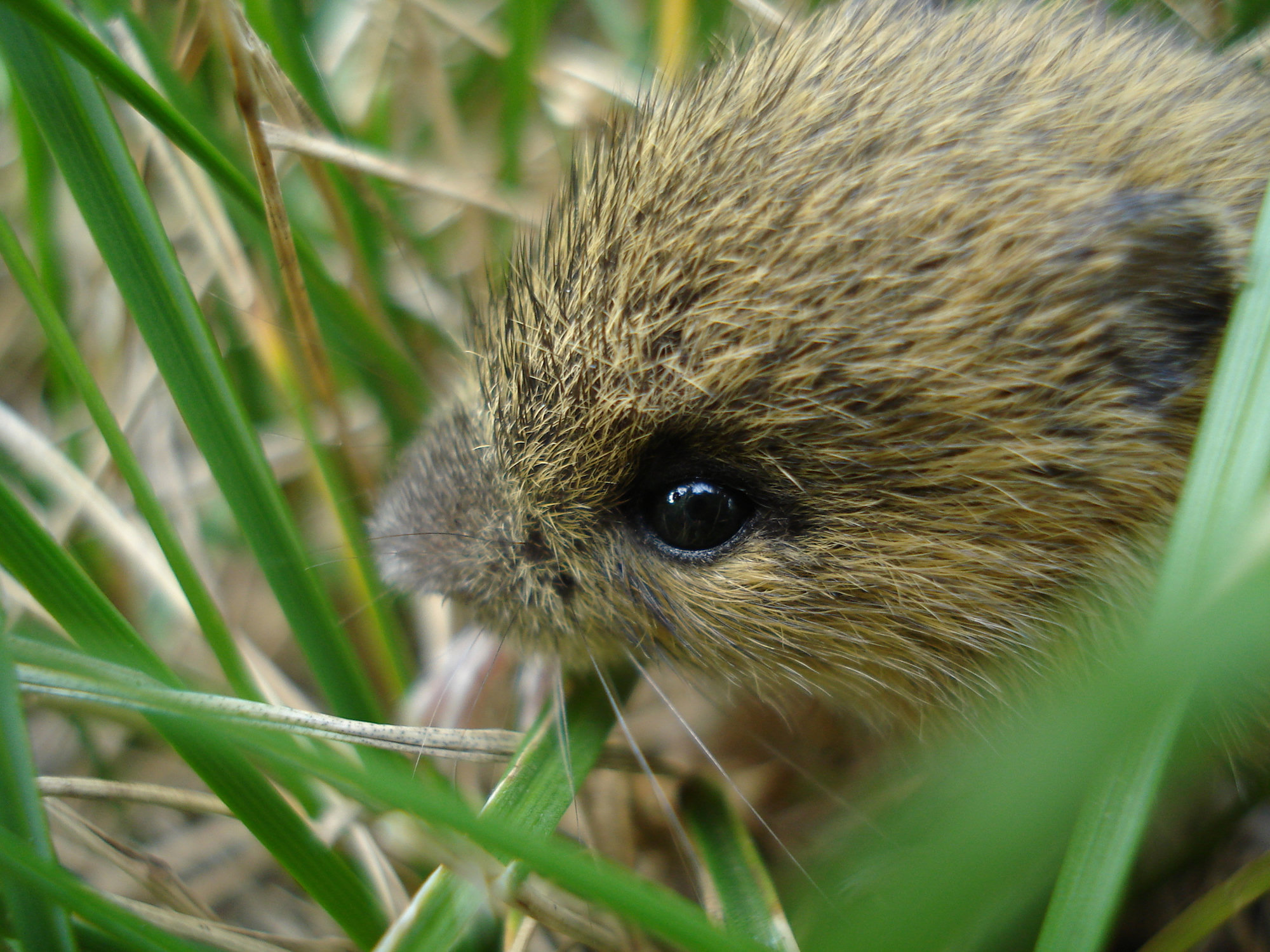
Photo Ryan Hodnett (opens in a new tab) / iNaturalist, CC BY-SA 4.0 (opens in a new tab)
At a glance
- Size
- Body about 7 to 9 cm; tail about 10 to 15 cm
- Weight
- About 15 to 25 g
- Habitat
- Wet meadows, grassy stream banks, marsh edges and damp fields
- Diet
- Seeds, fruit, fungi and insects
- Active
- Night
- Shelter
- Grass nests on the ground in summer; burrows for hibernation
- Lifespan
- A year or two
- Rabies vector
- No
Identification
- Key marks
- Yellow-brown sides, darker back stripe, white belly; very long tail, much longer than the body; long hind feet
- Movement
- Leaps in bounds when disturbed rather than running
- Told apart from
- Woodland jumping mouse, which has a white tip to the tail and brighter orange sides
- Told apart from
- Other mice, whose tails are much shorter and which run rather than leap
- Where to look
- Wet grassland and stream banks; in Georgia, rare and scattered in the north
Behaviour
Meadow jumping mice move through tall grass in a series of long leaps, using their long hind feet to spring and their long tail for balance. They are active at night and feed on grass seeds, fruit, fungi and insects.
They are deep hibernators. After fattening up in late summer, they spend six months or more asleep in an underground nest, one of the longest hibernation periods of any North American mammal.
Why they matter
Jumping mice are part of the wildlife of wet meadows, a habitat that has been drained and ploughed across much of the East. In Georgia they are rare, and where they occur they are a sign of a healthy wet grassland.
Their long hibernation also makes them an unusual mammal: a mouse that is awake for only about half the year.
Reproduction and lifecycle
Breeding — late spring and summer, one or two litters
Gestation — about 18 days
Litter — usually four to six young
Weaning — at about four weeks old
Hibernation — from autumn to spring, often six months or more
Lifespan — a year or two
Living around people
- Draining and mowing wet meadows removes their habitat.
- Leaving uncut grass along streams and ditches helps them.
- A jumping mouse found in winter is hibernating and should be left undisturbed.
Misconceptions
- A mouse that leaps like that must be a baby kangaroo rat. It is a native jumping mouse, with no relation to desert kangaroo rats.
- All mice are active in winter. Jumping mice hibernate for half the year.
Related species
Seasonal activity
When this species is breeding, and when there are nests on the ground. Mowing during the shaded months is how most nests are found.
| Jan | Feb | Mar | Apr | May | Jun | Jul | Aug | Sep | Oct | Nov | Dec | |
|---|---|---|---|---|---|---|---|---|---|---|---|---|
| Breeding | Jan: no | Feb: no | Mar: no | Apr: no | May: no | Jun: no | Jul: no | Aug: no | Sep: no | Oct: no | Nov: no | Dec: no |
| Active nests | Jan: no | Feb: no | Mar: no | Apr: no | May: no | Jun: no | Jul: no | Aug: no | Sep: no | Oct: no | Nov: no | Dec: no |
| Notes | Hibernating | Hibernating | Hibernating | Emerging from hibernation, males first | Breeding begins | First litters born in grass nests | Breeding continues | Feeding heavily to build fat | Entering hibernation begins | Hibernating | Hibernating | Hibernating |
Where it lives
Recorded in 47 states and provinces. Each one links to the other animals there, and to the rehabilitators licensed for them.
United States
- Alabama
- Alaska
- Colorado
- Connecticut
- Delaware
- Georgia
- Illinois
- Indiana
- Iowa
- Kansas
- Kentucky
- Maine
- Maryland
- Massachusetts
- Michigan
- Minnesota
- Missouri
- Montana
- Nebraska
- New Hampshire
- New Jersey
- New York
- North Carolina
- North Dakota
- Ohio
- Pennsylvania
- Rhode Island
- South Carolina
- South Dakota
- Tennessee
- Vermont
- Virginia
- West Virginia
- Wisconsin
- Wyoming
If you found one
Answer a few questions and you will get a specific answer for what you are looking at.
I found an animal