
Species
Cotton mouse
Peromyscus gossypinus
A large, dark woodland mouse of southern swamps and forests that climbs as easily as it runs.
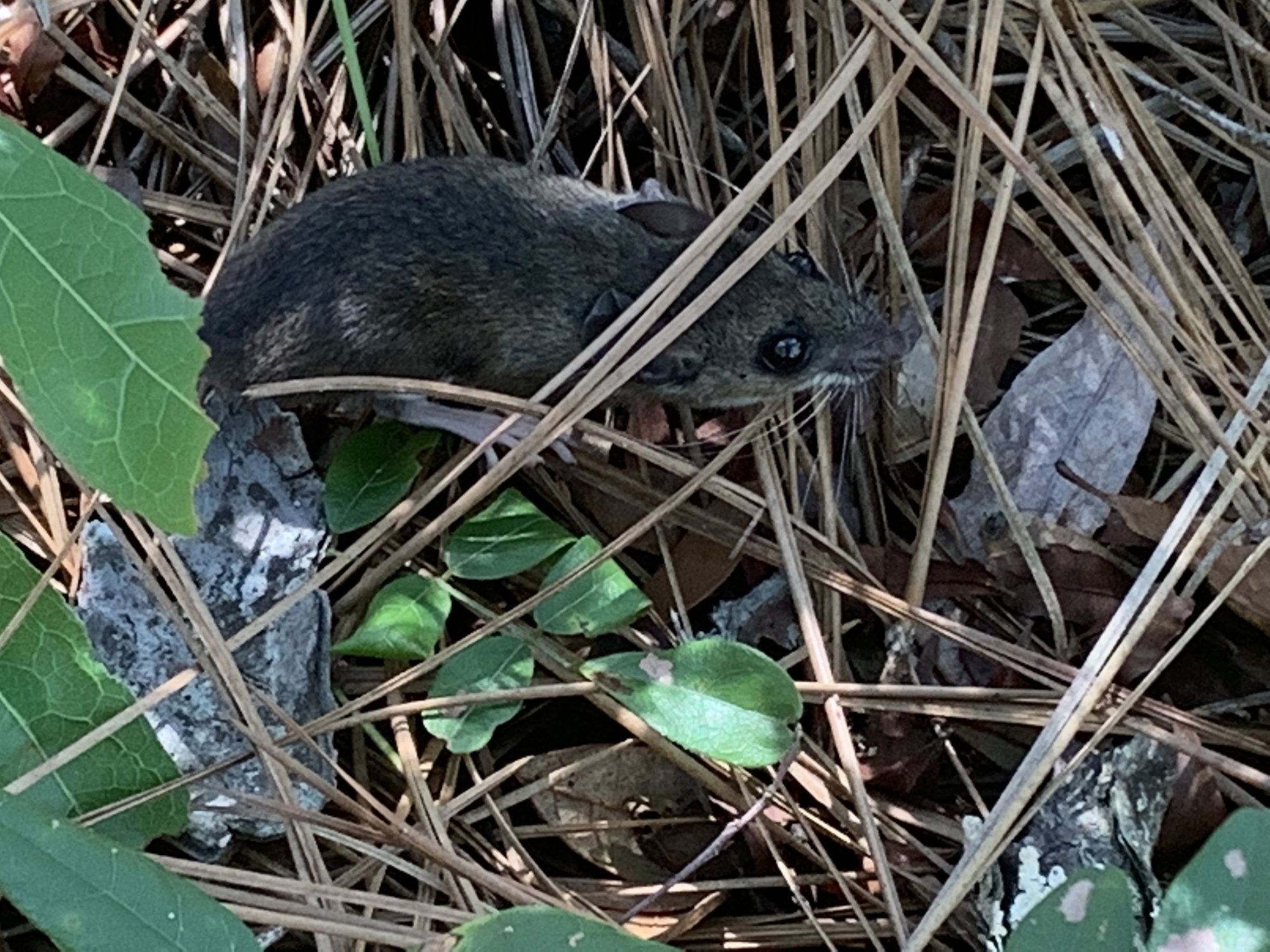
Photo Unknown photographer (opens in a new tab) / iNaturalist, CC0 1.0 (opens in a new tab)
At a glance
- Size
- Body about 9 to 11 cm; tail about 8 to 10 cm
- Weight
- About 25 to 45 g
- Habitat
- Bottomland forests, swamps, hammocks, pinewoods and brushy fields across the Southeast
- Diet
- Seeds, nuts, fruit, insects, spiders and snails
- Active
- Night
- Shelter
- Nests in logs, stumps, tree hollows, under bark and in buildings
- Lifespan
- Usually a year or less in the wild
- Rabies vector
- No
Identification
- Key marks
- Large for a mouse; dark brown back, white belly and feet; large eyes and ears; tail dark above and pale below
- Told apart from
- White-footed mouse, which is smaller and paler; the two can be hard to tell apart
- Told apart from
- House mouse, which is grey-brown with a scaly tail
- Where to look
- Swamp forests, stumps and log piles across Georgia
Behaviour
Cotton mice are large, strong-climbing mice of southern forests. They forage at night on the ground and in trees and shrubs for seeds, fruit and insects, and nest in hollow logs, stumps and tree cavities, sometimes well above the ground.
In the South, unlike many northern mice, they breed mostly in the cooler months, with less breeding in the heat of summer.
Why they matter
Cotton mice are among the most common small mammals in southern bottomland forests and swamps, and a major food for owls, snakes, foxes, bobcats and weasels.
One subspecies, the Key Largo cotton mouse of Florida, is endangered, a reminder that even common animals can have fragile local forms.
Reproduction and lifecycle
Breeding — mainly autumn to spring in the South
Gestation — about 23 days
Litter — usually two to five young
Weaning — at about three weeks old
Lifespan — usually less than a year in the wild
Living around people
- Cotton mice may enter cabins and sheds near woods; closing gaps keeps them out.
- Like other wild rodents, they can carry diseases; avoid handling them and clean up droppings carefully.
- Poisons harm the predators that eat mice.
Misconceptions
- A mouse in the woods is a house mouse gone wild. Cotton mice are native forest animals.
- Mice cannot climb well. Cotton mice nest and feed in trees.
Related species
Seasonal activity
When this species is breeding, and when there are nests on the ground. Mowing during the shaded months is how most nests are found.
| Jan | Feb | Mar | Apr | May | Jun | Jul | Aug | Sep | Oct | Nov | Dec | |
|---|---|---|---|---|---|---|---|---|---|---|---|---|
| Breeding | Jan: no | Feb: no | Mar: no | Apr: no | May: no | Jun: no | Jul: no | Aug: no | Sep: no | Oct: no | Nov: no | Dec: no |
| Active nests | Jan: no | Feb: no | Mar: no | Apr: no | May: no | Jun: no | Jul: no | Aug: no | Sep: no | Oct: no | Nov: no | Dec: no |
| Notes | Breeding | Breeding | Litters born in hollow logs and stumps | Breeding continues | Breeding slows | Less breeding in summer heat | Active at night | Active | Breeding resumes | Autumn litters | Breeding | Breeding |
Where it lives
Recorded in 15 states and provinces. Each one links to the other animals there, and to the rehabilitators licensed for them.
If you found one
Answer a few questions and you will get a specific answer for what you are looking at.
I found an animal