
Species
Golden mouse
Ochrotomys nuttalli
A golden-orange, tree-living mouse that builds round nests in vines and shrubs.
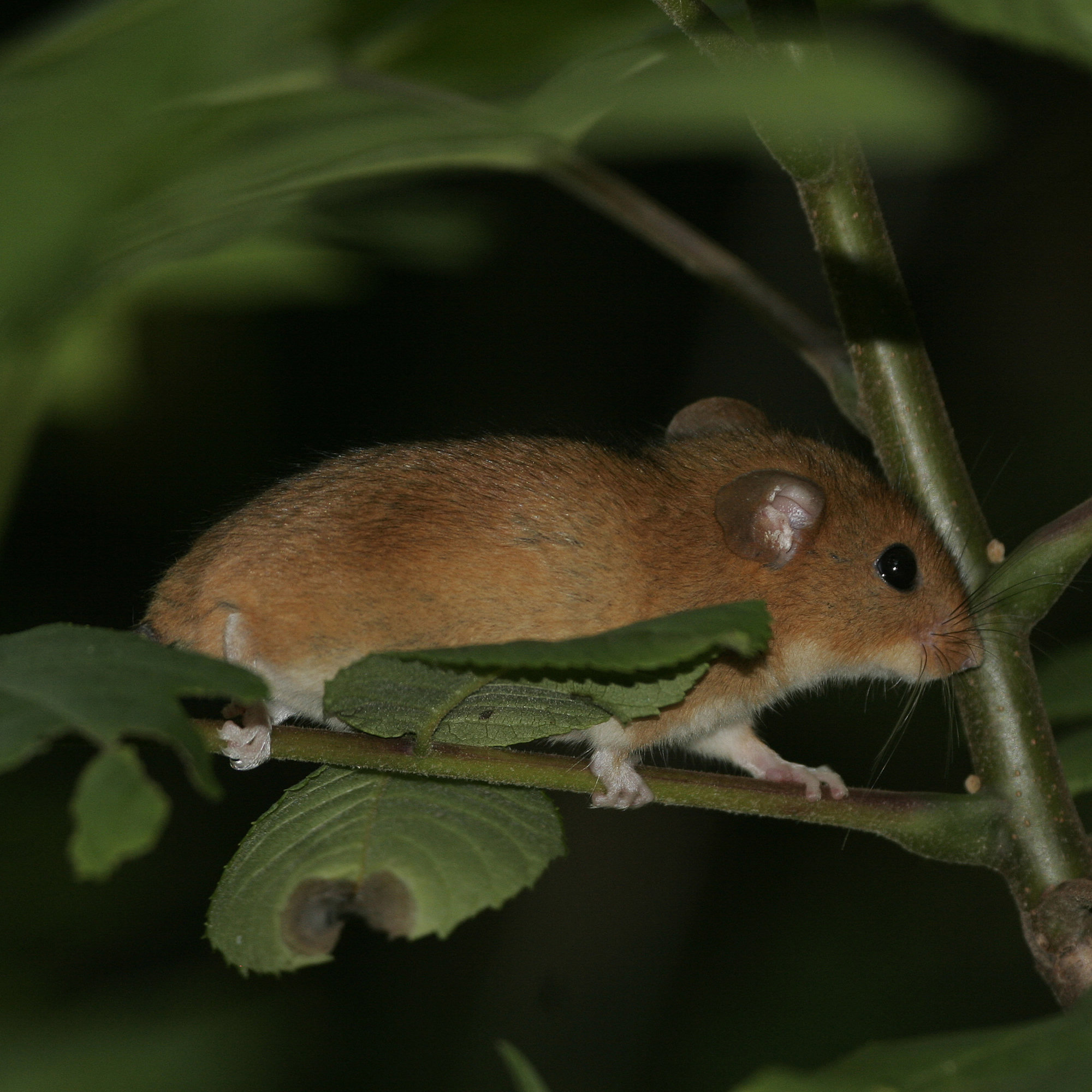
Photo Dan Vickers (opens in a new tab) / iNaturalist, CC BY 4.0 (opens in a new tab)
At a glance
- Size
- Body about 8 to 10 cm; tail about 7 to 9 cm
- Weight
- About 15 to 25 g
- Habitat
- Forests and thickets with dense vines, especially greenbrier and honeysuckle
- Diet
- Seeds of sumac, greenbrier, cherry and other plants, plus insects
- Active
- Night
- Shelter
- Round nests of shredded bark and leaves in vines and shrubs, from ground level to several metres up
- Lifespan
- Usually a year or two
- Rabies vector
- No
Identification
- Key marks
- Rich golden-orange to cinnamon fur; creamy white belly; large dark eyes; tail about as long as the body
- Told apart from
- White-footed and cotton mice, which are brown rather than golden
- Where to look
- Vine tangles and thickets in woods across Georgia; its ball-shaped nests in greenbrier and honeysuckle
Behaviour
Golden mice are the most tree-living mice of the Southeast. They climb through vines and shrubs, using their tail to help them balance, and build round nests of shredded bark, leaves and grass in tangles of greenbrier, honeysuckle and grape.
They also build small feeding platforms where they eat seeds, leaving piles of husks. Several golden mice may share a nest, and they are generally calm and gentle.
Why they matter
Golden mice are a sign of the dense, vine-rich thickets of southern forests, and they eat and spread the seeds of many shrubs and vines.
They are also a food for owls, snakes, foxes and other predators, and a reminder that the tangled edges people often clear are home to their own wildlife.
Reproduction and lifecycle
Breeding — spring and autumn, less in midsummer
Gestation — about four weeks
Litter — usually two or three young
Eyes open — at about two weeks old
Weaning — at about three weeks old
Lifespan — usually a year or two in the wild
Living around people
- Clearing vine tangles and thickets removes their nests and food.
- Leaving some greenbrier and honeysuckle at woodland edges keeps their habitat.
- Like other wild rodents, they can carry diseases; avoid handling them.
Misconceptions
- Mice live on the ground. Golden mice live mostly in vines and shrubs.
- Vine tangles are useless. They are home and food for golden mice and many birds.
Related species
Seasonal activity
When this species is breeding, and when there are nests on the ground. Mowing during the shaded months is how most nests are found.
| Jan | Feb | Mar | Apr | May | Jun | Jul | Aug | Sep | Oct | Nov | Dec | |
|---|---|---|---|---|---|---|---|---|---|---|---|---|
| Breeding | Jan: no | Feb: no | Mar: no | Apr: no | May: no | Jun: no | Jul: no | Aug: no | Sep: no | Oct: no | Nov: no | Dec: no |
| Active nests | Jan: no | Feb: no | Mar: no | Apr: no | May: no | Jun: no | Jul: no | Aug: no | Sep: no | Oct: no | Nov: no | Dec: no |
| Notes | Several may share a nest for warmth | Active on stored seeds | Breeding begins | Litters born in vine nests | Breeding continues | Breeding slows in summer heat | Active | Breeding resumes | Autumn litters | Feeding on ripening seeds and fruit | Active | Shared nests in cold weather |
Where it lives
Recorded in 16 states and provinces. Each one links to the other animals there, and to the rehabilitators licensed for them.
If you found one
Answer a few questions and you will get a specific answer for what you are looking at.
I found an animal