
Species
Oldfield mouse
Peromyscus polionotus
A pale, sand-coloured mouse of southern sandhills and fields that digs a burrow with a secret escape tunnel.
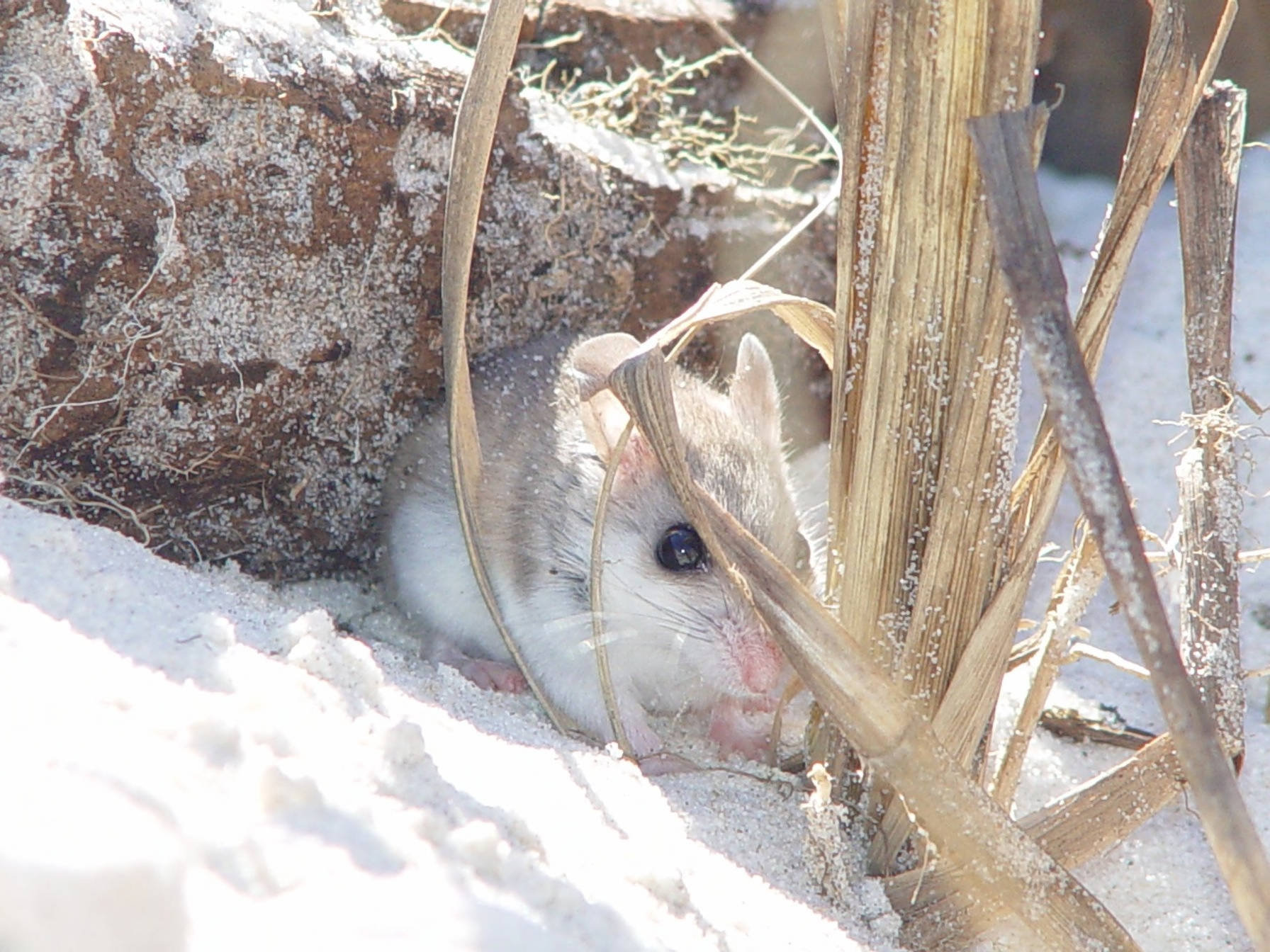
Photo Jackie Isaacs/ USFWS (opens in a new tab) / Wikimedia Commons, Public domain (opens in a new tab)
At a glance
- Size
- Body about 8 to 9 cm; tail about 4 to 6 cm
- Weight
- About 10 to 16 g
- Habitat
- Old fields, sandhills, open pinewoods, and coastal dunes where beach mice live
- Diet
- Seeds, fruit and insects
- Active
- Night
- Shelter
- Burrows dug in sandy soil
- Lifespan
- Usually a year or so in the wild
- Rabies vector
- No
Identification
- Key marks
- Small; sandy-brown to pale grey back, white belly and feet; short tail, dark above and white below; large dark eyes
- Coastal forms
- Beach mice on dunes are paler still, nearly white
- Told apart from
- Cotton mouse and white-footed mouse, which are larger with longer tails
- Told apart from
- House mouse, which is grey-brown with a scaly tail
- Where to look
- Sandy fields and sandhills of the coastal plain; tracks around burrow entrances in the sand
Behaviour
Oldfield mice dig burrows in sand with an entrance tunnel, a nest chamber and — unusually — a second tunnel that runs back up toward the surface but stops just short of it. If a predator enters the burrow, the mouse can break through this last thin layer and escape.
They are unusual among mice in forming lasting pairs, with both parents sharing the nest. They forage at night for seeds, fruit and insects.
Why they matter
Oldfield mice have become a famous subject of research on how behaviour is inherited: their long, escape-tunnelled burrows are built by instinct, and scientists have traced the genes behind them.
Several coastal subspecies, the beach mice of Alabama and Florida, are endangered because the dunes they need have been built over. They depend on open, sandy ground that is easily lost.
Reproduction and lifecycle
Pairing — pairs often stay together and share the nest
Breeding — mainly autumn to spring, less in the heat of summer
Gestation — about 23 to 24 days
Litter — usually three to four young
Weaning — at about three to four weeks old
Lifespan — about a year in the wild
Living around people
- Keep cats indoors, especially near dunes and sandhills where beach mice live.
- Stay on boardwalks over dunes; trampling collapses burrows.
- Like other wild rodents, they can carry diseases; avoid handling them.
Misconceptions
- All mice are the same grey pest. Oldfield mice are native, pale, sand-living animals with some of the most studied behaviour of any mammal.
- Burrows are just holes. An oldfield mouse's burrow has a planned escape route.
Related species
Seasonal activity
When this species is breeding, and when there are nests on the ground. Mowing during the shaded months is how most nests are found.
| Jan | Feb | Mar | Apr | May | Jun | Jul | Aug | Sep | Oct | Nov | Dec | |
|---|---|---|---|---|---|---|---|---|---|---|---|---|
| Breeding | Jan: no | Feb: no | Mar: no | Apr: no | May: no | Jun: no | Jul: no | Aug: no | Sep: no | Oct: no | Nov: no | Dec: no |
| Active nests | Jan: no | Feb: no | Mar: no | Apr: no | May: no | Jun: no | Jul: no | Aug: no | Sep: no | Oct: no | Nov: no | Dec: no |
| Notes | Breeding continues in mild weather | Breeding | Litters born underground | Breeding | Young leave the burrow at about three to four weeks old | Breeding slows in summer heat | Active at night | Active | Breeding increases in autumn | Autumn breeding | Breeding continues | Breeding in mild weather |
Where it lives
Recorded in 4 states and provinces. Each one links to the other animals there, and to the rehabilitators licensed for them.
United States
If you found one
Answer a few questions and you will get a specific answer for what you are looking at.
I found an animal