
Species
White ibis
Eudocimus albus
A white wader with a red, curved bill that probes for crayfish and crabs, often in flocks on suburban lawns.
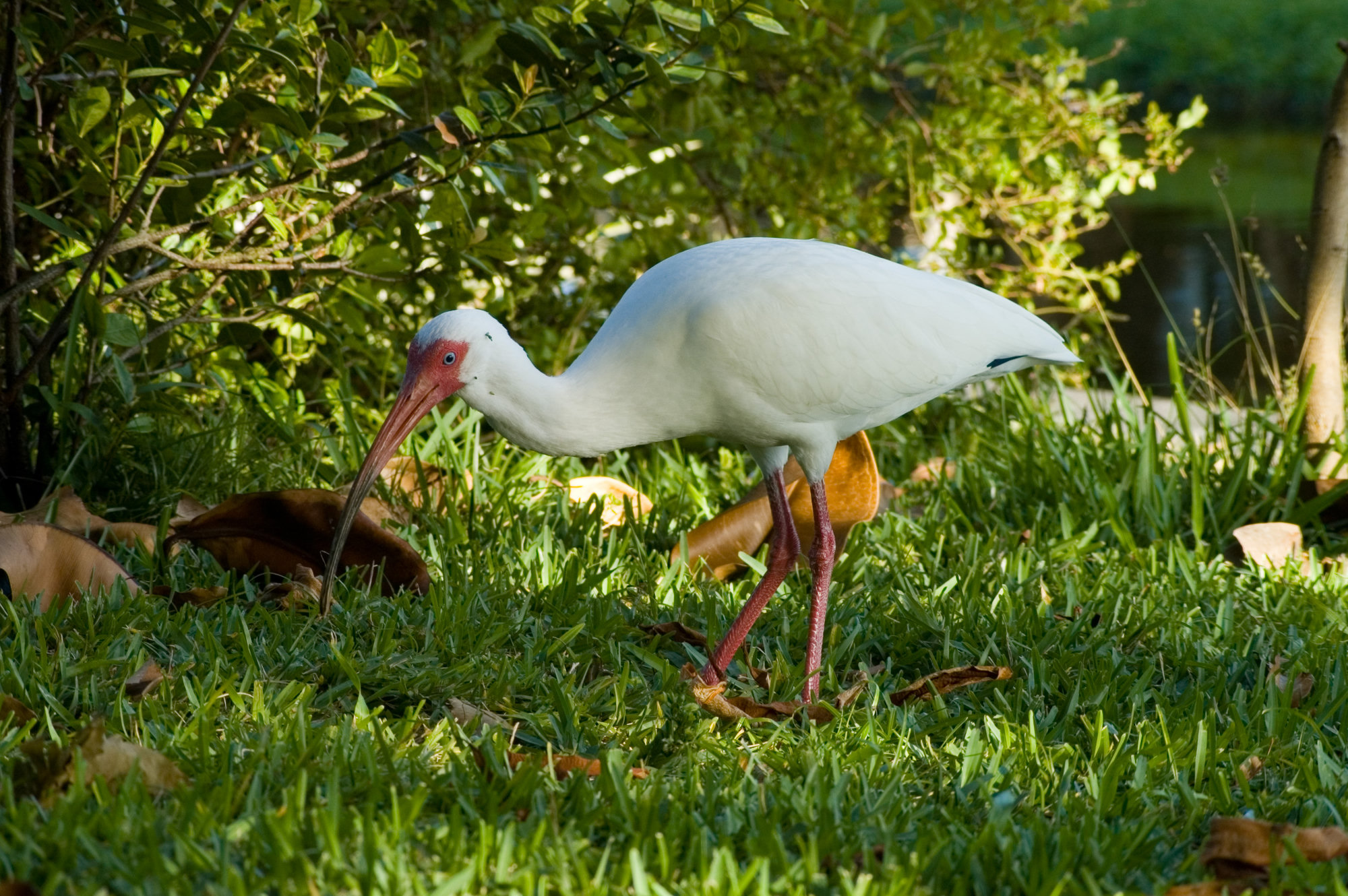
Photo Ianaré Sévi (opens in a new tab) / Wikimedia Commons, CC BY-SA 3.0 (opens in a new tab)
At a glance
- Size
- About 53 to 70 cm long
- Weight
- About 600 to 1,000 g
- Habitat
- Marshes, swamps, ponds, lawns and wet fields
- Diet
- Crayfish, crabs, insects and small fish
- In Georgia
- Common all year on the coast; summer visitor inland
- Voice
- A honking "hunk-hunk-hunk"
- Rabies vector
- No
Identification
- Key marks
- White with black wingtips; long, down-curved red-pink bill; red face; pink legs
- Young
- Brown back and neck with a white belly
- Told apart from
- Wood stork, which is larger with a bare grey head
- Told apart from
- Glossy ibis, which is dark bronze
- Where to look
- Lawns, marshes and pond edges, often in groups
Behaviour
White ibises probe mud and lawns with their curved bills, feeling for crayfish and insects. They fly in long lines and V-shapes between feeding and roosting sites.
Why they matter
White ibises are a key predator of crayfish and fiddler crabs. In recent years many have moved into towns, feeding on lawns and in parks — a change that makes them easy to see but may affect their health if they eat food handouts.
Reproduction and lifecycle
Nest — A platform of sticks in trees or shrubs, in large colonies
Eggs — Usually two or three
Incubation — About 21 to 23 days
Chicks — Fed by both parents
Flight — At about five weeks
Lifespan — Wild birds over sixteen years are recorded
Living around people
- Ibis probing lawns are eating grubs and insects; they do no harm.
- Feeding ibises bread or scraps can make them sick and draws them to roads.
Misconceptions
- Ibises on a lawn are lost. Many now feed in towns as a normal part of their range.
Related species
Seasonal activity
When this species is breeding, and when there are nests on the ground. Mowing during the shaded months is how most nests are found.
| Jan | Feb | Mar | Apr | May | Jun | Jul | Aug | Sep | Oct | Nov | Dec | |
|---|---|---|---|---|---|---|---|---|---|---|---|---|
| Breeding | Jan: no | Feb: no | Mar: no | Apr: no | May: no | Jun: no | Jul: no | Aug: no | Sep: no | Oct: no | Nov: no | Dec: no |
| Active nests | Jan: no | Feb: no | Mar: no | Apr: no | May: no | Jun: no | Jul: no | Aug: no | Sep: no | Oct: no | Nov: no | Dec: no |
| Notes | Present on the coast | Present | Colonies forming | Nesting | Nesting | Chicks | Young fledging | Young dispersing inland | Present | Inland birds leave | Present on the coast | Present on the coast |
Where it lives
Recorded in 30 states and provinces. Each one links to the other animals there, and to the rehabilitators licensed for them.
United States
If you found one
Answer a few questions and you will get a specific answer for what you are looking at.
I found an animal