
Species
Roseate spoonbill
Platalea ajaja
A pink wading bird with a spoon-shaped bill that sweeps the shallows, increasingly seen on Georgia's coast.
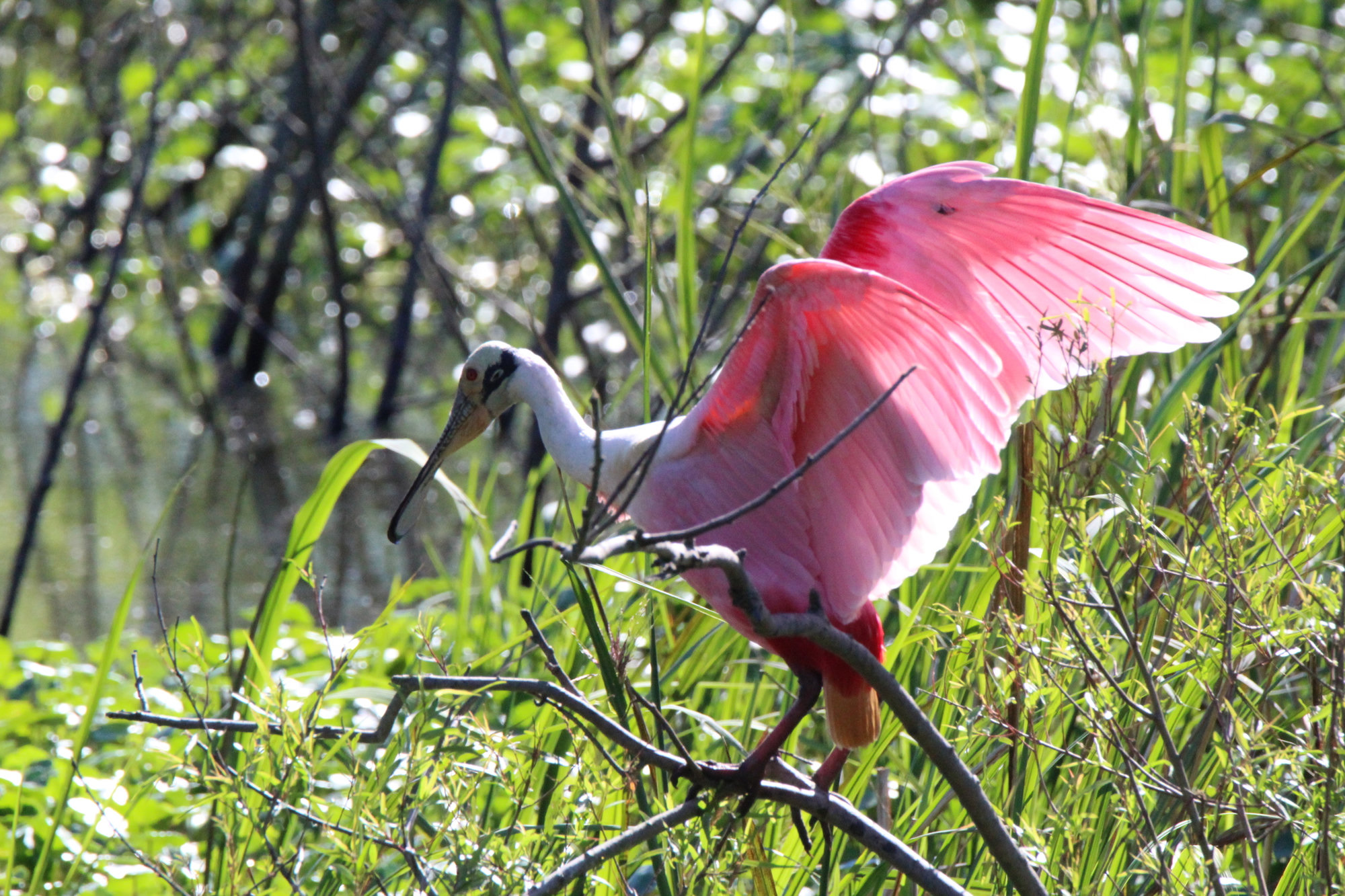
Photo Unknown photographer (opens in a new tab) / iNaturalist, CC0 1.0 (opens in a new tab)
At a glance
- Size
- About 71 to 86 cm long
- Weight
- About 1.2 to 1.8 kg
- Habitat
- Shallow coastal marshes, ponds and impoundments
- Diet
- Small fish, shrimp and aquatic insects
- In Georgia
- A summer visitor to the coast, increasing; now nesting in small numbers
- Voice
- A low grunt
- Rabies vector
- No
Identification
- Key marks
- Bright pink body; white neck; bare greenish head; long, flat, spoon-shaped bill
- Told apart from
- Flamingos, which are very rare, all pink, with a bent bill and long neck
- Where to look
- Coastal impoundments and marsh ponds, summer and autumn
Behaviour
Spoonbills sweep their open bills side to side through shallow water, snapping them shut on prey. Their pink colour comes from pigments in the crustaceans they eat.
Why they matter
Roseate spoonbills were nearly wiped out in the US by plume hunters. Their numbers in Florida's Everglades have shifted as water management changed, and they have spread north into Georgia and the Carolinas — a change linked to both habitat and warming.
Reproduction and lifecycle
Nest — A platform of sticks in trees or shrubs, in mixed colonies
Eggs — Usually two or three
Incubation — About 22 to 24 days
Chicks — Fed by both parents
Flight — At about six weeks
Lifespan — Wild birds over fifteen years are recorded
Living around people
- Coastal impoundments that stay shallow in summer give them feeding places.
Misconceptions
- A pink bird in Georgia is a flamingo. It is almost certainly a roseate spoonbill.
Related species
Seasonal activity
When this species is breeding, and when there are nests on the ground. Mowing during the shaded months is how most nests are found.
| Jan | Feb | Mar | Apr | May | Jun | Jul | Aug | Sep | Oct | Nov | Dec | |
|---|---|---|---|---|---|---|---|---|---|---|---|---|
| Breeding | Jan: no | Feb: no | Mar: no | Apr: no | May: no | Jun: no | Jul: no | Aug: no | Sep: no | Oct: no | Nov: no | Dec: no |
| Active nests | Jan: no | Feb: no | Mar: no | Apr: no | May: no | Jun: no | Jul: no | Aug: no | Sep: no | Oct: no | Nov: no | Dec: no |
| Notes | Mostly in Florida | Few present | Few present | Arriving | Present; some nesting | Present | Numbers increase as young birds wander north | Present | Present | Leaving | Few present | Few present |
Where it lives
Recorded in 35 states and provinces. Each one links to the other animals there, and to the rehabilitators licensed for them.
United States
If you found one
Answer a few questions and you will get a specific answer for what you are looking at.
I found an animal