
Species
Glossy ibis
Plegadis falcinellus
A dark, bronze-glossed ibis whose feathers flash green and purple in sunlight.
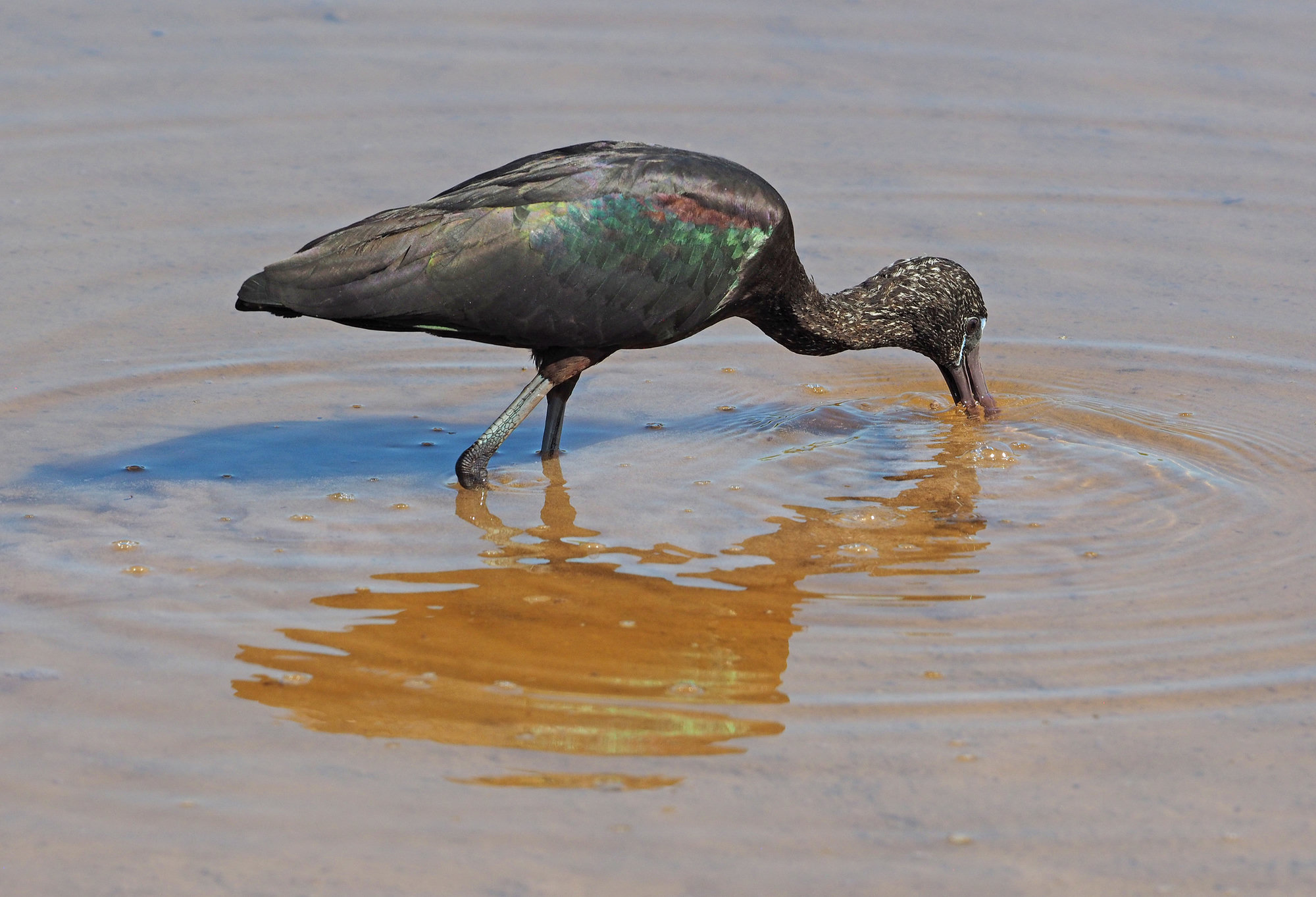
Photo Judy Gallagher (opens in a new tab) / iNaturalist, CC BY-SA 4.0 (opens in a new tab)
At a glance
- Size
- About 46 to 66 cm long
- Weight
- About 500 to 800 g
- Habitat
- Marshes, flooded fields and coastal impoundments
- Diet
- Insects, crayfish, snails and small fish
- In Georgia
- An uncommon summer resident on the coast
- Voice
- A low, bleating "urnh"
- Rabies vector
- No
Identification
- Key marks
- Dark chestnut-bronze body with green and purple gloss; long, down-curved dark bill; thin pale lines on the face in breeding season
- Told apart from
- White ibis, which is white with a red bill
- Where to look
- Coastal impoundments and flooded fields
Behaviour
Glossy ibises probe mud for insects and crayfish, often in flocks with white ibises.
Why they matter
The glossy ibis is found on every continent except Antarctica, and it probably reached the Americas on its own from Africa. It is a sign of healthy freshwater wetlands on the coast.
Reproduction and lifecycle
Nest — A platform of sticks in mixed colonies
Eggs — Usually three or four
Incubation — About 21 days
Chicks — Fed by both parents
Lifespan — Several years
Living around people
- Coastal impoundments that stay flooded in spring support nesting ibis.
Misconceptions
- Dark ibises are young white ibises. Young white ibises are brown with white bellies; glossy ibises are dark all over.
Related species
Seasonal activity
When this species is breeding, and when there are nests on the ground. Mowing during the shaded months is how most nests are found.
| Jan | Feb | Mar | Apr | May | Jun | Jul | Aug | Sep | Oct | Nov | Dec | |
|---|---|---|---|---|---|---|---|---|---|---|---|---|
| Breeding | Jan: no | Feb: no | Mar: no | Apr: no | May: no | Jun: no | Jul: no | Aug: no | Sep: no | Oct: no | Nov: no | Dec: no |
| Active nests | Jan: no | Feb: no | Mar: no | Apr: no | May: no | Jun: no | Jul: no | Aug: no | Sep: no | Oct: no | Nov: no | Dec: no |
| Notes | Few present | Few present | Arriving | Nesting | Nesting | Chicks | Young fledging | Present | Leaving | Few remain | Few present | Few present |
Where it lives
Recorded in 21 states and provinces. Each one links to the other animals there, and to the rehabilitators licensed for them.
United States
If you found one
Answer a few questions and you will get a specific answer for what you are looking at.
I found an animal