
Species
Western kingbird
Tyrannus verticalis
A grey-headed, yellow-bellied kingbird of the West that turns up in Georgia each autumn and winter.
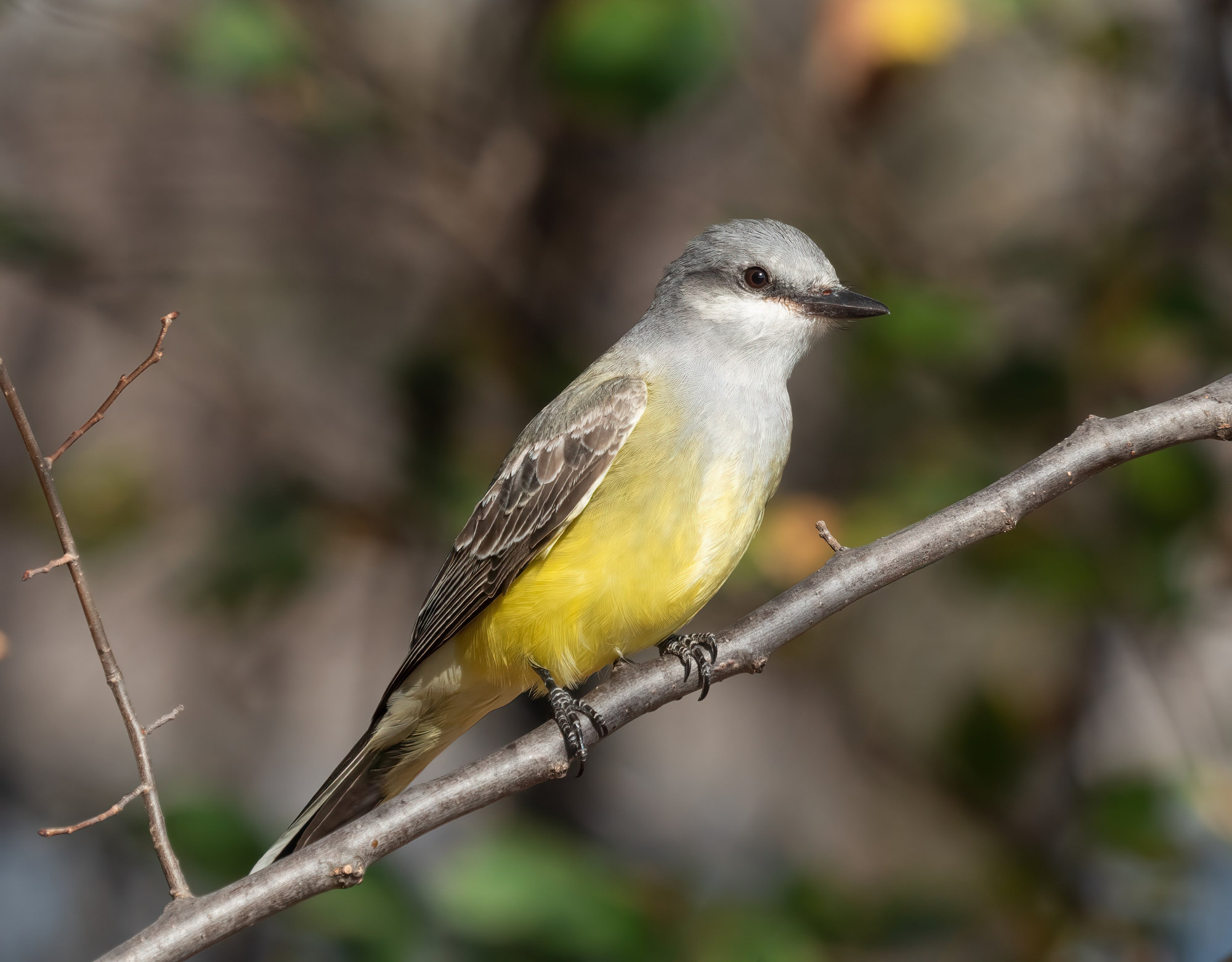
Photo Rhododendrites (opens in a new tab) / Wikimedia Commons, CC BY-SA 4.0 (opens in a new tab)
At a glance
- Size
- About 20 to 24 cm long
- Weight
- About 37 to 45 g
- Habitat
- Open country, fields and fence lines
- Diet
- Flying insects
- In Georgia
- A rare but regular visitor, mostly on the coast in autumn and winter
- Voice
- A sharp "kip" and chattering calls
- Rabies vector
- No
Identification
- Key marks
- Pale grey head and breast; yellow belly; black tail with white outer edges
- Told apart from
- Great crested flycatcher, which has rufous in the wings and tail
- Told apart from
- Eastern kingbird, which is black and white
- Where to look
- Fence lines and wires near the coast, September to March
Behaviour
Western kingbirds sally from wires and fences to catch insects, and aggressively chase hawks and crows.
Why they matter
Western kingbirds breed across the western plains and winter mostly in Mexico and Central America, but a few travel east each autumn and winter in Florida and along the Southeast coast.
Reproduction and lifecycle
Nest — A cup of twigs and grass in a tree or on a utility pole, in the West
Eggs — Usually three to five
Incubation — About 14 days
Chicks — Fed by both parents
Flight — At about 16 to 17 days
Lifespan — Several years
Living around people
- Kingbirds hunt from wires along roads and are sometimes hit by cars.
Misconceptions
- A yellow-bellied bird in winter is lost. Western kingbirds winter in the Southeast in small numbers every year.
Related species
Seasonal activity
When this species is breeding, and when there are nests on the ground. Mowing during the shaded months is how most nests are found.
| Jan | Feb | Mar | Apr | May | Jun | Jul | Aug | Sep | Oct | Nov | Dec | |
|---|---|---|---|---|---|---|---|---|---|---|---|---|
| Breeding | Jan: no | Feb: no | Mar: no | Apr: no | May: no | Jun: no | Jul: no | Aug: no | Sep: no | Oct: no | Nov: no | Dec: no |
| Active nests | Jan: no | Feb: no | Mar: no | Apr: no | May: no | Jun: no | Jul: no | Aug: no | Sep: no | Oct: no | Nov: no | Dec: no |
| Notes | Rare wintering birds | Rare | Rare | In the West | Nesting in the West | Nesting | Nesting | Moving south | A few reach the Southeast | Visitors on the coast | Visitors | Rare wintering birds |
Where it lives
Recorded in 56 states and provinces. Each one links to the other animals there, and to the rehabilitators licensed for them.
United States
- Alabamain winter
- Arizonabreeding
- Arkansasbreeding
- Californiabreeding
- Coloradobreeding
- Floridain winter
- Georgiain winter
- Idahobreeding
- Illinoisbreeding
- Iowabreeding
- Kansasbreeding
- Louisiana
- Minnesotabreeding
- Mississippiin winter
- Missouribreeding
- Montanabreeding
- Nebraskabreeding
- Nevadabreeding
- New Mexicobreeding
- North Dakotabreeding
- Oklahomabreeding
- Oregonbreeding
- South Carolinain winter
- South Dakotabreeding
- Tennesseebreeding
- Texasbreeding
- Utahbreeding
- Washingtonbreeding
- Wyomingbreeding
Mexico
- Aguascalientespassing through
- Baja Californiabreeding
- Baja California Surin winter
- Chiapasin winter
- Chihuahuabreeding
- Coahuilabreeding
- Colimain winter
- Durangobreeding
- Guerreroin winter
- Jaliscoin winter
- Mexico Cityin winter
- Michoacanin winter
- Morelosin winter
- Nayaritin winter
- Nuevo Leonbreeding
- Oaxacain winter
- Pueblain winter
- San Luis Potosipassing through
- Sinaloapassing through
- Sonorabreeding
- State of Mexicoin winter
- Tamaulipasbreeding
- Zacatecaspassing through
If you found one
Answer a few questions and you will get a specific answer for what you are looking at.
I found an animal