
Species
Eastern kingbird
Tyrannus tyrannus
A black-and-white flycatcher that fearlessly chases hawks and crows away from its nest.
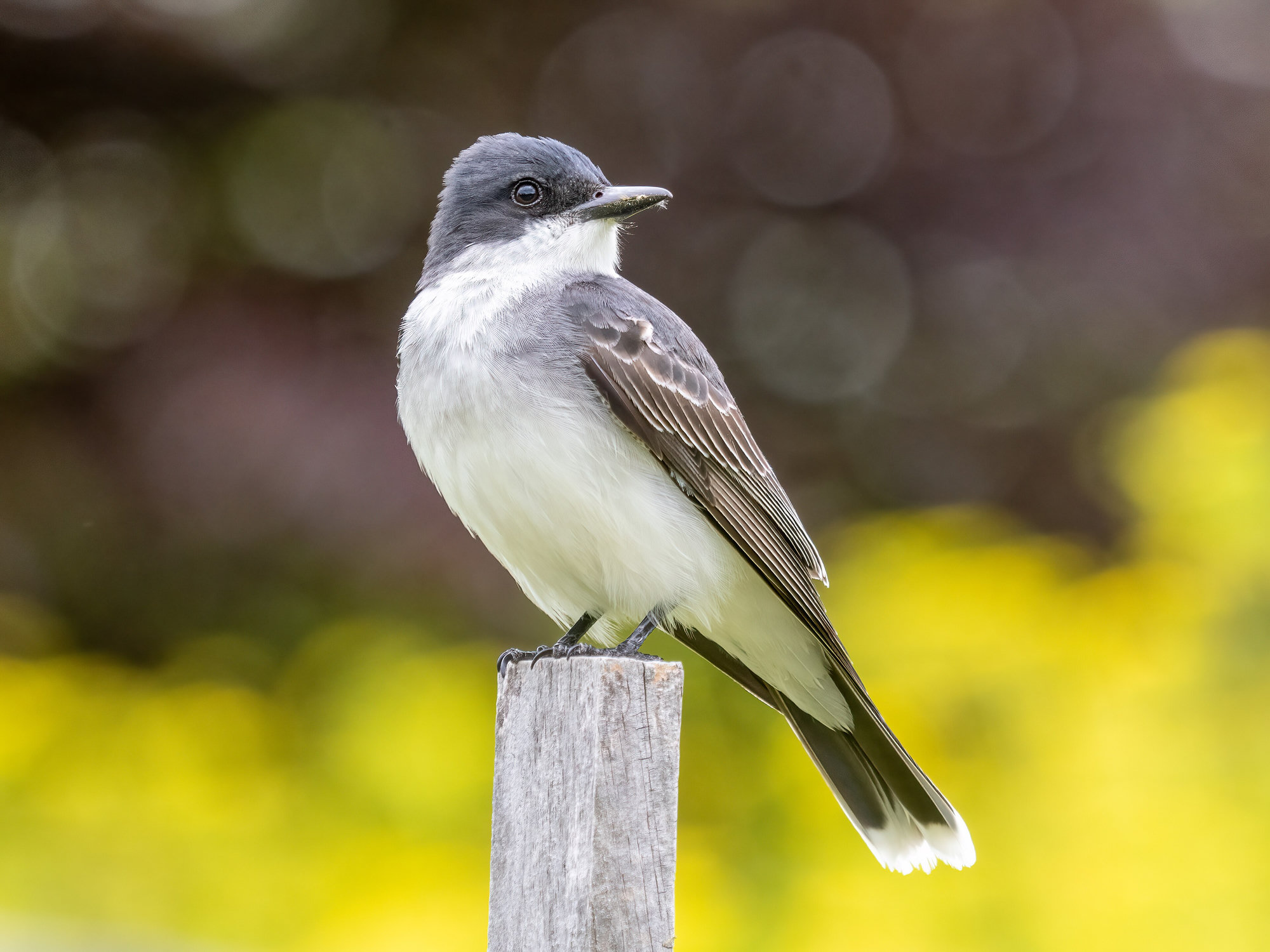
Photo Rhododendrites (opens in a new tab) / Wikimedia Commons, CC BY-SA 4.0 (opens in a new tab)
At a glance
- Size
- About 19 to 23 cm long
- Weight
- About 33 to 55 g
- Habitat
- Fields, pastures, orchards, roadsides and water edges
- Diet
- Flying insects in summer; fruit in winter in South America
- In Georgia
- A common summer resident, April to September
- Voice
- A sharp, electric "zeer" and chattering
- Rabies vector
- No
Identification
- Key marks
- Black head and back; white throat and underparts; black tail with a white tip
- Told apart from
- Eastern phoebe, which is brownish with no white tail tip and wags its tail
- Where to look
- Wires, fences and treetops in open country
Behaviour
Eastern kingbirds sally out from perches for insects. They are fierce defenders of their nests, attacking crows, hawks and even herons that come near, sometimes landing on their backs.
Why they matter
Eastern kingbirds eat many flying insects in farmland. In South America in winter they switch almost entirely to fruit and travel in flocks, a very different life from their summer one.
Reproduction and lifecycle
Nest — A cup of grass and twigs in a tree, shrub or on a post
Eggs — Usually three or four
Incubation — About 14 to 17 days
Chicks — Fed by both parents
Flight — At about 16 to 17 days
Lifespan — Several years
Living around people
- Pesticide use in pastures and fields reduces the insects kingbirds depend on.
Misconceptions
- Small birds chasing a hawk are being attacked. They are driving the hawk away from their nests.
Related species
Seasonal activity
When this species is breeding, and when there are nests on the ground. Mowing during the shaded months is how most nests are found.
| Jan | Feb | Mar | Apr | May | Jun | Jul | Aug | Sep | Oct | Nov | Dec | |
|---|---|---|---|---|---|---|---|---|---|---|---|---|
| Breeding | Jan: no | Feb: no | Mar: no | Apr: no | May: no | Jun: no | Jul: no | Aug: no | Sep: no | Oct: no | Nov: no | Dec: no |
| Active nests | Jan: no | Feb: no | Mar: no | Apr: no | May: no | Jun: no | Jul: no | Aug: no | Sep: no | Oct: no | Nov: no | Dec: no |
| Notes | In South America | In South America | In South America | Arriving | Nesting | Nesting | Young fledging | Flocks gathering | Migrating south | Last birds | In South America | In South America |
Where it lives
Recorded in 64 states and provinces. Each one links to the other animals there, and to the rehabilitators licensed for them.
United States
- Alabamabreeding
- Arkansasbreeding
- Coloradobreeding
- Connecticutbreeding
- Delawarebreeding
- District of Columbiabreeding
- Floridabreeding
- Georgiabreeding
- Idahobreeding
- Illinoisbreeding
- Indianabreeding
- Iowabreeding
- Kansasbreeding
- Kentuckybreeding
- Louisianabreeding
- Mainebreeding
- Marylandbreeding
- Massachusettsbreeding
- Michiganbreeding
- Minnesotabreeding
- Mississippibreeding
- Missouribreeding
- Montanabreeding
- Nebraskabreeding
- Nevadabreeding
- New Hampshirebreeding
- New Jerseybreeding
- New Yorkbreeding
- North Carolinabreeding
- North Dakotabreeding
- Ohiobreeding
- Oklahomabreeding
- Oregonbreeding
- Pennsylvaniabreeding
- Rhode Islandbreeding
- South Carolinabreeding
- South Dakotabreeding
- Tennesseebreeding
- Texasbreeding
- Utahbreeding
- Vermontbreeding
- Virginiabreeding
- Washingtonbreeding
- West Virginiabreeding
- Wisconsinbreeding
- Wyomingbreeding
Canada
If you found one
Answer a few questions and you will get a specific answer for what you are looking at.
I found an animal