
Species
Scissor-tailed flycatcher
Tyrannus forficatus
A pale flycatcher with an extraordinarily long, forked tail that opens and closes like scissors in flight.
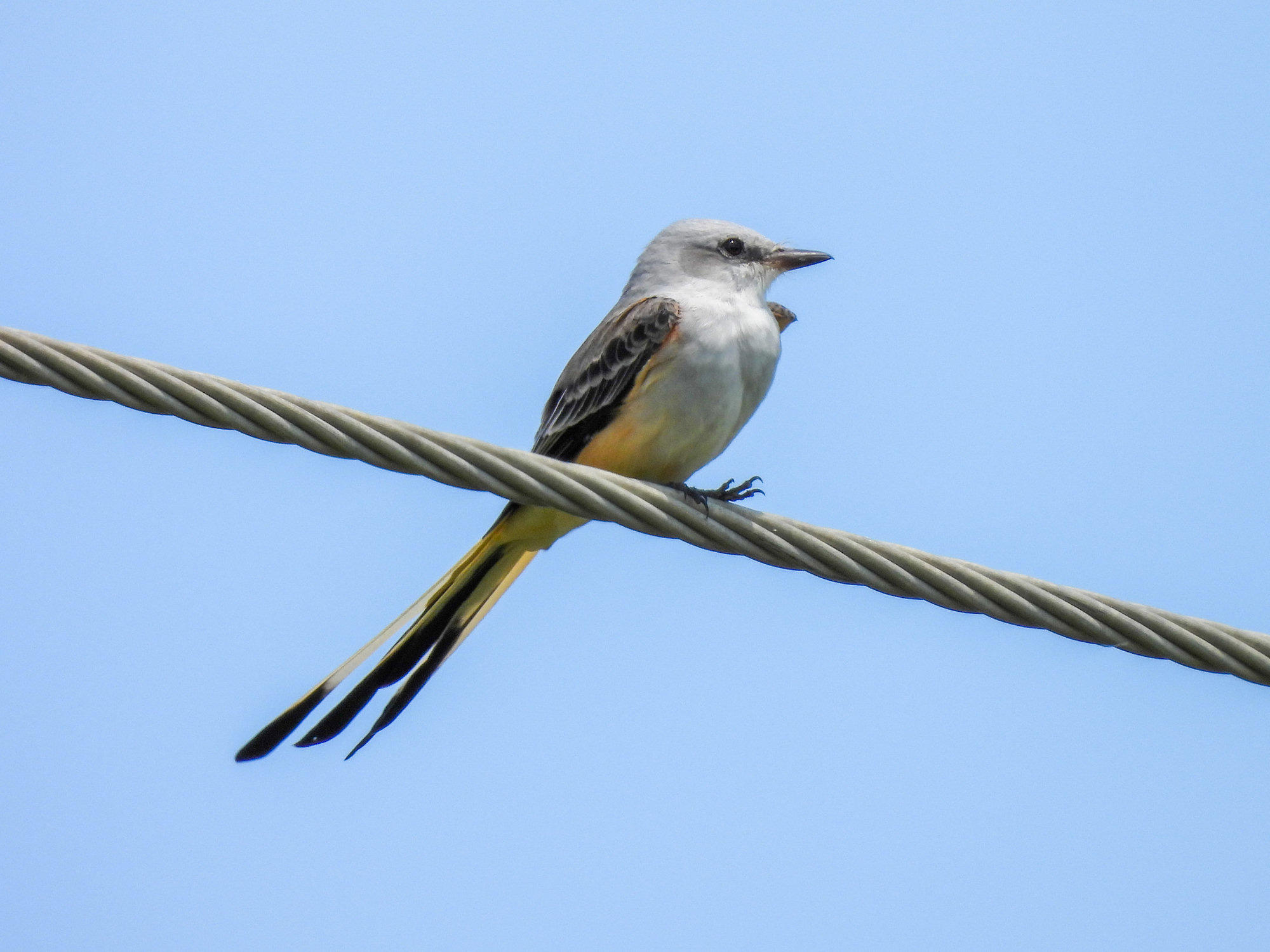
Photo Unknown photographer (opens in a new tab) / iNaturalist, CC0 1.0 (opens in a new tab)
At a glance
- Size
- About 22 to 37 cm long, much of it tail
- Weight
- About 36 to 43 g
- Habitat
- Open country with scattered trees, fences and wires
- Diet
- Grasshoppers, beetles and other insects
- In Georgia
- A rare visitor, mostly in spring and autumn
- Voice
- A sharp "pik" and chattering calls
- Rabies vector
- No
Identification
- Key marks
- Pale grey head and back; salmon-pink sides and underwings; very long, black-and-white forked tail
- Told apart from
- Eastern kingbird, which is black and white with a short tail
- Where to look
- Wires and fences in open country, especially near the coast
Behaviour
Scissor-tailed flycatchers hunt insects from perches and in flight, and males perform acrobatic "sky dances" with their long tails.
Why they matter
The scissor-tailed flycatcher is the state bird of Oklahoma and a bird of the southern Great Plains. Its occasional appearances in Georgia show how far migrating birds can wander from their usual routes.
Reproduction and lifecycle
Nest — A cup of plant material in an isolated tree or on a pole, on the plains
Eggs — Usually four or five
Incubation — About 14 to 17 days
Chicks — Fed by both parents
Flight — At about 14 to 17 days
Lifespan — Several years
Living around people
- A scissor-tailed flycatcher in Georgia is a rare visitor worth watching from a distance.
Misconceptions
- The long tail is a sign of a tropical escapee. It is a wild, native flycatcher of the plains.
Related species
Seasonal activity
When this species is breeding, and when there are nests on the ground. Mowing during the shaded months is how most nests are found.
| Jan | Feb | Mar | Apr | May | Jun | Jul | Aug | Sep | Oct | Nov | Dec | |
|---|---|---|---|---|---|---|---|---|---|---|---|---|
| Breeding | Jan: no | Feb: no | Mar: no | Apr: no | May: no | Jun: no | Jul: no | Aug: no | Sep: no | Oct: no | Nov: no | Dec: no |
| Active nests | Jan: no | Feb: no | Mar: no | Apr: no | May: no | Jun: no | Jul: no | Aug: no | Sep: no | Oct: no | Nov: no | Dec: no |
| Notes | In Central America | In Central America | In Central America | Migrating north through Texas | Rare in Georgia | Nesting on the southern plains | Nesting | Moving south | Migrating | Rare in Georgia | A few winter in Florida | In Central America |
Where it lives
Recorded in 23 states and provinces. Each one links to the other animals there, and to the rehabilitators licensed for them.
United States
If you found one
Answer a few questions and you will get a specific answer for what you are looking at.
I found an animal