
Species
Two-toed amphiuma
Amphiuma means
A long, eel-like salamander with tiny legs that lives in southern swamps and ditches.
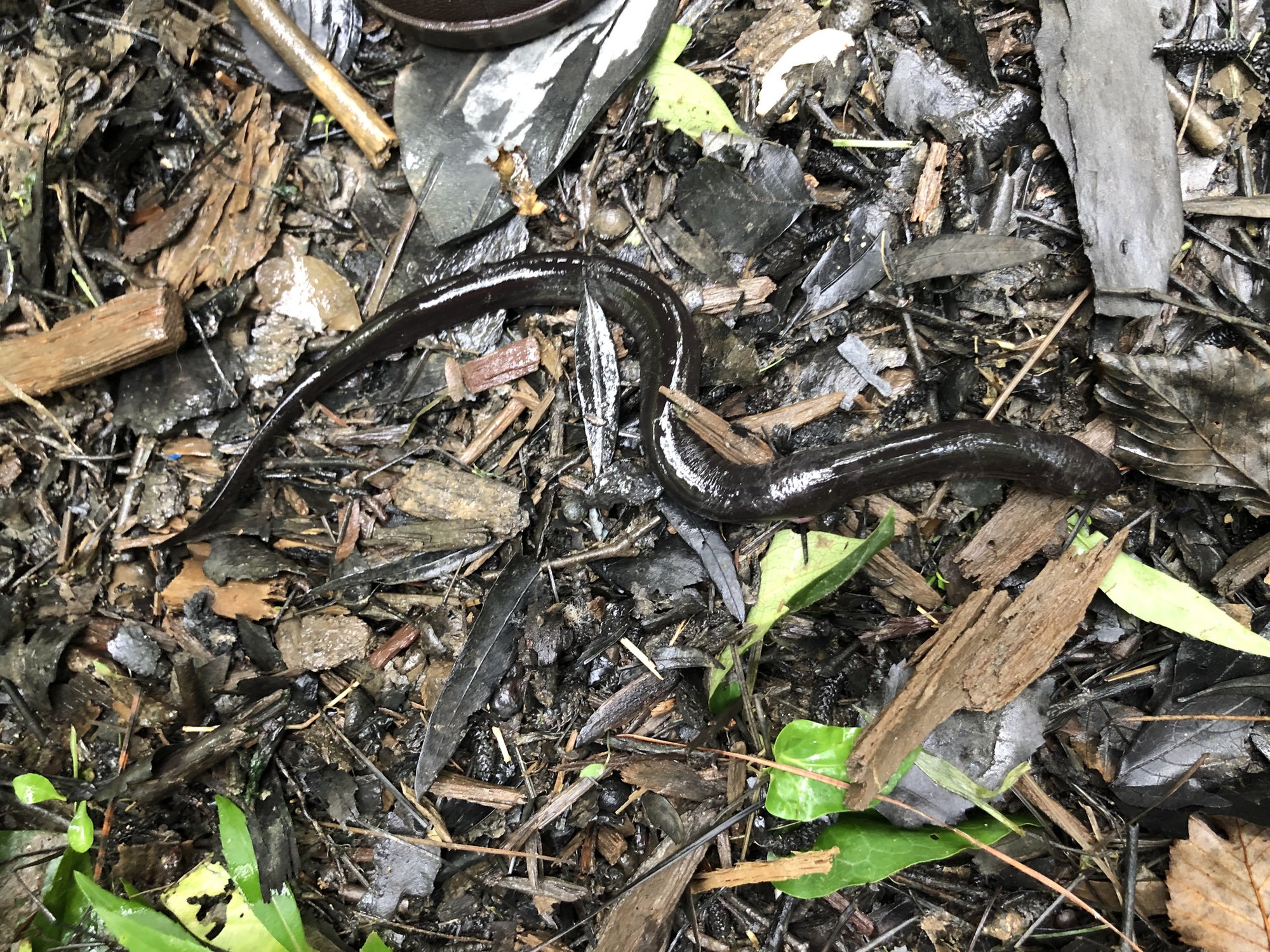
Photo NC Wetlands (opens in a new tab) / iNaturalist, CC BY 4.0 (opens in a new tab)
At a glance
- Size
- Usually 45 to 75 cm long; up to about 1.1 m
- Habitat
- Swamps, ditches, ponds and slow streams with muddy bottoms
- Diet
- Crayfish, snails, fish, frogs and insects
- In Georgia
- The Coastal Plain and lower Piedmont
- Rabies vector
- No
Identification
- Key marks
- Long and eel-like, dark grey; four tiny legs each with two toes; no external gills
- Told apart from
- Eels, which have fins and no legs
- Told apart from
- Sirens, which have front legs only and feathery gills
- Where to look
- Rarely seen; sometimes found in ditches at night
Behaviour
Amphiumas live in mud and crayfish burrows and hunt at night. They can survive droughts by burrowing into the mud. Their bite is strong, and they should not be handled.
Why they matter
They are among the top predators of southern swamps and prey for mudsnakes and herons.
Reproduction and lifecycle
Eggs — Around 100 to 200, in strings, guarded by the female
Hatching — In about five months
Larvae — Briefly with gills, then like small adults
Maturity — At about four years
Lifespan — Over 20 years
Habits — Aquatic
Living around people
- Do not pick one up; the bite is painful, though not venomous.
Misconceptions
- Congo eels are venomous snakes. They are harmless salamanders, though they bite if handled.
Related species
Seasonal activity
When this species is breeding, and when there are nests on the ground. Mowing during the shaded months is how most nests are found.
| Jan | Feb | Mar | Apr | May | Jun | Jul | Aug | Sep | Oct | Nov | Dec | |
|---|---|---|---|---|---|---|---|---|---|---|---|---|
| Breeding | Jan: no | Feb: no | Mar: no | Apr: no | May: no | Jun: no | Jul: no | Aug: no | Sep: no | Oct: no | Nov: no | Dec: no |
| Active nests | Jan: no | Feb: no | Mar: no | Apr: no | May: no | Jun: no | Jul: no | Aug: no | Sep: no | Oct: no | Nov: no | Dec: no |
| Notes | In mud | Active in mild weather | Active | Active | Breeding | Females guarding eggs | Guarding eggs | Guarding eggs | Young hatching | Active | Active | In mud |
Where it lives
Recorded in 8 states and provinces. Each one links to the other animals there, and to the rehabilitators licensed for them.
If you found one
Answer a few questions and you will get a specific answer for what you are looking at.
I found an animal