
Species
Greater siren
Siren lacertina
A huge, eel-like salamander with only front legs and feathery gills, from southern swamps.
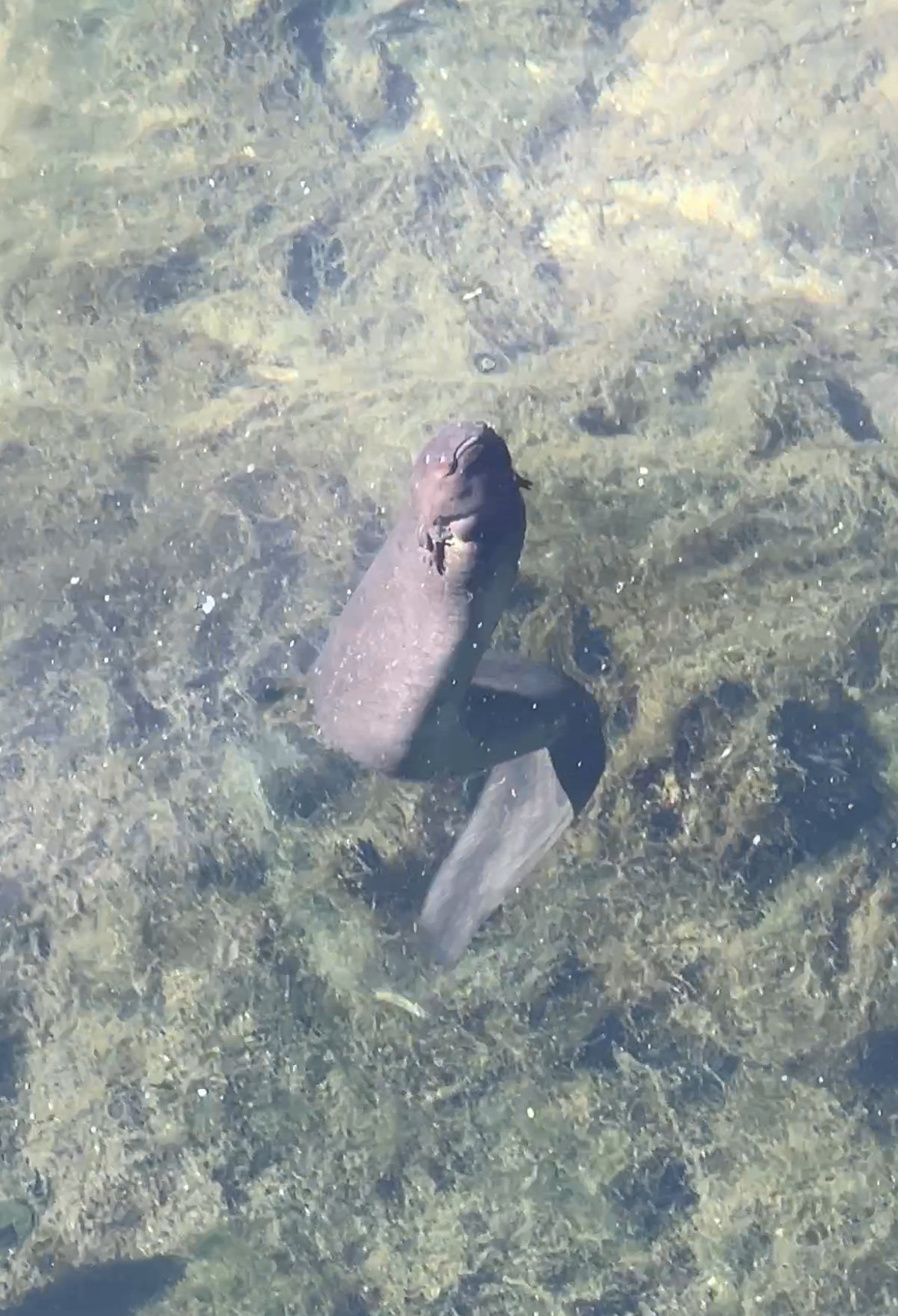
Photo Nick Tobler (Cowturtle) (opens in a new tab) / iNaturalist, CC BY 4.0 (opens in a new tab)
At a glance
- Size
- Usually 50 to 90 cm long
- Habitat
- Swamps, ponds, ditches and slow streams with plants and mud
- Diet
- Crayfish, snails, insects and some plants
- In Georgia
- The Coastal Plain
- Rabies vector
- No
Identification
- Key marks
- Very long; grey to olive with lighter spots; feathery external gills; small front legs only, no hind legs
- Told apart from
- Two-toed amphiuma, which has four tiny legs and no external gills
- Where to look
- Rarely seen; sometimes in ditches at night
Behaviour
Sirens can survive their ponds drying up by burying themselves in mud and forming a cocoon of dried mucus, staying dormant for months.
Why they matter
They are large predators of southern wetlands and food for mudsnakes, alligators and wading birds. They can yelp or click when caught.
Reproduction and lifecycle
Eggs — Several hundred laid in vegetation
Hatching — In a few weeks
Larvae — Small and gilled, with a pale stripe
Maturity — At a few years
Lifespan — Over 20 years
Habits — Aquatic
Living around people
- It is harmless if left alone.
Misconceptions
- A siren is an eel. It has legs and is a salamander.
Related species
Seasonal activity
When this species is breeding, and when there are nests on the ground. Mowing during the shaded months is how most nests are found.
| Jan | Feb | Mar | Apr | May | Jun | Jul | Aug | Sep | Oct | Nov | Dec | |
|---|---|---|---|---|---|---|---|---|---|---|---|---|
| Breeding | Jan: no | Feb: no | Mar: no | Apr: no | May: no | Jun: no | Jul: no | Aug: no | Sep: no | Oct: no | Nov: no | Dec: no |
| Active nests | Jan: no | Feb: no | Mar: no | Apr: no | May: no | Jun: no | Jul: no | Aug: no | Sep: no | Oct: no | Nov: no | Dec: no |
| Notes | Active in water | Breeding | Breeding | Active | Active | Active | In mud in dry weather | In mud in dry weather | Active | Active | Active | Active |
Where it lives
Recorded in 4 states and provinces. Each one links to the other animals there, and to the rehabilitators licensed for them.
United States
If you found one
Answer a few questions and you will get a specific answer for what you are looking at.
I found an animal