
Species
Timber rattlesnake
Crotalus horridus
A big, patient rattlesnake of Georgia's forests and canebrakes, often called the canebrake.
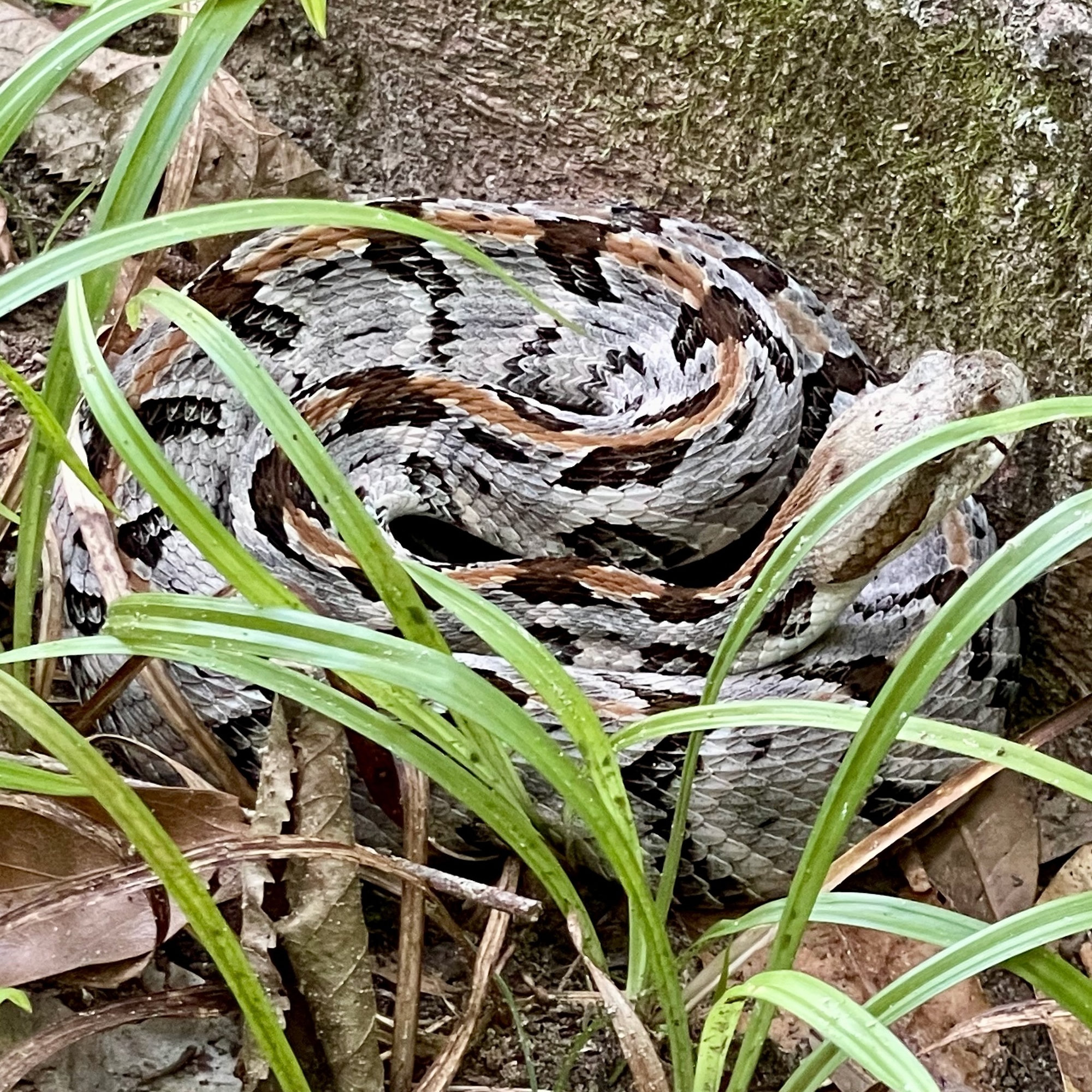
Photo John P Friel (opens in a new tab) / iNaturalist, CC BY 4.0 (opens in a new tab)
At a glance
- Size
- Usually 90 to 150 cm long
- Habitat
- Forest, rocky ridges, bottomland hardwoods and canebrakes
- Diet
- Mice, squirrels, chipmunks and rabbits
- In Georgia
- Statewide, but scattered and declining
- Venomous
- Yes
- Rabies vector
- No
Identification
- Key marks
- Grey, tan or pinkish with dark chevron-shaped bands; black tail with a rattle; southern animals often have a rusty stripe down the back
- Told apart from
- Eastern diamondback, which has diamonds and bold facial stripes
- Told apart from
- Pygmy rattlesnake, which is much smaller with a tiny rattle
- Where to look
- Coiled beside a fallen log, waiting in ambush
Behaviour
Timber rattlesnakes are sit-and-wait hunters that coil beside logs on the paths small mammals use, sometimes for days. They are notably calm, often rattling only when nearly stepped on. In the north they gather in winter dens; in Georgia they shelter in stump holes and burrows.
Why they matter
Timber rattlesnakes eat many rodents, including the mice that carry ticks and Lyme disease. They live long and breed slowly, which is why they have declined across much of their range.
Reproduction and lifecycle
Young — Born live, usually 5 to 14, in late summer
Size at birth — About 25 to 35 cm
Venom — Present from birth
Maturity — Females at five to nine years
Breeding — Females give birth every two to four years
Lifespan — Can exceed 20 years
Living around people
- Walk round a rattlesnake at a distance; it will not follow.
- Keep dogs on a lead on woodland trails.
- If someone is bitten, call 911 and get to a hospital; keep them still and calm, and do not cut, suck, ice or tie off the bite.
Misconceptions
- Rattlesnakes always rattle before striking. Many stay silent and still to avoid being noticed.
- You can tell a snake's age by its rattle. A segment is added at each shed, several times a year, and old ones break off.
Related species
Seasonal activity
When this species is breeding, and when there are nests on the ground. Mowing during the shaded months is how most nests are found.
| Jan | Feb | Mar | Apr | May | Jun | Jul | Aug | Sep | Oct | Nov | Dec | |
|---|---|---|---|---|---|---|---|---|---|---|---|---|
| Breeding | Jan: no | Feb: no | Mar: no | Apr: no | May: no | Jun: no | Jul: no | Aug: no | Sep: no | Oct: no | Nov: no | Dec: no |
| Active nests | Jan: no | Feb: no | Mar: no | Apr: no | May: no | Jun: no | Jul: no | Aug: no | Sep: no | Oct: no | Nov: no | Dec: no |
| Notes | Sheltering | Sheltering | Emerging on warm days | Basking | Active; hunting | Active | Mating | Young born | Young and adults active | Returning to shelters | Sheltering | Sheltering |
Where it lives
Recorded in 30 states and provinces. Each one links to the other animals there, and to the rehabilitators licensed for them.
If you found one
Answer a few questions and you will get a specific answer for what you are looking at.
I found an animal