
Species
Eastern diamondback rattlesnake
Crotalus adamanteus
The largest rattlesnake in the world, a snake of longleaf pine and gopher tortoise burrows.
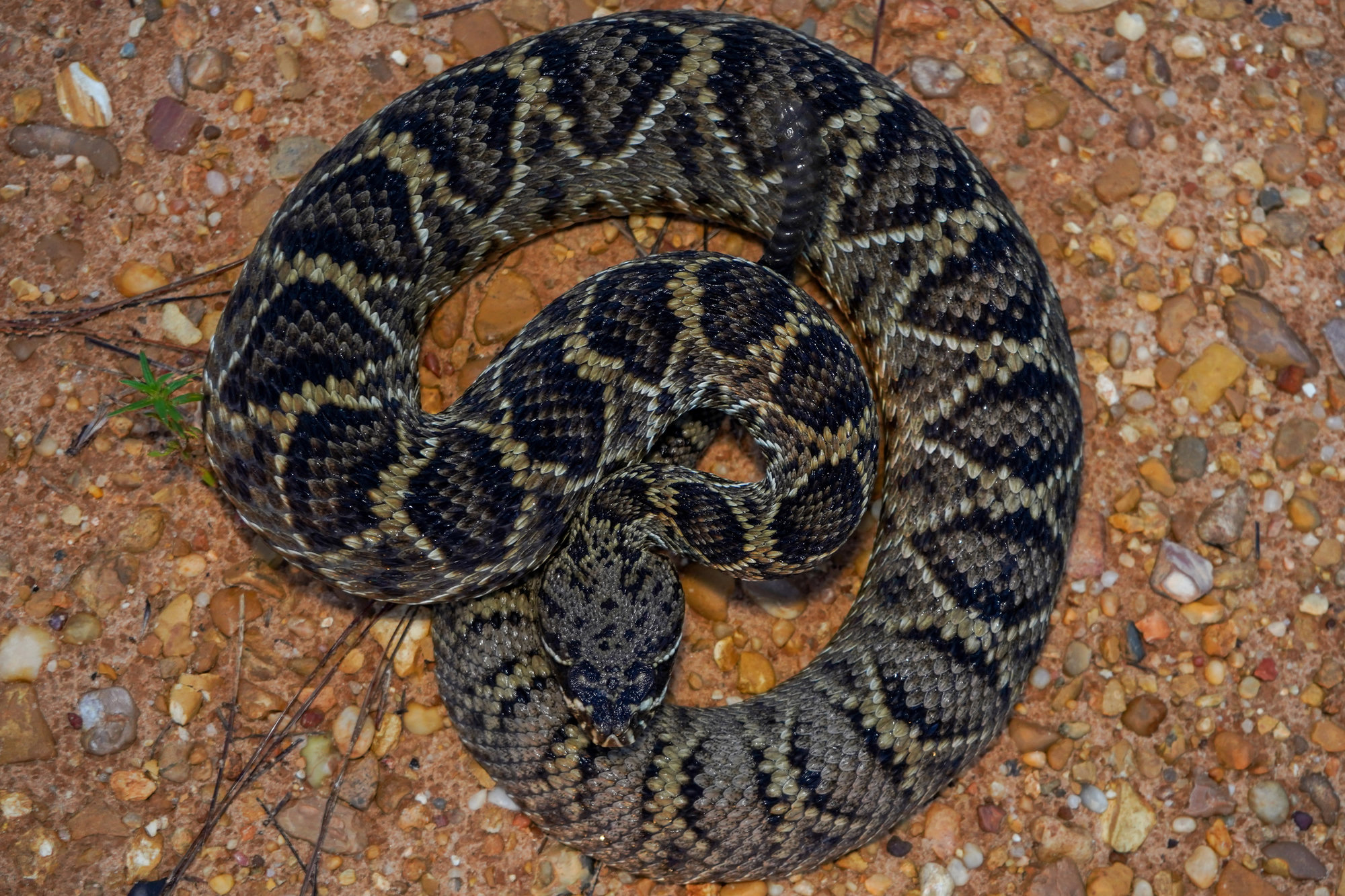
Photo evangrimes (opens in a new tab) / Wikimedia Commons, CC BY 4.0 (opens in a new tab)
At a glance
- Size
- Usually 1 to 1.8 m long; the heaviest venomous snake in North America
- Habitat
- Longleaf pine flatwoods, sandhills, coastal scrub and maritime forest
- Diet
- Rabbits, squirrels, rats and mice
- In Georgia
- The Coastal Plain, including the barrier islands; declining
- Venomous
- Yes
- Rabies vector
- No
Identification
- Key marks
- Heavy body with dark diamonds outlined in cream; two pale diagonal stripes on each side of the face; rattle
- Told apart from
- Timber rattlesnake, which has bands rather than diamonds and a black tail
- Where to look
- Near gopher tortoise burrows and stump holes in pine woods
Behaviour
Eastern diamondbacks spend much of their time in gopher tortoise burrows and stump holes, ambushing rabbits and rodents along trails. They rattle loudly when disturbed and would rather retreat than strike.
Why they matter
As top predators of rabbits and rats in pine forests they help keep those populations in check. They have disappeared from much of their range as longleaf pine and gopher tortoise burrows have been lost, and from persecution and round-ups.
Reproduction and lifecycle
Young — Born live, usually 7 to 21, in late summer
Size at birth — About 30 to 38 cm
Venom — Present from birth
Maturity — At two to three years or more
Breeding — Females give birth every two or three years
Lifespan — Over 15 years
Living around people
- Back away slowly from a rattling snake; it will not chase you.
- If someone is bitten, call 911 and get to a hospital at once; keep them calm and still, and do not cut, suck, ice or tie off the bite.
- Keep dogs close in pine woods and on coastal trails.
Misconceptions
- Diamondbacks are aggressive. They warn loudly and prefer to escape.
- Rattlesnakes come to houses looking for people. They follow prey such as rats, which are drawn to feed and rubbish.
Related species
Seasonal activity
When this species is breeding, and when there are nests on the ground. Mowing during the shaded months is how most nests are found.
| Jan | Feb | Mar | Apr | May | Jun | Jul | Aug | Sep | Oct | Nov | Dec | |
|---|---|---|---|---|---|---|---|---|---|---|---|---|
| Breeding | Jan: no | Feb: no | Mar: no | Apr: no | May: no | Jun: no | Jul: no | Aug: no | Sep: no | Oct: no | Nov: no | Dec: no |
| Active nests | Jan: no | Feb: no | Mar: no | Apr: no | May: no | Jun: no | Jul: no | Aug: no | Sep: no | Oct: no | Nov: no | Dec: no |
| Notes | Sheltering in burrows | Basking at burrow entrances | Active | Active | Active | Active | Hunting | Mating; young born | Young active | Active | Moving to shelters | Sheltering |
Where it lives
Recorded in 5 states and provinces. Each one links to the other animals there, and to the rehabilitators licensed for them.
United States
If you found one
Answer a few questions and you will get a specific answer for what you are looking at.
I found an animal