
Species
Gopher tortoise
Gopherus polyphemus
Georgia's state reptile: a burrowing tortoise whose tunnels shelter hundreds of other species.
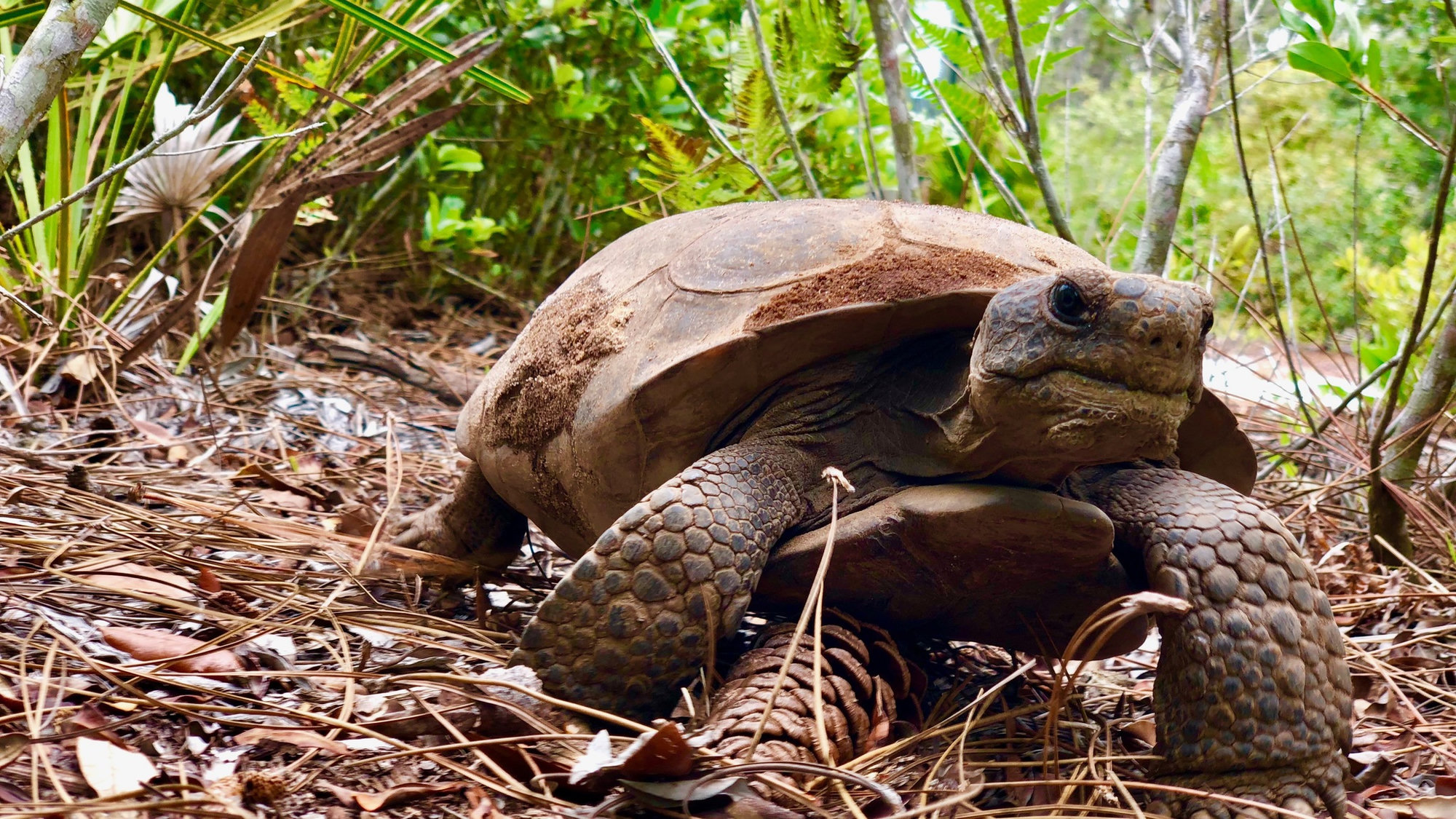
Photo Gerardo Chavarri (opens in a new tab) / iNaturalist, CC BY 4.0 (opens in a new tab)
At a glance
- Size
- Shell usually 23 to 38 cm long, high and domed
- Habitat
- Dry, sandy uplands, especially longleaf pine sandhills and open pine woods
- Diet
- Grasses, legumes, prickly pear, fruits and other low plants
- In Georgia
- The southern Coastal Plain; Georgia's state reptile
- Rabies vector
- No
Identification
- Key marks
- Heavy, domed brown to grey shell; front legs flattened like shovels; elephant-like hind feet
- Told apart from
- Box turtles, which are much smaller and have a hinged underside
- Told apart from
- Water turtles, which have webbed feet; gopher tortoises have none
- Where to look
- Near the half-moon mouths of burrows in open sandy ground, with a fan of sand in front
Behaviour
A gopher tortoise digs a burrow that can run 12 metres long and 3 metres deep, where the temperature and humidity hardly change through the year. It spends nights, cold spells and hot afternoons inside, and grazes near the entrance. Each tortoise uses several burrows and keeps to a home range for most of its life.
Why they matter
More than 350 species have been recorded using gopher tortoise burrows, among them the eastern indigo snake, the gopher frog and many insects that live nowhere else. Fire sweeps longleaf pine forest regularly, and the burrows are where many of those animals survive it. Where tortoises disappear, a whole community goes with them.
Reproduction and lifecycle
Nest — Dug in the sandy apron in front of the burrow
Eggs — Usually 3 to 15
Incubation — About 80 to 110 days
Hatchlings — About 5 cm long; many are taken by predators in their first years
Maturity — At 10 to 20 years
Lifespan — Wild gopher tortoises live 40 to 60 years or more
Living around people
- Never put a gopher tortoise in water. It is a land animal and can drown.
- A tortoise crossing a road can be carried across in the direction it was heading. Moving one anywhere else fails: it tries to walk home, and many die on the way.
- Mow and drive carefully around the sandy mounds of burrows.
- Gopher tortoises are protected in Georgia and across their range.
Misconceptions
- A gopher tortoise is a turtle that needs water. It lives on dry land and drinks mostly from the plants it eats.
- Burrows are just holes in the ground. Each can shelter dozens of other animals, some found nowhere else.
Related species
Seasonal activity
When this species is breeding, and when there are nests on the ground. Mowing during the shaded months is how most nests are found.
| Jan | Feb | Mar | Apr | May | Jun | Jul | Aug | Sep | Oct | Nov | Dec | |
|---|---|---|---|---|---|---|---|---|---|---|---|---|
| Breeding | Jan: no | Feb: no | Mar: no | Apr: no | May: no | Jun: no | Jul: no | Aug: no | Sep: no | Oct: no | Nov: no | Dec: no |
| Active nests | Jan: no | Feb: no | Mar: no | Apr: no | May: no | Jun: no | Jul: no | Aug: no | Sep: no | Oct: no | Nov: no | Dec: no |
| Notes | In burrows; out on warm days | In burrows; out on warm days | Active above ground | Courtship | Females nesting in the burrow apron | Nesting | Grazing | Hatching begins | Hatchlings emerge | Grazing before winter | Mostly in burrows | In burrows |
Where it lives
Recorded in 5 states and provinces. Each one links to the other animals there, and to the rehabilitators licensed for them.
United States
If you found one
Answer a few questions and you will get a specific answer for what you are looking at.
I found an animal