
Species
Eastern indigo snake
Drymarchon couperi
The longest native snake in the United States, a glossy blue-black predator that eats other snakes, including rattlesnakes.
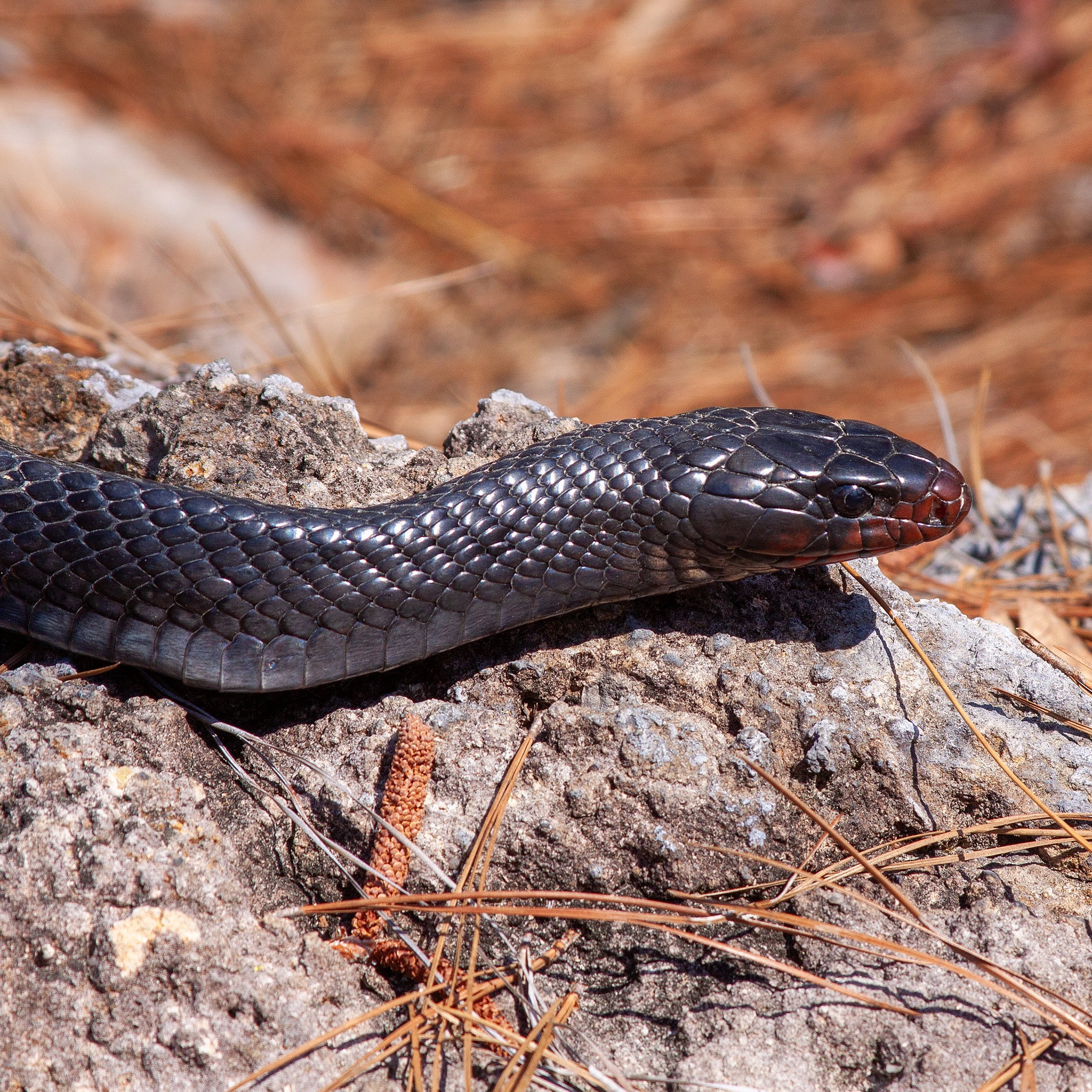
Photo Dan Vickers (opens in a new tab) / iNaturalist, CC BY 4.0 (opens in a new tab)
At a glance
- Size
- Usually 1.5 to 2.1 m long; up to about 2.6 m
- Habitat
- Longleaf pine sandhills with gopher tortoise burrows, and nearby wetlands
- Diet
- Snakes, including rattlesnakes; frogs, turtles, birds and small mammals
- In Georgia
- The southern Coastal Plain; rare
- Venomous
- No
- Rabies vector
- No
Identification
- Key marks
- Very large and glossy blue-black; red or orange chin and throat
- Told apart from
- North American racer, which is smaller, slimmer and has a white chin
- Where to look
- Near gopher tortoise burrows in winter
Behaviour
Indigo snakes are active by day and overpower prey with their jaws rather than by constricting. In winter they depend on gopher tortoise burrows for shelter. They range over large areas.
Why they matter
Eastern indigo snakes are threatened and protected under federal law. They depend on gopher tortoises and on large areas of longleaf pine, and their survival is tied to both.
Reproduction and lifecycle
Eggs — Usually 4 to 12
Nest — In burrows
Incubation — About 70 to 100 days
Hatchlings — About 45 to 60 cm long
Maturity — In three to four years
Lifespan — Over 20 years
Living around people
- It is harmless and protected; leave it where it is.
- Gopher tortoise burrows are its winter homes; keep them undisturbed.
Misconceptions
- Big black snakes are dangerous. The indigo is harmless and eats venomous snakes.
Related species
Seasonal activity
When this species is breeding, and when there are nests on the ground. Mowing during the shaded months is how most nests are found.
| Jan | Feb | Mar | Apr | May | Jun | Jul | Aug | Sep | Oct | Nov | Dec | |
|---|---|---|---|---|---|---|---|---|---|---|---|---|
| Breeding | Jan: no | Feb: no | Mar: no | Apr: no | May: no | Jun: no | Jul: no | Aug: no | Sep: no | Oct: no | Nov: no | Dec: no |
| Active nests | Jan: no | Feb: no | Mar: no | Apr: no | May: no | Jun: no | Jul: no | Aug: no | Sep: no | Oct: no | Nov: no | Dec: no |
| Notes | In tortoise burrows; out on warm days | Mating | Active | Active | Laying | Active | Active | Hatching | Young active | Active | Returning to burrows | Sheltering in burrows |
Where it lives
Recorded in 3 states and provinces. Each one links to the other animals there, and to the rehabilitators licensed for them.
If you found one
Answer a few questions and you will get a specific answer for what you are looking at.
I found an animal