
Species
Pygmy rattlesnake
Sistrurus miliarius
A small rattlesnake with a rattle so tiny that its buzz sounds like an insect.
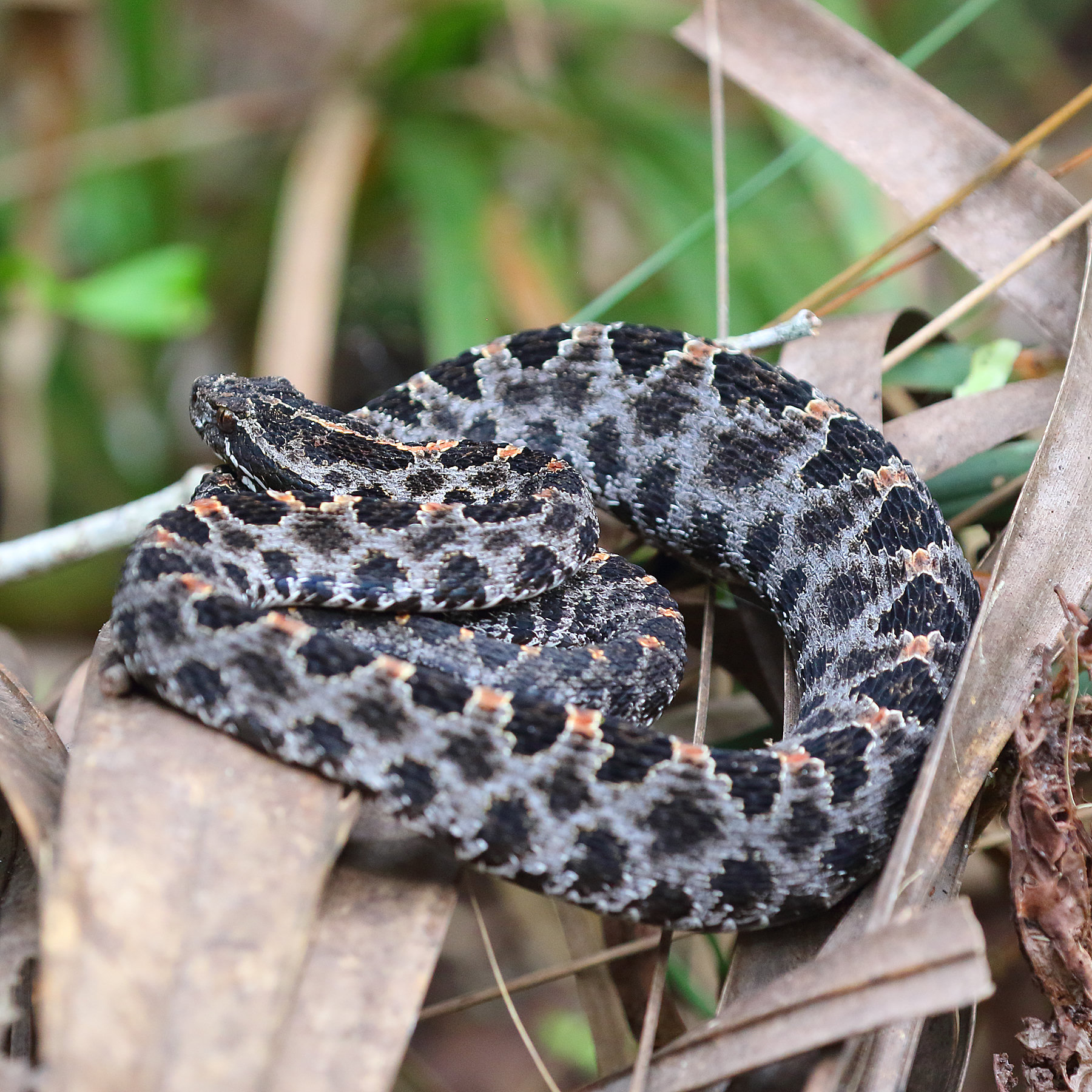
Photo Dan Vickers (opens in a new tab) / iNaturalist, CC BY 4.0 (opens in a new tab)
At a glance
- Size
- Usually 40 to 60 cm long
- Habitat
- Pine flatwoods, sandhills, wet prairies and the edges of wetlands
- Diet
- Frogs, lizards, mice, small snakes and centipedes
- In Georgia
- Statewide except the mountains, most common in the Coastal Plain
- Venomous
- Yes
- Rabies vector
- No
Identification
- Key marks
- Grey with dark blotches down the back and sides, often a reddish stripe; small head; tiny rattle
- Told apart from
- Hognose snakes, which have upturned snouts and no rattle
- Where to look
- Coiled on leaf litter and pine straw, often near water
Behaviour
Pygmy rattlesnakes lie coiled in one spot for days waiting for prey. The rattle makes a faint buzz, easily missed. They bite when stepped on or handled; bites are painful but rarely dangerous to adults.
Why they matter
They are important predators of frogs, lizards and small rodents in southern pinelands, and food for kingsnakes, indigo snakes and hawks.
Reproduction and lifecycle
Young — Born live, usually 3 to 9
Size at birth — About 15 cm, with a yellow tail tip
Venom — Present from birth
Maturity — In two to three years
Breeding — Usually every year
Lifespan — Over 10 years
Living around people
- Watch where you step in pine straw and leaf litter.
- If someone is bitten, call 911 and get to a hospital; keep them still and do not cut, suck, ice or tie off the bite.
Misconceptions
- Small rattlesnakes are baby rattlesnakes. The pygmy rattlesnake is fully grown at this size.
Related species
Seasonal activity
When this species is breeding, and when there are nests on the ground. Mowing during the shaded months is how most nests are found.
| Jan | Feb | Mar | Apr | May | Jun | Jul | Aug | Sep | Oct | Nov | Dec | |
|---|---|---|---|---|---|---|---|---|---|---|---|---|
| Breeding | Jan: no | Feb: no | Mar: no | Apr: no | May: no | Jun: no | Jul: no | Aug: no | Sep: no | Oct: no | Nov: no | Dec: no |
| Active nests | Jan: no | Feb: no | Mar: no | Apr: no | May: no | Jun: no | Jul: no | Aug: no | Sep: no | Oct: no | Nov: no | Dec: no |
| Notes | Active on warm days | Active on warm days | Active | Active | Active | Active | Active | Young born | Young active | Active | Active on warm days | Sheltering in cold spells |
Where it lives
Recorded in 11 states and provinces. Each one links to the other animals there, and to the rehabilitators licensed for them.
If you found one
Answer a few questions and you will get a specific answer for what you are looking at.
I found an animal