
Species
Swamp rabbit
Sylvilagus aquaticus
The largest cottontail, a strong swimmer of river-bottom forests.
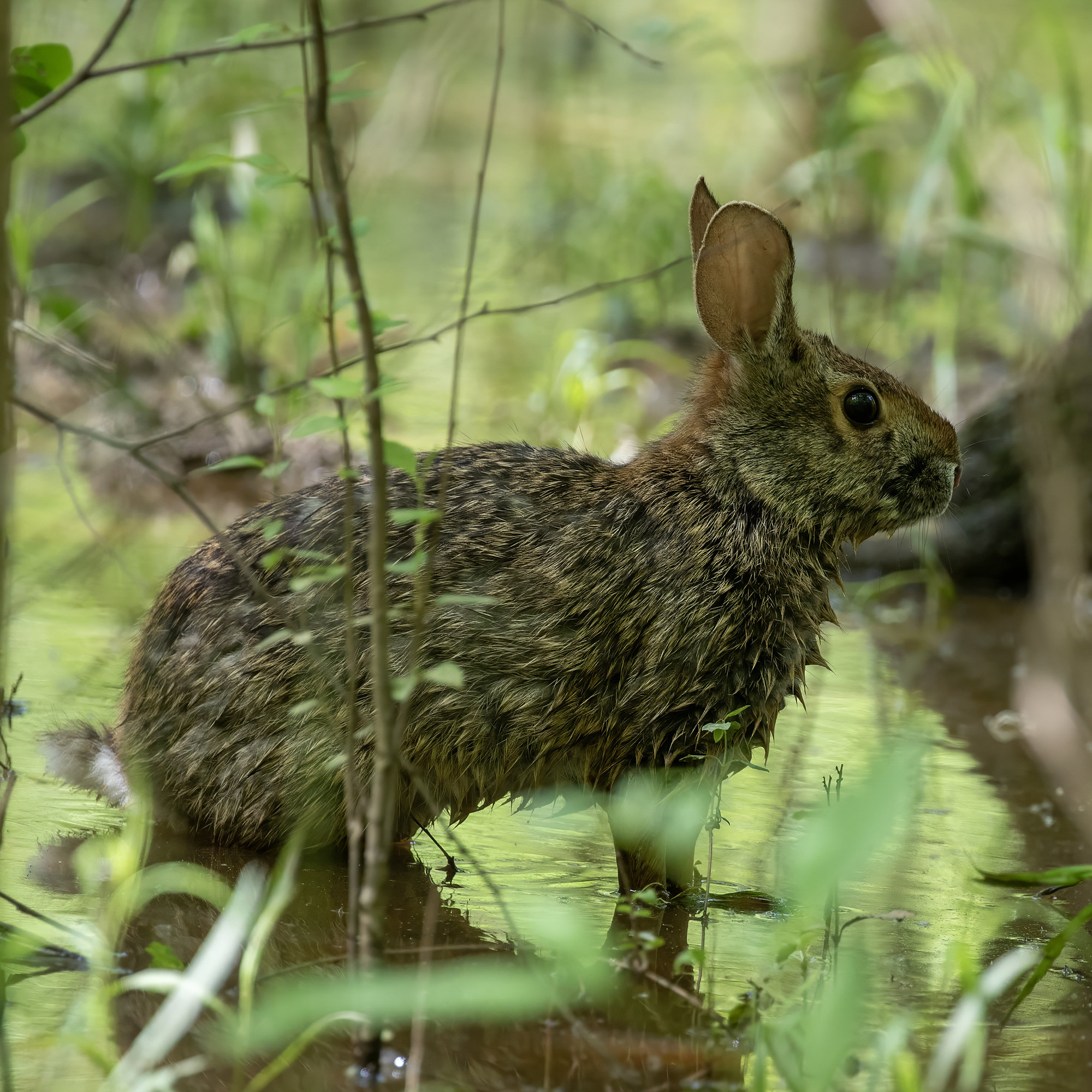
Photo Dan Vickers (opens in a new tab) / Wikimedia Commons, CC BY 4.0 (opens in a new tab)
At a glance
- Size
- Body about 45 to 55 cm
- Weight
- About 1.6 to 2.7 kg
- Habitat
- Bottomland hardwood forests, swamps, river floodplains and canebrakes
- Diet
- Grasses, sedges, cane, herbs, and in winter the bark and twigs of shrubs and trees
- Active
- Mostly dusk, night and dawn
- Shelter
- Thickets, hollow logs, stumps and brush piles in the floodplain
- Lifespan
- A few years in the wild
- Rabies vector
- No
Identification
- Key marks
- Large; rusty-brown to grey-brown fur with black flecking; rusty-cinnamon ring around the eye; short, rounded ears; white tail underneath
- Size
- Noticeably bigger than an eastern cottontail
- Told apart from
- Eastern cottontail, which is smaller and paler with longer ears
- Told apart from
- Marsh rabbit, which is smaller and darker and lives in coastal marsh
- Signs
- Droppings left on logs and stumps, used as scent posts
- Where to look
- River-bottom forests of west and southwest Georgia and the lower Southeast
Behaviour
Swamp rabbits live in the floodplains of southern rivers, and water is their refuge. When chased, they swim readily and may hide in the water with only the nose above the surface.
They leave their droppings on logs, stumps and other raised spots, and these "latrine" sites are used to mark territory and are one of the best signs that swamp rabbits are present. Males defend areas against other males during the breeding season.
Why they matter
Swamp rabbits are part of the life of bottomland hardwood forests, one of the richest and most reduced habitats in the Southeast. Their browsing shapes the understorey, and they feed bobcats, coyotes, owls, hawks, alligators and snakes.
Their need for large tracts of floodplain forest makes them a good measure of how intact those forests remain.
Reproduction and lifecycle
Breeding — late winter to late summer
Gestation — about 35 to 40 days
Litter — usually one to six young, born furred in a nest of grass and fur
Leaving the nest — at about two weeks old
Independence — within a few weeks
Lifespan — a few years in the wild
Living around people
- Floodplain clearing and drainage removes their habitat.
- Young rabbits in a nest should be left alone; the mother visits only briefly.
- Dogs off lead in river bottoms can catch young rabbits.
Misconceptions
- A rabbit swimming toward you is attacking. A swimming rabbit is almost always escaping something.
- A nest of young rabbits alone is abandoned. Mothers visit only once or twice a day.
- All wild rabbits are cottontails. Swamp rabbits are cottontails too, but larger and river-dwelling.
Related species
Seasonal activity
When this species is breeding, and when there are nests on the ground. Mowing during the shaded months is how most nests are found.
| Jan | Feb | Mar | Apr | May | Jun | Jul | Aug | Sep | Oct | Nov | Dec | |
|---|---|---|---|---|---|---|---|---|---|---|---|---|
| Breeding | Jan: no | Feb: no | Mar: no | Apr: no | May: no | Jun: no | Jul: no | Aug: no | Sep: no | Oct: no | Nov: no | Dec: no |
| Active nests | Jan: no | Feb: no | Mar: no | Apr: no | May: no | Jun: no | Jul: no | Aug: no | Sep: no | Oct: no | Nov: no | Dec: no |
| Notes | Breeding begins in the South | Breeding | First litters born | Breeding continues | Young leave the nest at about two weeks old | Breeding continues | Young disperse | Breeding slows | Floodwaters and drought shift where rabbits feed | Active in thickets and cane | Browsing on bark and twigs increases | Active; breeding may begin in mild areas |
Where it lives
Recorded in 14 states and provinces. Each one links to the other animals there, and to the rehabilitators licensed for them.
If you found one
Answer a few questions and you will get a specific answer for what you are looking at.
I found an animal