
Species
Appalachian cottontail
Sylvilagus obscurus
A mountain rabbit almost identical to the eastern cottontail, living in high forests and heath.
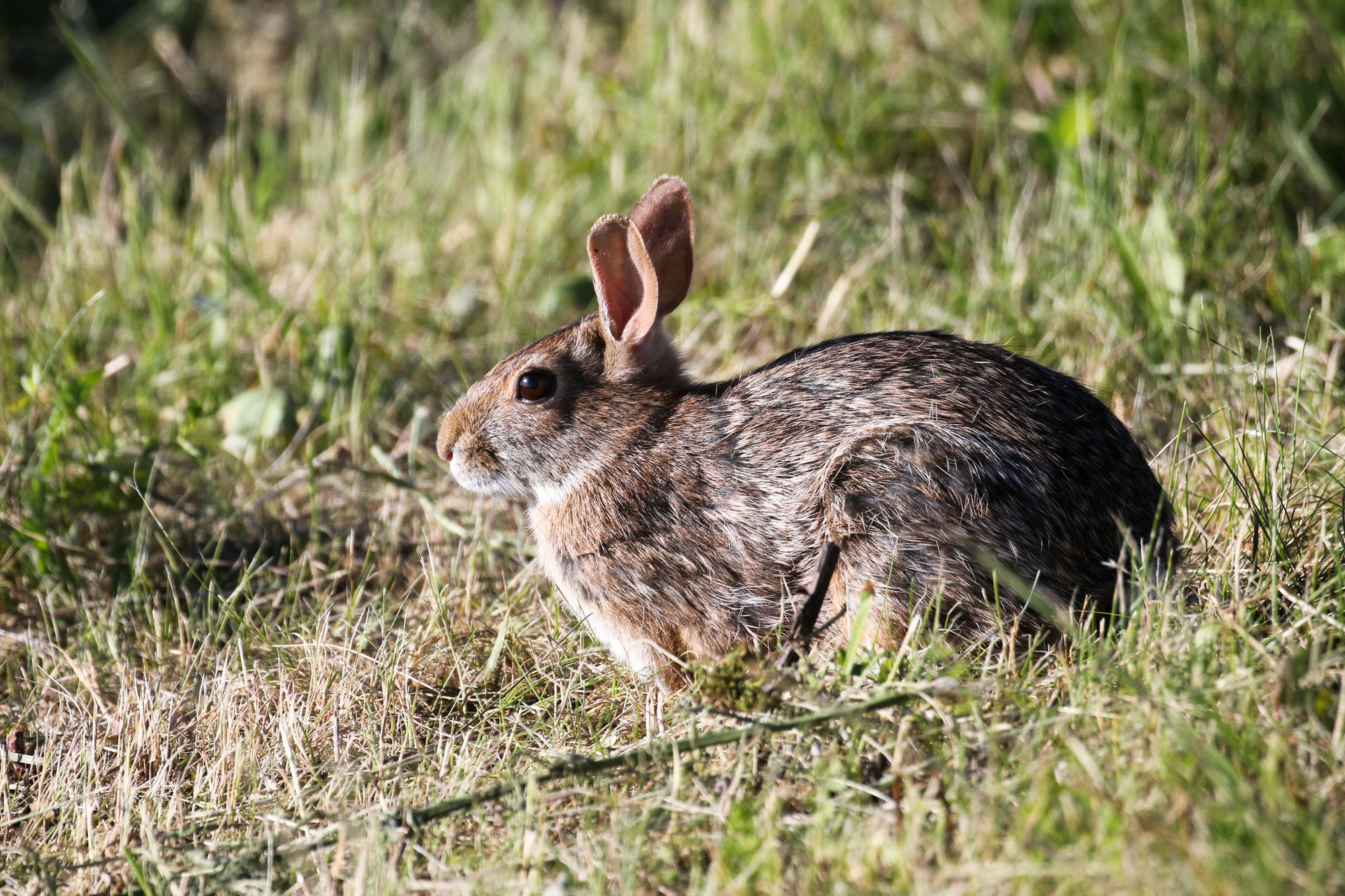
Photo Tom Field (opens in a new tab) / iNaturalist, CC BY 4.0 (opens in a new tab)
At a glance
- Size
- Body about 38 to 43 cm
- Weight
- About 0.8 to 1.2 kg
- Habitat
- High-elevation forests, heath balds, rhododendron and laurel thickets and young regrowth in the Appalachians
- Diet
- Grasses, herbs and, in winter, bark, twigs and buds of shrubs
- Active
- Mostly dusk, night and dawn
- Shelter
- Dense shrub thickets
- Lifespan
- A few years in the wild
- Rabies vector
- No
Identification
- Key marks
- Brown fur with black flecking; usually a black spot between the ears and black edges to the ears; usually no white spot on the forehead
- Told apart from
- Eastern cottontail, which often has a white forehead spot and lacks the black ear edges; the two can be very hard to tell apart in the field, and experts often need the skull or DNA
- Where to look
- The higher mountains of northeast Georgia, in dense shrubby cover
Behaviour
Appalachian cottontails live in the higher parts of the southern Appalachians, where they depend on dense shrub cover: rhododendron and mountain laurel thickets, heath balds, and young forest regrowing after disturbance. They feed at the edges of this cover and rarely stray far from it.
Scientists only recognised them as a separate species from the New England cottontail in 1992.
Why they matter
Appalachian cottontails are part of the mountain shrublands that also shelter golden-winged warblers, ruffed grouse and other species that need thick young growth.
They are considered near threatened, largely because their high-elevation habitat is patchy and changing, and they are easily overlooked as "just a cottontail".
Reproduction and lifecycle
Breeding — spring and summer
Gestation — about four weeks
Litter — usually three to six young, born furred in a hidden nest
Leaving the nest — at about two to three weeks old
Lifespan — a few years in the wild
Living around people
- Young rabbits in a nest should be left alone; the mother visits only briefly.
- Dogs and cats near mountain homes catch young rabbits.
- Keeping patches of dense shrubs helps them.
Misconceptions
- Every rabbit in the mountains is an eastern cottontail. The Appalachian cottontail is a separate, rarer species.
- Baby rabbits alone in a nest have been abandoned. Mothers visit only once or twice a day.
Related species
Seasonal activity
When this species is breeding, and when there are nests on the ground. Mowing during the shaded months is how most nests are found.
| Jan | Feb | Mar | Apr | May | Jun | Jul | Aug | Sep | Oct | Nov | Dec | |
|---|---|---|---|---|---|---|---|---|---|---|---|---|
| Breeding | Jan: no | Feb: no | Mar: no | Apr: no | May: no | Jun: no | Jul: no | Aug: no | Sep: no | Oct: no | Nov: no | Dec: no |
| Active nests | Jan: no | Feb: no | Mar: no | Apr: no | May: no | Jun: no | Jul: no | Aug: no | Sep: no | Oct: no | Nov: no | Dec: no |
| Notes | Browsing on bark and twigs in thickets | Breeding begins | Breeding | First litters born | Young leave the nest | Breeding continues | Young disperse | Breeding slows | Active at dusk and dawn | Active | Browsing shifts to woody plants | Sheltering in dense cover |
Where it lives
Recorded in 10 states and provinces. Each one links to the other animals there, and to the rehabilitators licensed for them.
If you found one
Answer a few questions and you will get a specific answer for what you are looking at.
I found an animal