
Species
Marsh rabbit
Sylvilagus palustris
A small, dark, short-eared rabbit of southern marshes that swims readily and often walks instead of hopping.
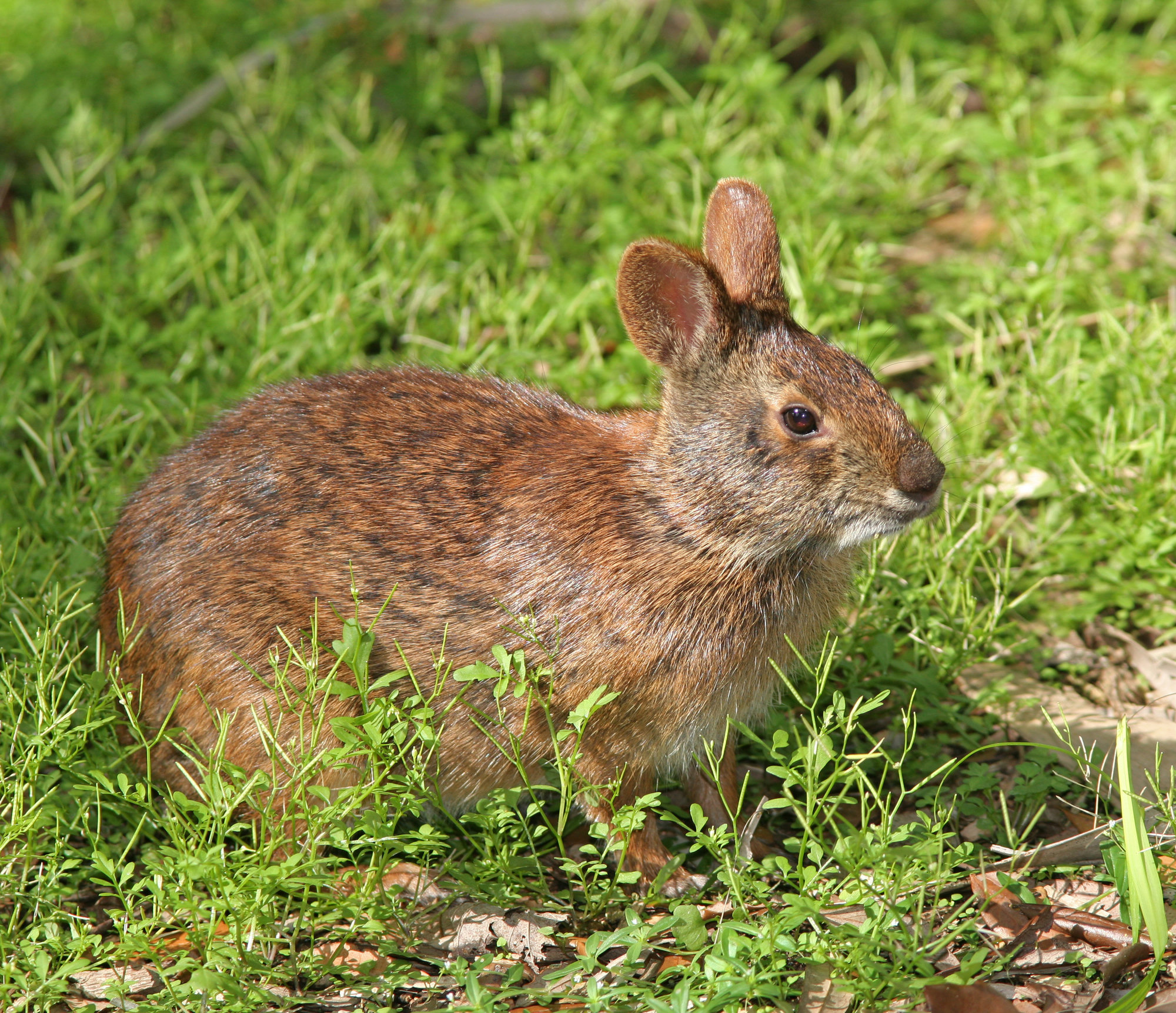
Photo Tomfriedel (opens in a new tab) / Wikimedia Commons, CC BY 3.0 (opens in a new tab)
At a glance
- Size
- Body about 35 to 45 cm
- Weight
- About 1 to 1.6 kg
- Habitat
- Freshwater and brackish marshes, swamp edges, wet meadows and canal banks of the southern coastal plain
- Diet
- Grasses, sedges, rushes, marsh plants, and the bark and twigs of shrubs
- Active
- Mostly dusk, night and dawn
- Shelter
- Dense marsh vegetation; nests of grass and fur on raised ground
- Lifespan
- Usually a year or two in the wild
- Rabies vector
- No
Identification
- Key marks
- Dark reddish-brown to grey-brown fur; short, rounded ears; small feet; a small tail that is greyish-brown underneath rather than bright white
- Movement
- Often walks on all fours rather than hopping
- Told apart from
- Eastern cottontail, which is paler, longer-eared and has a bright white cotton tail
- Told apart from
- Swamp rabbit, which is larger and lives in bottomland forest
- Where to look
- Marsh edges, levees and grassy banks along coastal Georgia and the coastal plain at dusk
Behaviour
Marsh rabbits live in the wettest places a rabbit can: coastal and freshwater marshes, swamp edges and the grassy banks of canals. They swim well and readily, and will take to water to escape a predator, sometimes floating with only eyes and nose above the surface.
They are unusual among rabbits in often walking on all fours rather than hopping. They feed at dusk and through the night on grasses, marsh plants and shrubs.
Why they matter
Marsh rabbits are an important food for predators of southern wetlands — alligators, bobcats, owls, hawks and snakes among them — and their grazing helps shape marsh vegetation.
One population, the Lower Keys marsh rabbit of Florida, is endangered, a reminder of how much these animals depend on marshes that are easily drained or built on.
Reproduction and lifecycle
Breeding — much of the year in the Deep South
Gestation — about 30 to 37 days
Litter — usually two to four young, born furred in a nest of grass and fur
Leaving the nest — at about two to three weeks old
Independence — soon after leaving the nest
Lifespan — rarely more than a few years in the wild
Living around people
- Mowing canal banks and marsh edges in spring and summer can destroy nests.
- Dogs and cats kill many young rabbits near homes.
- A nest of young rabbits is best left alone; the mother visits only briefly, usually at dusk and dawn.
Misconceptions
- A nest of young rabbits with no mother in sight is abandoned. Rabbit mothers stay away from the nest to avoid leading predators to it, returning to feed the young once or twice a day.
- Rabbits do not swim. Marsh rabbits swim readily.
- Any wild rabbit is a cottontail. Coastal Georgia has marsh rabbits too, darker and shorter-eared.
Related species
Seasonal activity
When this species is breeding, and when there are nests on the ground. Mowing during the shaded months is how most nests are found.
| Jan | Feb | Mar | Apr | May | Jun | Jul | Aug | Sep | Oct | Nov | Dec | |
|---|---|---|---|---|---|---|---|---|---|---|---|---|
| Breeding | Jan: no | Feb: no | Mar: no | Apr: no | May: no | Jun: no | Jul: no | Aug: no | Sep: no | Oct: no | Nov: no | Dec: no |
| Active nests | Jan: no | Feb: no | Mar: no | Apr: no | May: no | Jun: no | Jul: no | Aug: no | Sep: no | Oct: no | Nov: no | Dec: no |
| Notes | Breeding can occur year-round in the warm South | Breeding | Young born in hidden nests | Peak breeding | Young leave the nest at about two to three weeks old | Breeding continues | Young of the year disperse along marsh edges | Breeding continues | Breeding slows in some areas | Active at dusk along levees and banks | Breeding may continue in mild weather | Active; breeding in warm spells |
Where it lives
Recorded in 6 states and provinces. Each one links to the other animals there, and to the rehabilitators licensed for them.
If you found one
Answer a few questions and you will get a specific answer for what you are looking at.
I found an animal