
Species
Star-nosed mole
Condylura cristata
A mole with a pink star of 22 fleshy tentacles on its nose, the most sensitive touch organ known in any mammal.
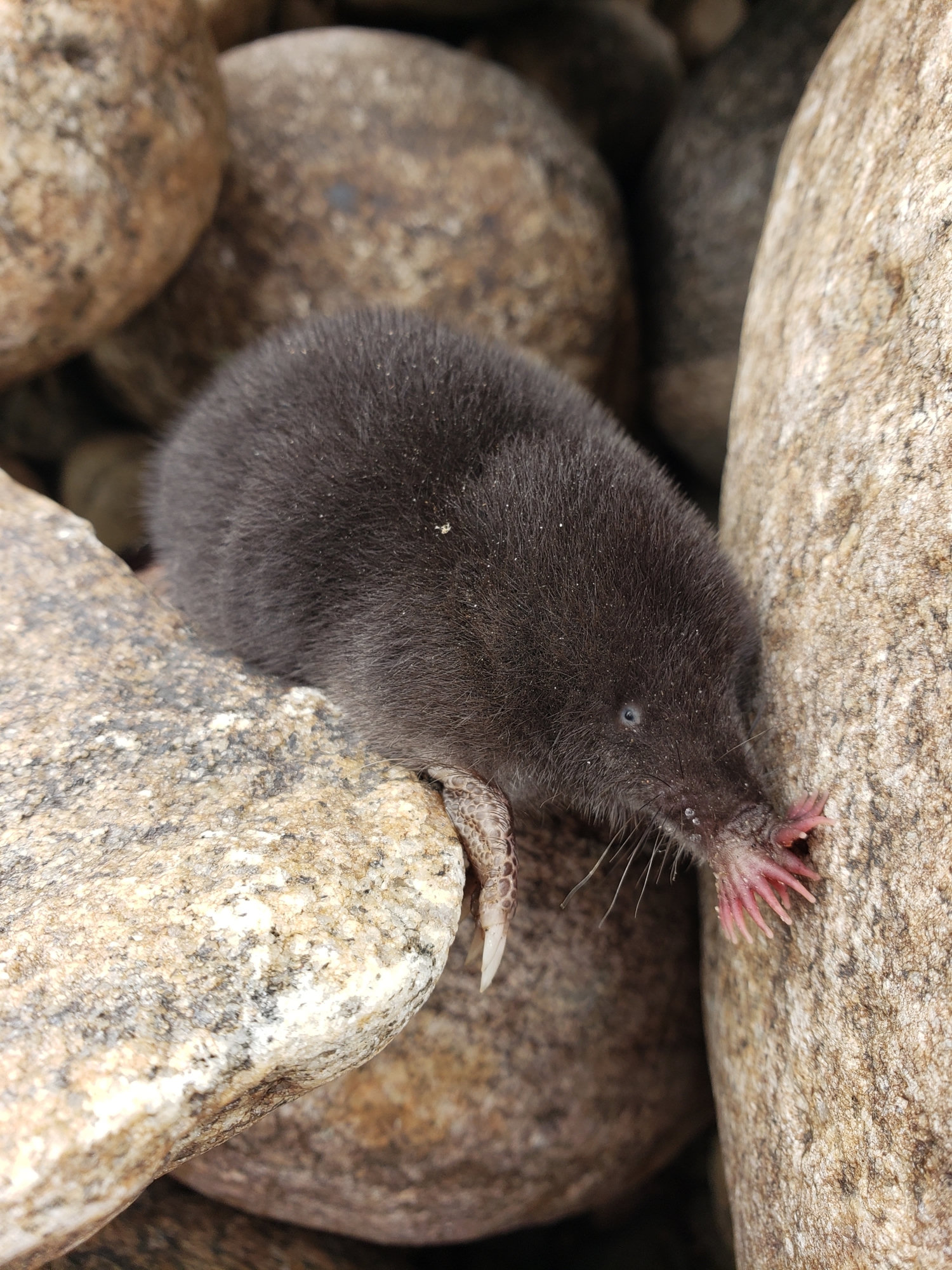
Photo Fyn Kynd (opens in a new tab) / iNaturalist, CC BY-SA 4.0 (opens in a new tab)
At a glance
- Size
- Body about 10 to 13 cm; tail about 6 to 8 cm
- Weight
- About 40 to 85 g
- Habitat
- Wet meadows, marshes, bogs, stream banks and swampy woods
- Diet
- Aquatic insects, earthworms, small crustaceans, leeches and other small invertebrates
- Active
- Day and night, all year
- Shelter
- Tunnels in wet soil, often opening under water
- Lifespan
- A few years
- Rabies vector
- No
Identification
- Key marks
- A ring of 22 pink, fleshy rays around the nostrils; black fur; broad digging forefeet; long, scaly tail that thickens with fat in winter
- Told apart from
- Every other North American mammal by its nose
- Told apart from
- Eastern mole, which has a pointed nose and a short tail
- Where to look
- Wet ground near streams and marshes; in Georgia, very rare, recorded in the mountains and a few places in the coastal plain
Behaviour
Star-nosed moles tunnel in wet soil and swim well, hunting both underground and under water. The star on the nose is a touch organ: its 22 rays are covered in thousands of tiny sensory structures, and the mole sweeps it across the ground many times a second to "feel" its surroundings.
They are among the fastest-eating mammals known, able to find, identify and swallow a small food item in a fraction of a second. Under water, they can smell by blowing bubbles onto objects and sniffing them back in.
Why they matter
The star-nosed mole has taught scientists a great deal about the sense of touch. Its star is the most sensitive touch organ found in any mammal, and studies of how its brain handles the information have been used to understand touch in other animals, including people.
It also depends on wetlands, and where wet meadows and stream banks are drained, it disappears.
Reproduction and lifecycle
Mating — late winter and early spring
Gestation — about 45 days
Birth — April to June, one litter a year of usually two to seven young
Leaving the nest — at about four weeks old
Independence — by summer
Lifespan — a few years
Living around people
- Draining wet ground and straightening streams removes their habitat.
- Cats catch moles near streams.
- A star-nosed mole found on the surface is best left near wet ground where it was found.
Misconceptions
- The star is for smelling. It is for touch.
- Moles cannot swim. Star-nosed moles swim and hunt under water.
- An animal this strange must be rare everywhere. It is common in parts of the Northeast, though very rare in Georgia.
Related species
Seasonal activity
When this species is breeding, and when there are nests on the ground. Mowing during the shaded months is how most nests are found.
| Jan | Feb | Mar | Apr | May | Jun | Jul | Aug | Sep | Oct | Nov | Dec | |
|---|---|---|---|---|---|---|---|---|---|---|---|---|
| Breeding | Jan: no | Feb: no | Mar: no | Apr: no | May: no | Jun: no | Jul: no | Aug: no | Sep: no | Oct: no | Nov: no | Dec: no |
| Active nests | Jan: no | Feb: no | Mar: no | Apr: no | May: no | Jun: no | Jul: no | Aug: no | Sep: no | Oct: no | Nov: no | Dec: no |
| Notes | Active in tunnels and under ice in streams | Tail is at its fattest from stored fat | Breeding begins | Mating continues | Young born in a nest of leaves and grass in a dry spot | Young leave the nest at about a month old | Young disperse | Active in wet ground | Active | Active | Fat builds up in the tail | Active under snow and ice |
Where it lives
Recorded in 29 states and provinces. Each one links to the other animals there, and to the rehabilitators licensed for them.
United States
If you found one
Answer a few questions and you will get a specific answer for what you are looking at.
I found an animal